
More solar planned for Taupō
An application to build a large solar farm at the southern end of Lake Taupō is still on the cards, says Meridian Energy Limited, despite it not being accepted into the first lot of fast-track projects.
By Chris Marshall
The proposed $800 million project would be the largest solar farm in New Zealand based on output.
The original application for the Western Bays Solar Development Project was submitted in May 2024 by the company to be among those in the Fast-track Approvals Bill.
Recommended by the government’s Independent Advisory Group to be included as one of 342 projects, Cabinet however chose to only include 149 in Schedule 2 of the Act – leaving out Western Bays Solar.
Minister for Infrastructure Chris Bishop said Cabinet chose to include only 149 because of the capacity of expert panels to assess the projects.
A Meridian spokesperson says they are still developing the Western Bays proposal and talking with key stakeholders but no decision has been made on when the project would enter the consenting process.
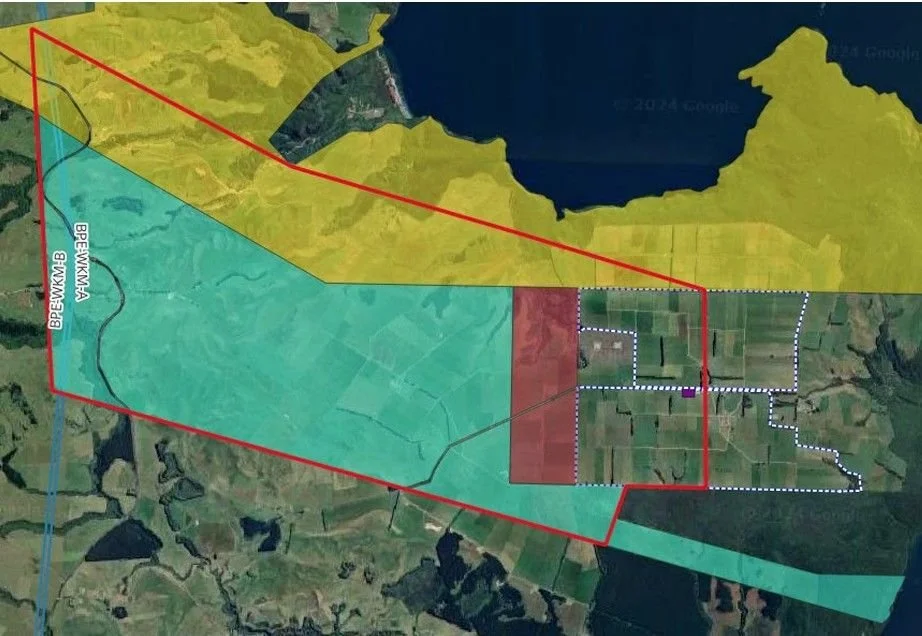
The project covers about 620 hectares on either side of Karangahape Rd and will generate about 500MW, or the equivalent power used by 135,000 homes.
A 220kV transmission line would traverse land to the west to connect to the national grid and would likely require a separate resource consent.
The application states that the site comprises a single landowner who signed a development agreement with Meridian in September 2023 which “grants comprehensive rights and registerable interests to carry out all aspects of the project, including access, construction, and continuous operation.”
The registered owners of the Karangahape Rd property are Theland Tahi Farm Group Ltd.
Meridian has done initial consultation with the Taupō District Council and Waikato Regional Council and an introductory huihas been held with Te Kotahitanga ko Ngāti Tūwharetoa (TKNT). Initial discussions have been had with neighbours including the Proprietors of Hauhungaroa 1D3B.
The project would employ 60-100 people during construction, with 6-10 people required to run it once it is operational.
The farm would have limited visual impact, Meridian says, due to its remote nature and topography screening it from Lake Taupō and adjacent areas in most directions.
Anticipated adverse effects of the project on the environment were assessed as limited by Meridian as the site was on rural land elevated 100m above the level of Lake Taupō and accessed via a spur road (Karangahape Rd) off State Highway 32.
“In an operational state the proposed solar electricity generation activity will generally have very limited potential for adverse effects compared to other rural land uses… ensuring no loss of highly versatile soils,” the spokesperson says.
They say the shift in land use, coupled with a decrease in farming activities, would likely diminish the application of Nitrogen (N) and Phosphorus (P) on the farm.
“This reduction is expected to yield broader environmental benefits, including decreased runoff to the catchment and enhanced groundwater quality.”
The company says the Western Bays Solar Development was nationally significant as one of the biggest solar developments in Aotearoa and would make a notable contribution to the de-carbonisation of the economy.