
Reining in the wild horses
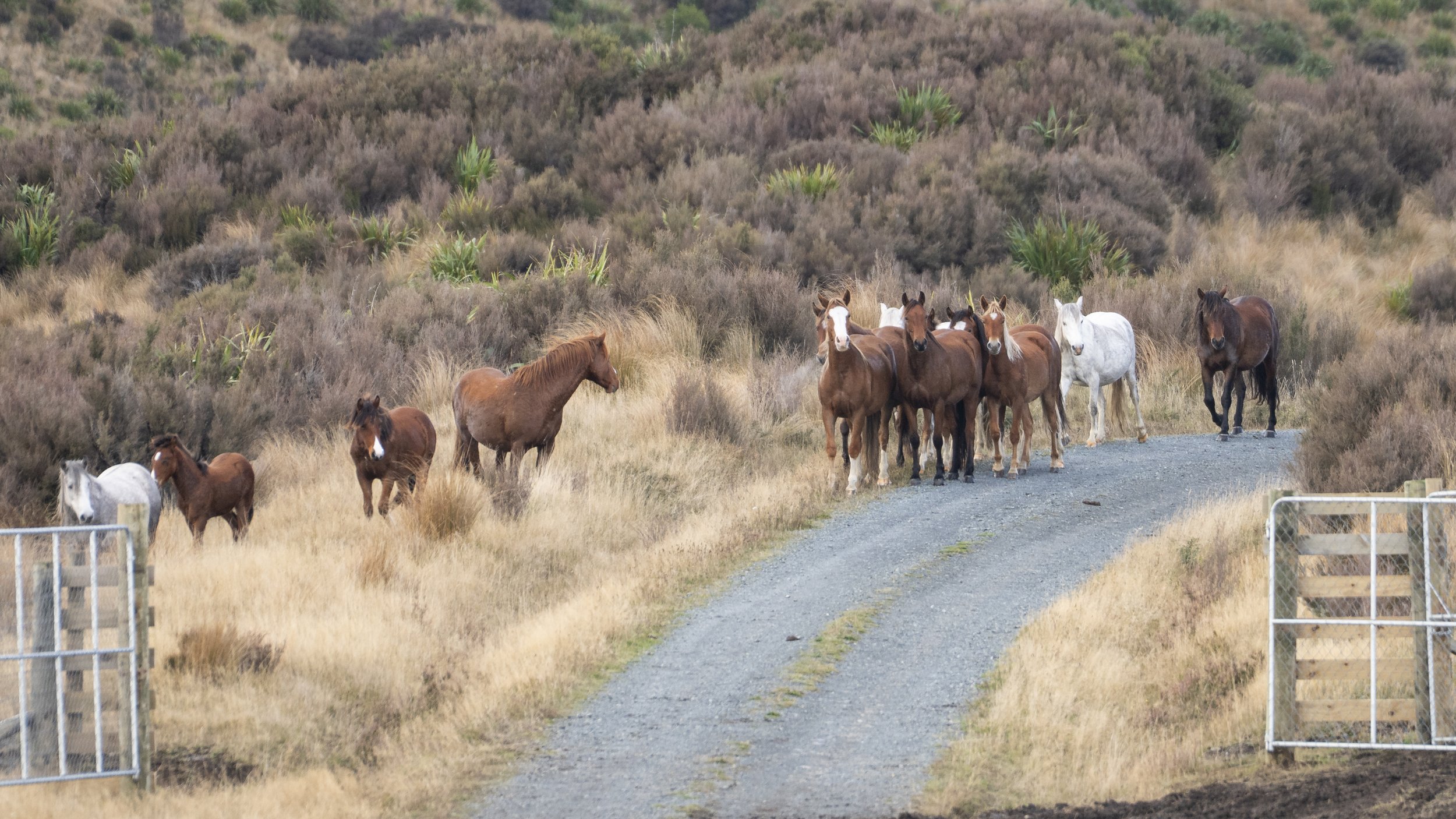
Wild Kaimanawa horses are brought into the new mustering yards at the southern end of the Waiouru Military Training Area. Photos: Kaimanawa Heritage Horses
The latest muster of wild Kaimanawa horses has taken place, with 58 rehomed and 100 mares given contraceptive treatment.
The wild horses are well established in the Waiouru Military Training Area and is managed by the Kaimanawa Wild Horse Advisory Group to protect the fragile ecosystems unique to the area and to keep the population healthy.
The group consists of multiple iwi, animal welfare experts, rehoming groups, environmental advocates, the Department of Conservation, and the New Zealand Defence Force.
Department of Conservation Principal Ranger Nina Manning says two musters took place over the Anzac period and additional musters are planned this year to help get the herd back to a more sustainable level for the future.
Small helicopters are used to muster the horses because of the vast area in which they live.
New yards have been set up at the southern end of the area to cut down on costs and stress on the horses.
“The muster at the new southern yards went incredibly smoothly, which is a testament to the huge amount of work the DOC team and contractors have done to design and prepare them.
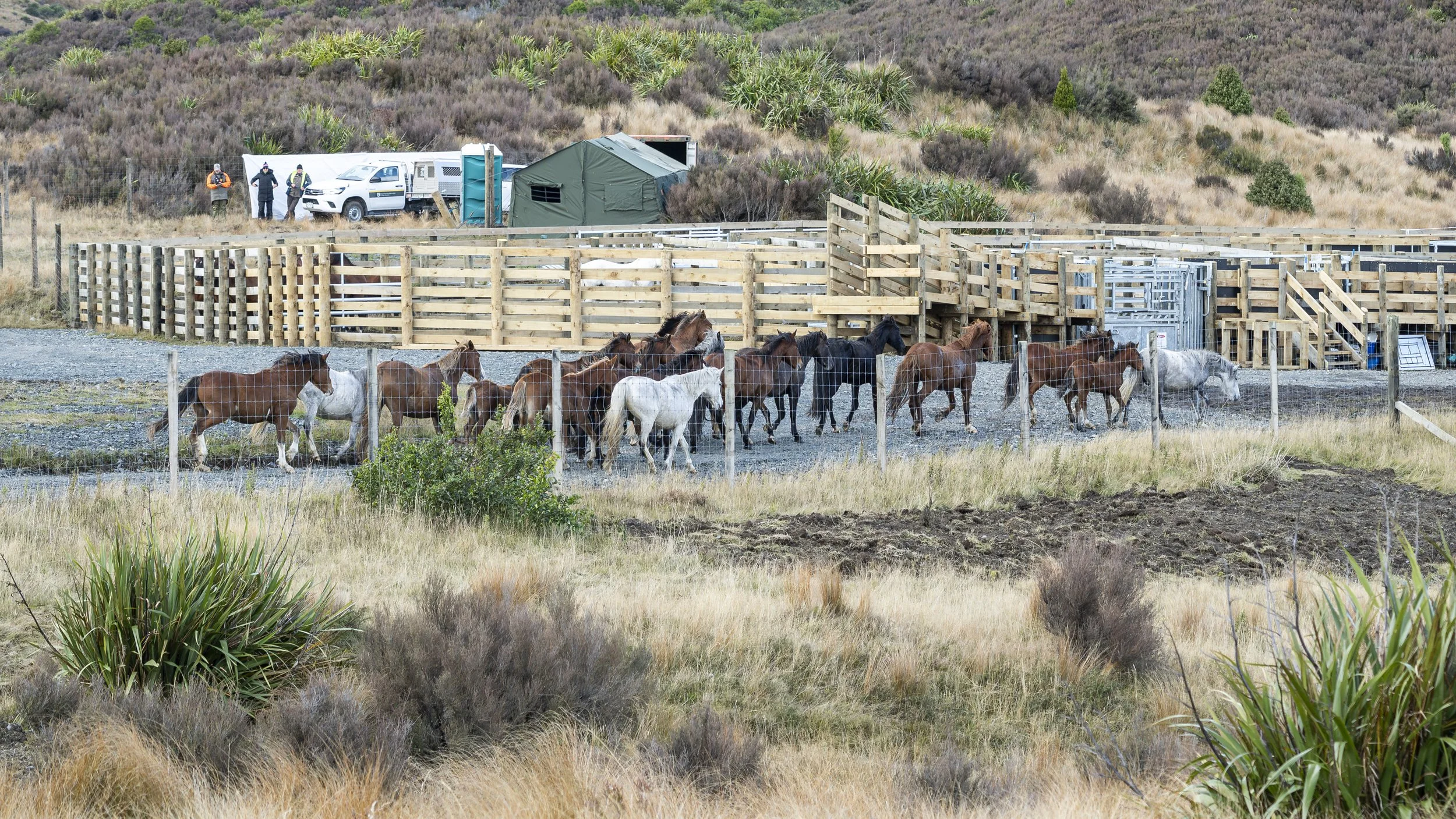
Wild Kaimanawa horses are brought into the new mustering yards at the southern end of the Waiouru Military Training Area. Photos: Kaimanawa Heritage Horses
“These yards allow mustering of the southern horses over shorter distances, reducing stress on the horses and costs of flying time – and they’re permanent, so the benefit will continue in years to come,” Nina says.
Immuno-contraceptive treatment of mares has continued, with the ultimate goal of slowing herd growth in the wild.
The goal is to keep the wild herd to about 300 horses to maintain genetic diversity and health while still protecting sensitive ecosystems.
However rehoming efforts remain critical to both herd health and the environment.
Carolyn Haigh of rehoming group Kaimanawa Heritage Horses says the use of Immuno-contraception represents an important step toward improving welfare outcomes for Kaimanawa horses.
“It’s helping to reduce the number of animals facing uncertain futures while supporting more sustainable herd management.
“From our perspective, this muster has also demonstrated encouraging progress in rehoming, with a strong community response ensuring many horses will continue to transition into safe, long-term homes.
“While there is still work to be done, these combined efforts reflect a growing commitment to balancing conservation with compassionate, practical solutions for the horses.”
The Kaimanawa wild horse herd descends from domestic horse releases as early as 1870, and ranges across subalpine habitat within the military training area.