Crossing the river
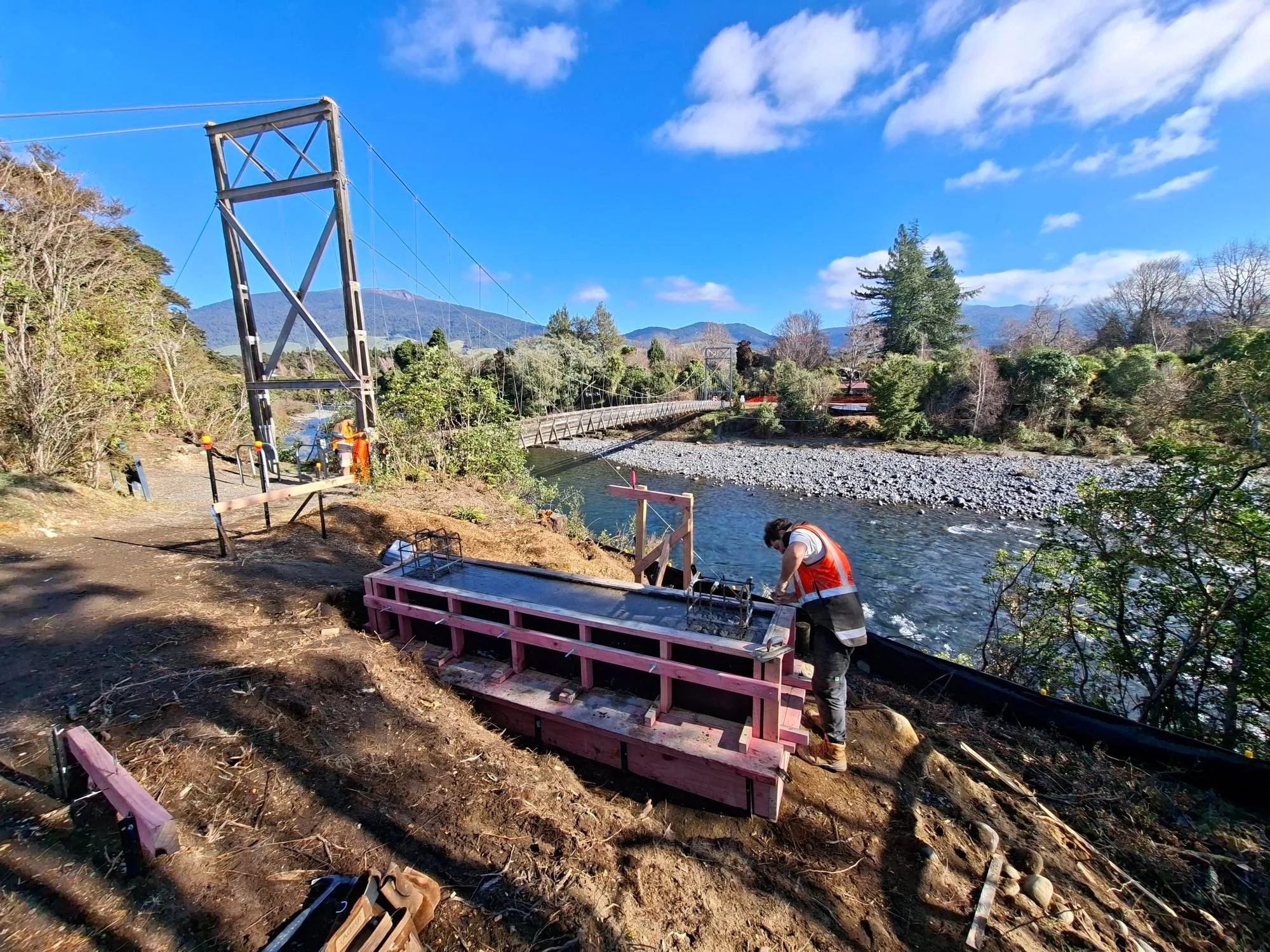
A new suspension bridge over the Tongariro River is taking shape with almost 70 tonnes of concrete poured and towers set to be erected.
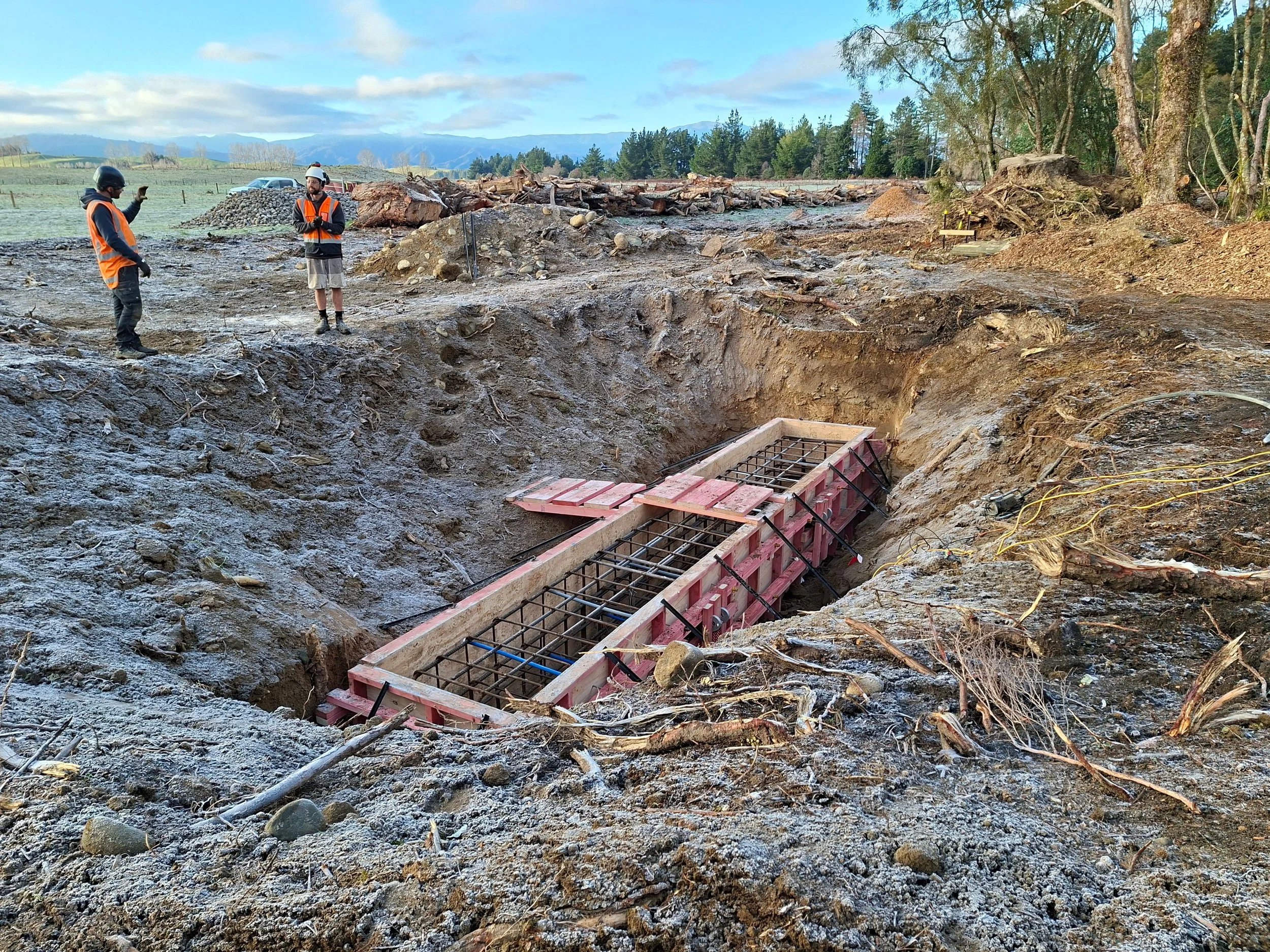
The replacement for the almost-70-year-old Major Jones Bridge has reached a key stage with foundations poured for the towers at either side of the river and 25-tonne ‘deadman’ weights in place.
A ‘deadman’ is a heavy weight, in this case concrete, that acts as a buried anchor for a bridge.
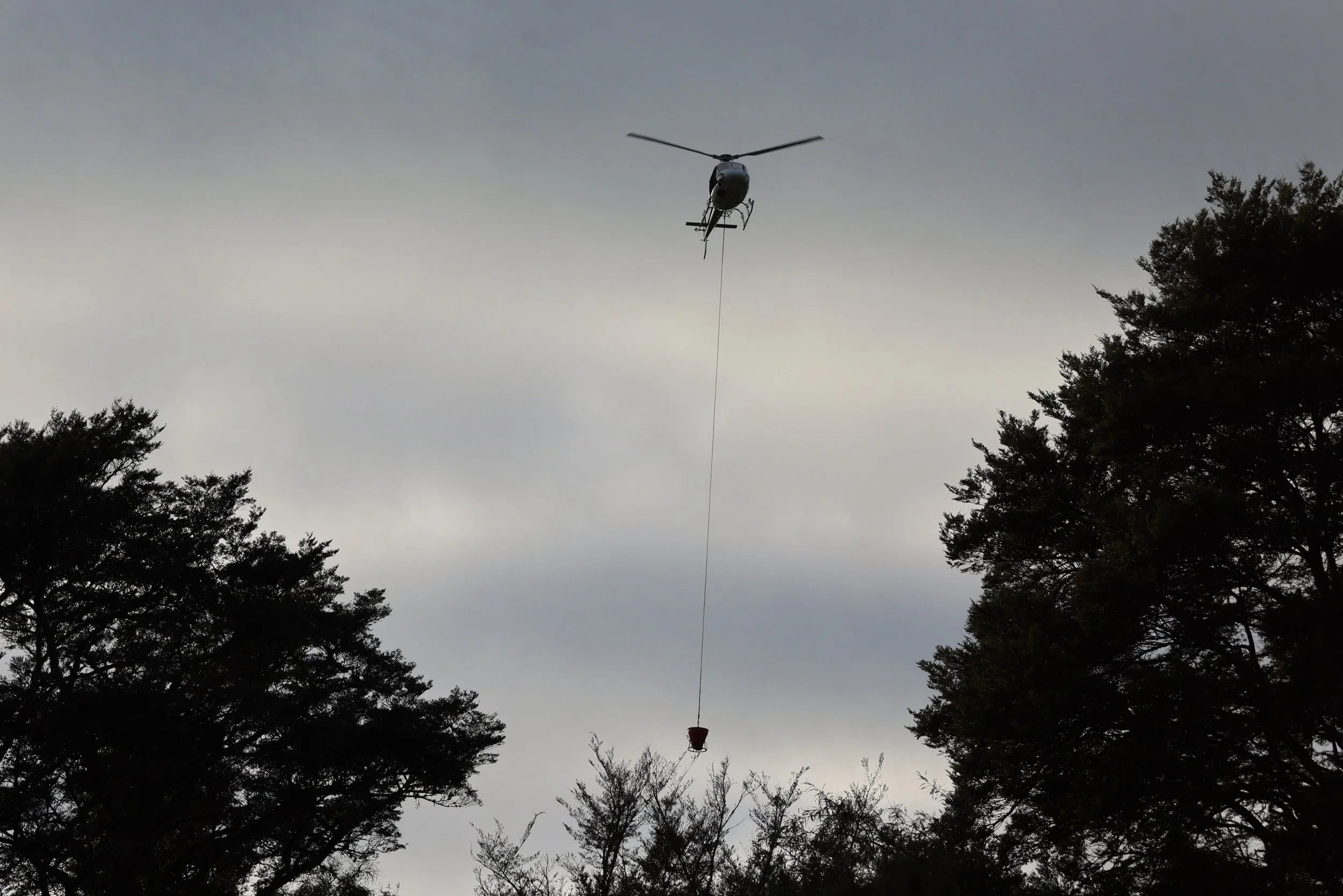
Unable to safely move a concrete truck across paddocks, half the concrete was delivered by helicopter, giving anglers and walkers an unusual backdrop for their morning naturing.
Department of Conservation project manager Wayne Boness says paddocks on the northern side of the river are too wet at this time of the year to safely drive concrete trucks over, so they had to use helicopters.
Once the towers have been erected, the main cables can be strung across the river but first they must wait for the concrete to fully cure so it reaches maximum strength.
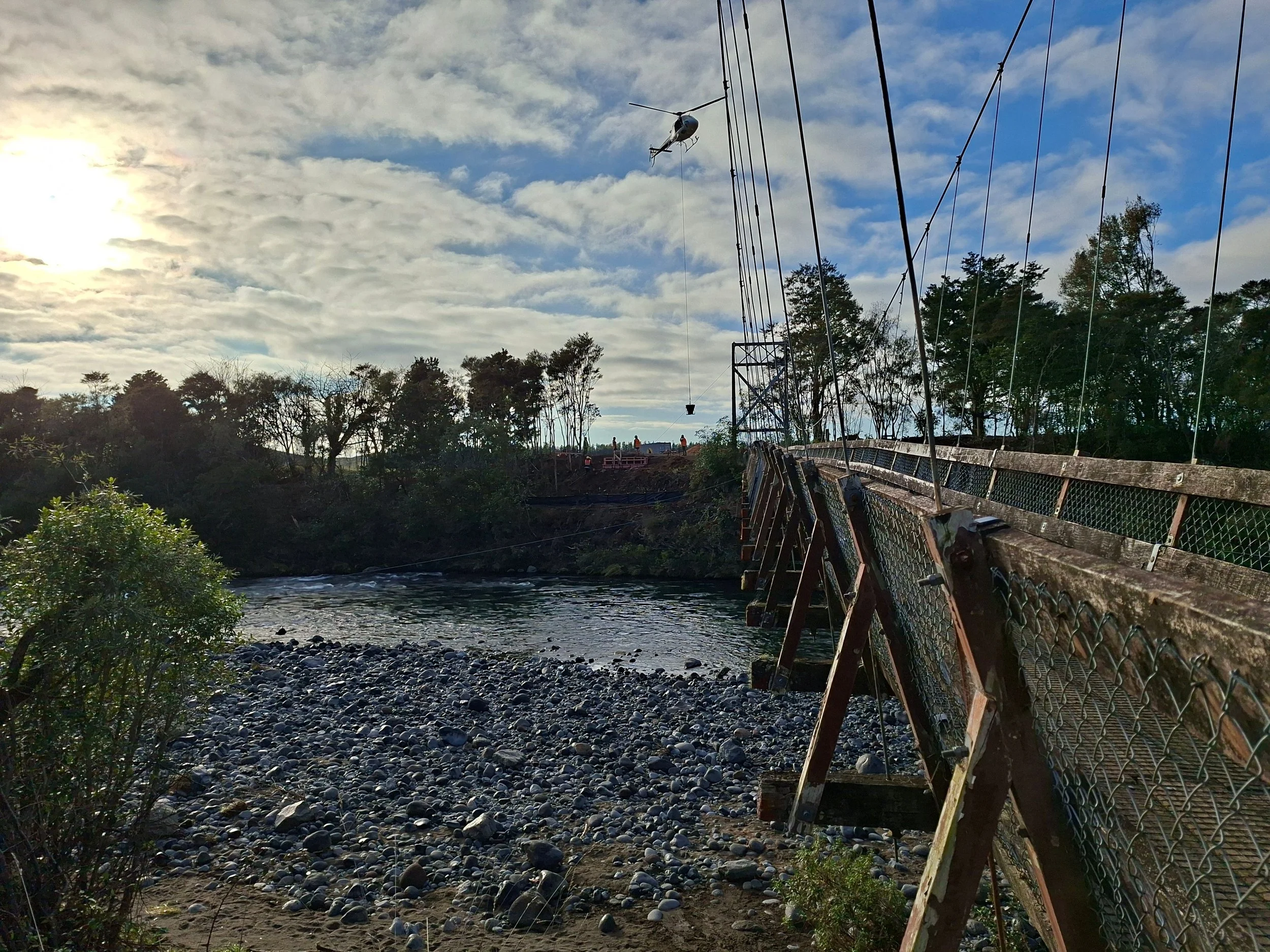
Concrete delivery for the ‘deadman’ securing the new Tongariro River suspension bridge. Photos: Department of Conservation
“Deadmen are basically what holds the bridge up and supports the cables, so we want to be 100% sure they will not budge. The name is a bit funny, but I guess we lay a ‘deadman’ so we don’t have dead men.”
Once the cables are strung between the towers, work can begin on building the bridge in sections.
The existing suspension bridge has reached the end of its life and DOC has been working with Ngāti Tūrangitukua and the Tūwharetoa Māori Trust Board to ensure the replacement is fit for the popular Tongariro River Trail.
Wayne says the trail is a favourite of locals and visitors, and passers-by are very interested in the construction process.
“It’s a good excuse to get out during the winter, come see the progress that’s been made and enjoy some nature while you’re at it.”
Visitors are asked to follow signage and instructions from the crew on site to keep safe.
The bridge has been funded by the International Visitor Levy, where visitors from overseas contribute to caring for New Zealand’s natural environment and visitor experiences. The new bridge is on track to be open by October 2026.