Taupō’s Garden of Eden
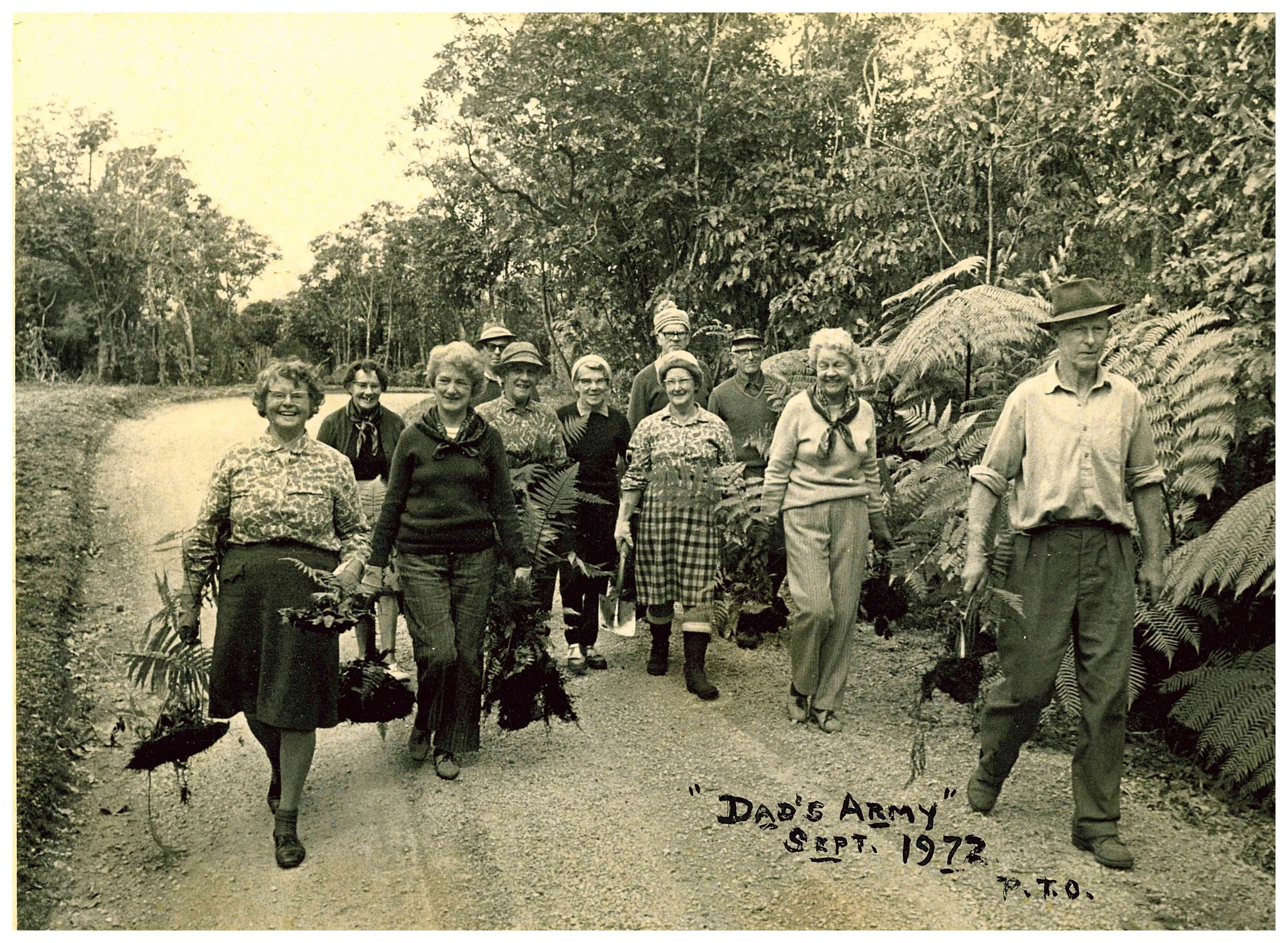
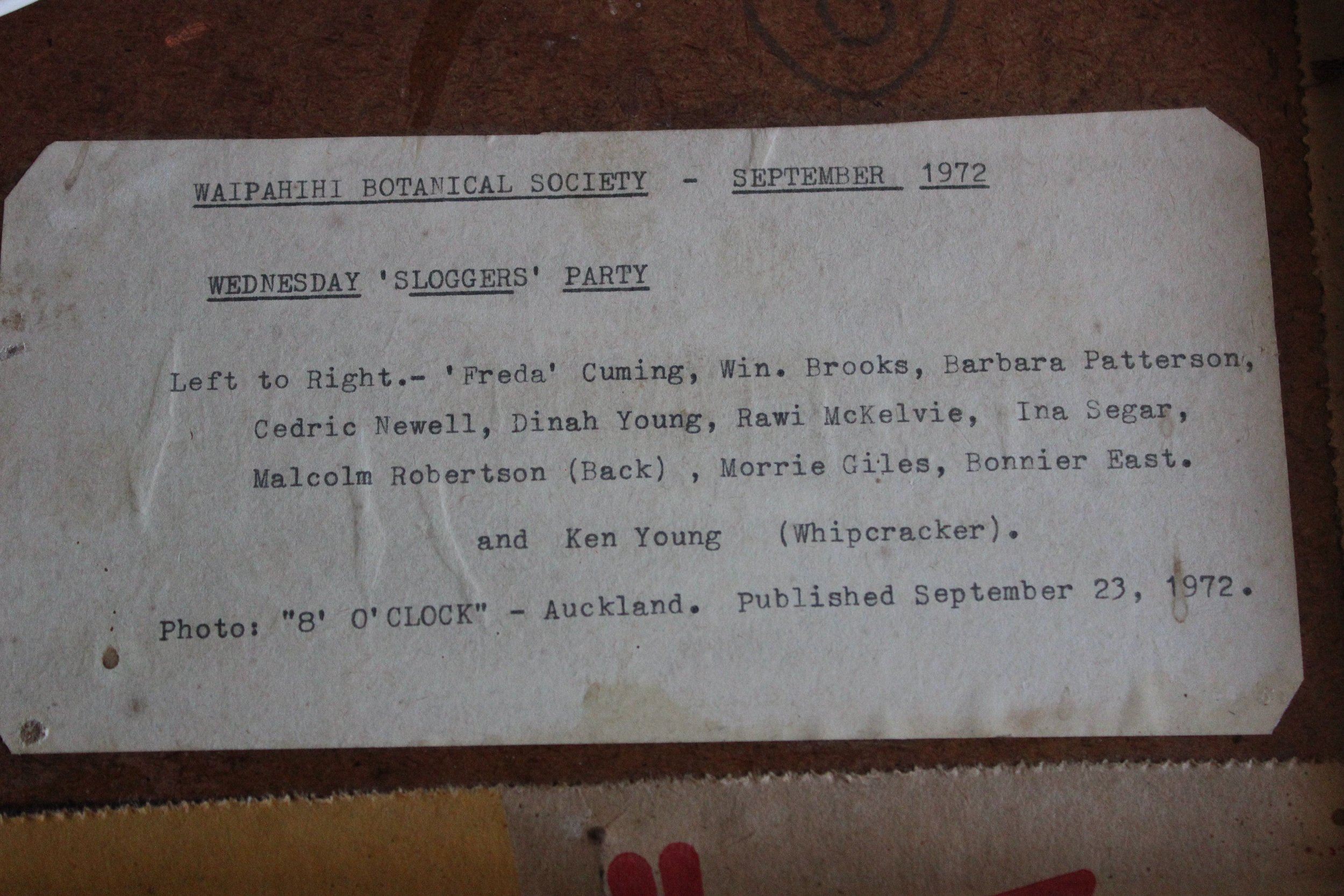
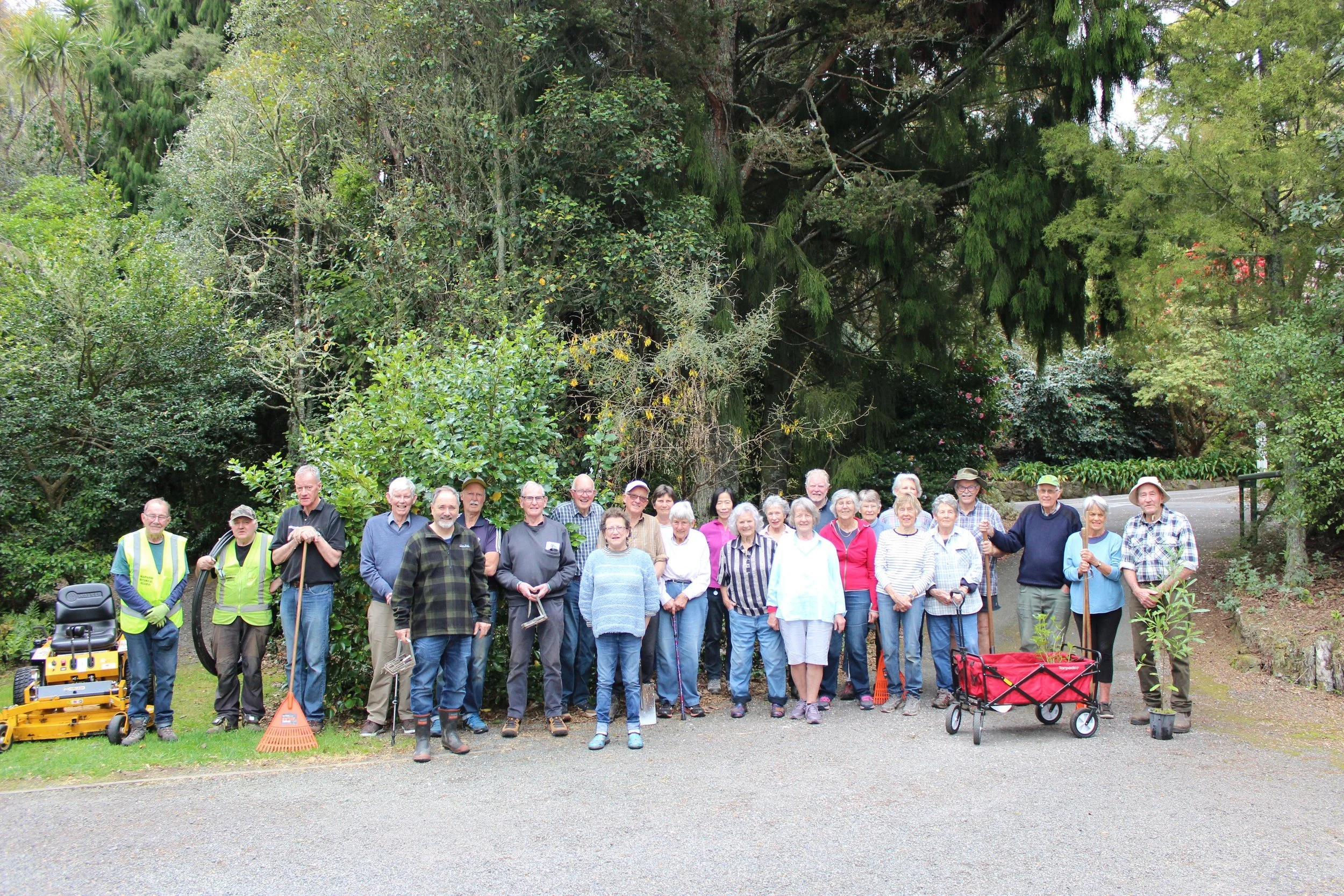
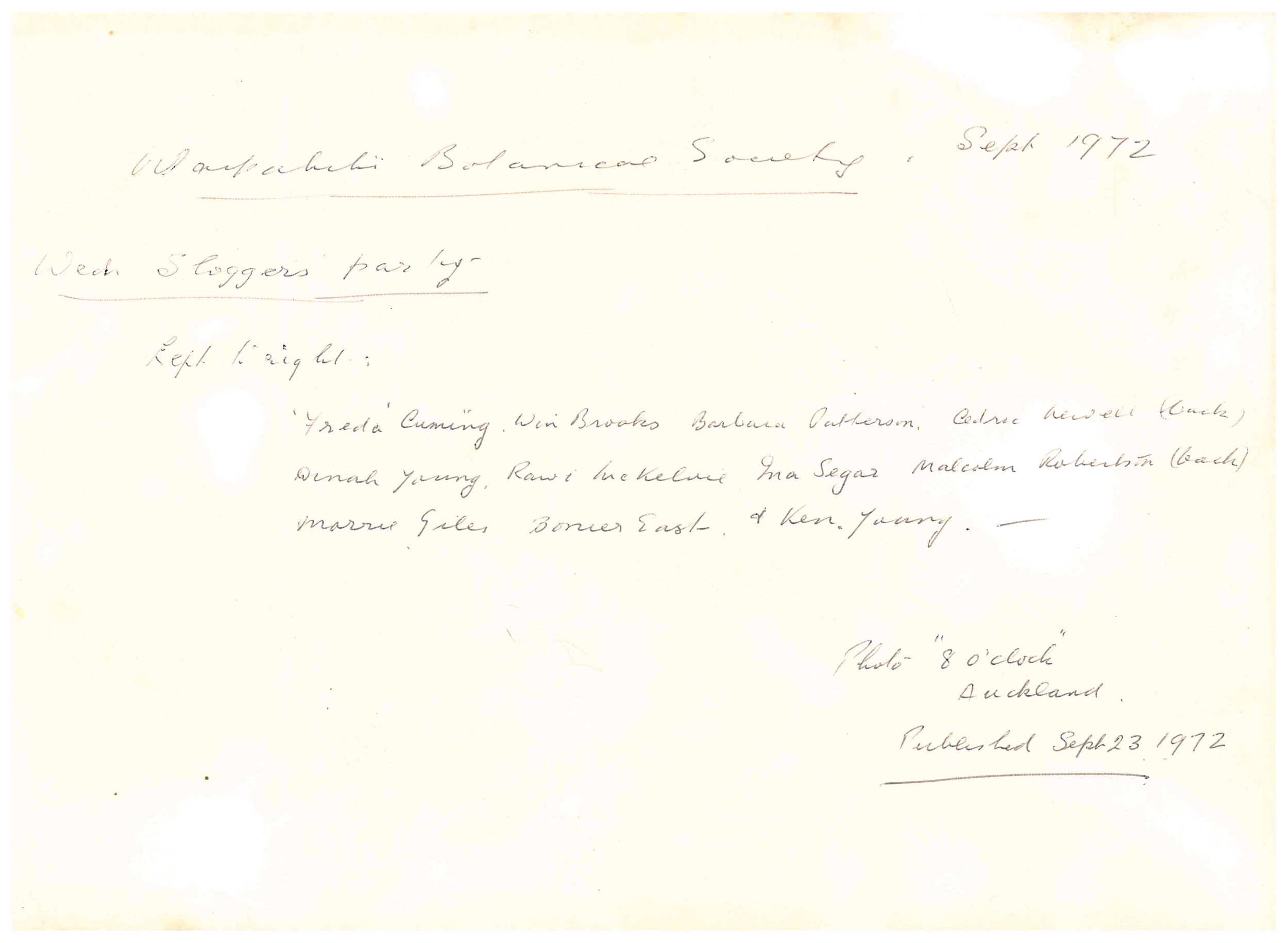
Then and now - September 1972
What began as unwanted, scrub-covered farmland on the outskirts of Taupō is now one of its most cherished green spaces.
By Dan Hutchinson
The Waipahihi Botanical Gardens is marking its 60th anniversary this year, thanks to the efforts of countless volunteers over the years and a founding vision that was ahead of its time.
The Waipahihi Botanical Garden Society was established in 1966 under the oversight of the Department of Lands and Survey.
Society chairman Graeme Robinson says by the end of 1967, about 2,000 rimu, kahikatea, tōtara, miro, beech, kauri, and rhododendrons had been planted, which was a major undertaking for a volunteer-led group working with limited resources.
Support came from the Forest Research Institute in Rotorua, which supplied about 2,500 canopy species.
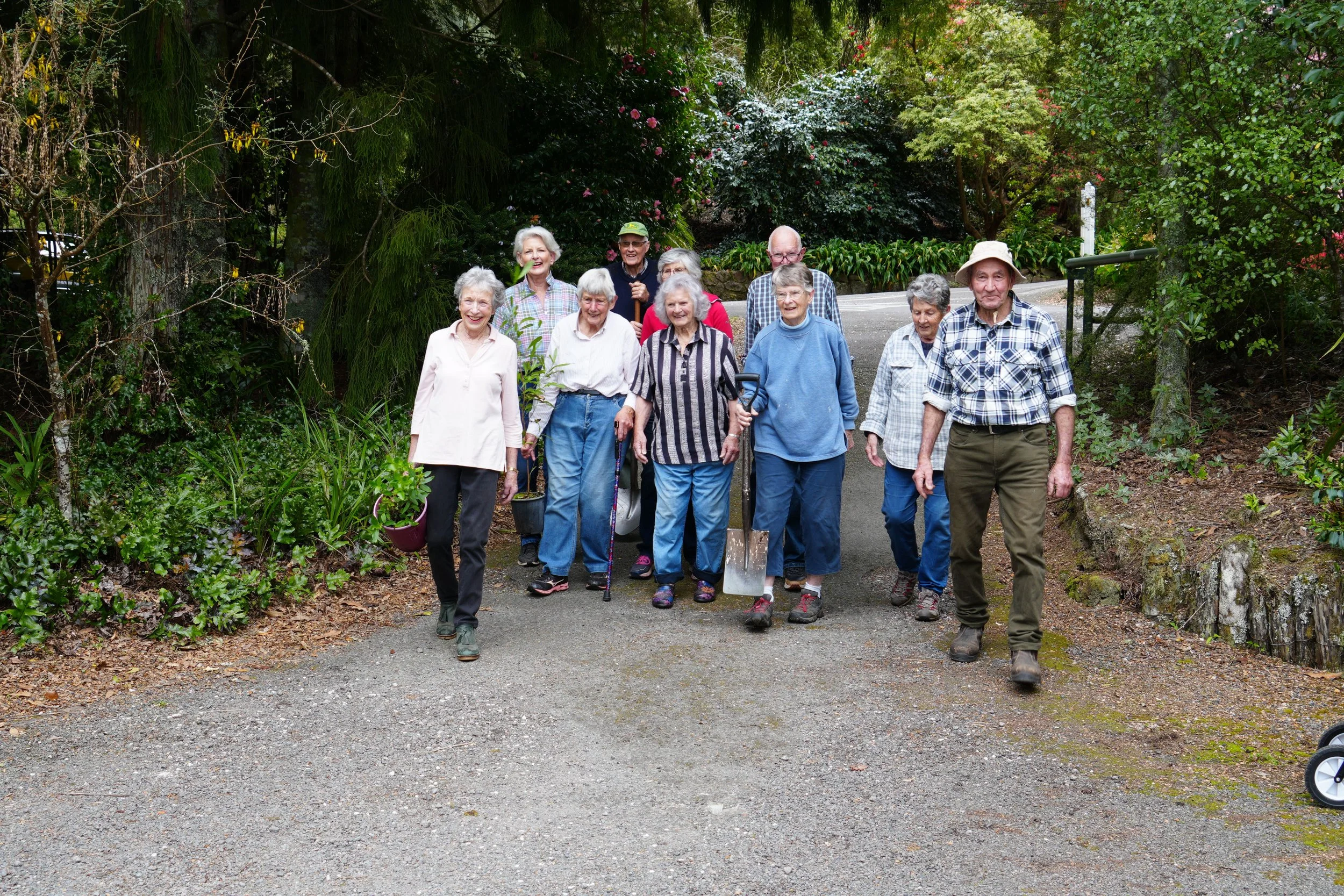
Then and now – today’s Waipahihi Botanical Garden Society members recreate a photo of the early pioneers. Today’s volunteers from left; Ginty McGuire, Madeleine Ridley, Molly Lymburn, Murray Hutton, Mary King (at the back), Jenny Bishop, Bob Tinworth, Lorna Chinn, Johanna Tamarua and Graeme Robinson.
"Conservation planting was in the minds of people then, It's the big thing now … conservation, restoration, all that kind of thing. Well, these guys were doing it 60 years ago."
The gardens now operate as a native arboretum, with exotic plantings permitted alongside the native species, provided they don’t dominate.
Graeme says the relationship between the two is mutually beneficial.
"The native trees enhance the exotic plantings that have been laid alongside them, and the native forest is enhanced by the exotic plantings that are in here."
Among the gardens' most notable features is the Richard Clare Collection — approximately 700 individual camellias, believed to be one of the largest such collections in New Zealand.
For five years, Graeme and his wife photographed every plant in the collection as it flowered, restoring the name plaques of more than 90% of the specimens and building a comprehensive database.
Visitors can now access the full collection via a QR code at the entrance to the camellia area, pulling up each plant by name and number on their phone.
"Somebody on the other side of the world can do the same thing, which I think is pretty cool."
The gardens are managed under the supervision of the Department of Conservation and run entirely by volunteers.
Around 80 society members are involved, with the core volunteer programme centred on Thursday working bees — a two-hour session followed by a cup of tea and a debrief in the clubrooms.
A second group, the Tuesday Night Volunteers, meets from 5-6pm and is designed to accommodate people who are working.
"You can tell by the noise in here at those smokos that they're enjoying themselves," Robinson says of the Thursday gatherings.
The Society also maintains a small on-site nursery for propagating seedlings to fill gaps in the plantings and runs a pest control programme with 200 traps across the reserve.
Three regular trappers manage the traps, targeting rats, mice, ferrets, and possums. Over about 10 years of trapping, more than 2,000 pests have been recorded.
The gardens have not been without their challenges. Cyclone Gabrielle caused damage to several large beech trees, uprooting about half a dozen of them.
Rather than simply clearing the debris, the Society turned the stumps into a feature — the Stumpery — inspired by a similar garden at King Charles's estate.
Ferns now grow among the stumps, supported by an irrigation system, and a tōtara planted to mark the King's coronation sits prominently beside the road nearby.
Another challenge came from an unexpected direction: the Taupō Airport. The Society was warned that hilltop trees in the reserve were encroaching on airspace and would need to be topped.
After consulting with the Civil Aviation Authority and Air New Zealand pilots — who noted that modern aircraft fly on electronic flight paths and would not go near the trees — a council representative took the case to the CAA in Wellington and secured a dispensation.
"It sounds horrendous, it was horrendous," Graeme says of the prospect of having to remove trees and flatten off the top of the hilltop canopy.
Looking ahead, Graeme is concerned at ongoing residential development on the gardens' eastern boundary.
Houses in a previous round of development were built within 1.5 metres of the reserve boundary, with large canopy trees just two or three metres away on the other side, potentially causing problems in future storms.
With further development planned under the council's East Urban Lands programme, Robinson intends to make a submission at an upcoming council meeting.
"I just want some finite response from the council about their intentions with the reserve, the boundary, and its reserve in the coming years, because the housing will be here before you know it."
The Society's financial model relies on a combination of public donations, grants, membership fees, and returns from an endowment trust held with Craig Investments.
Donation boxes at the gardens provide some income, though Graeme acknowledges that fewer people carry cash than they once did.
Larger capital needs — such as a tractor replacement — would require a grant application.
Generous in-kind contributions also play a role. A local contractor recently delivered a 10-tonne load of topsoil, and a retired ship's engineer has installed a comprehensive electronic irrigation system throughout the gardens, work Graeme estimates would cost tens of thousands of dollars if contracted out.
"His wife came up to me and said, 'Thank God he's found you people.'"
Graeme says the gardens are a great way for retired people to continue using their skills and are also popular with school groups doing conservation projects.
The gardens are open to pedestrian traffic at all hours, with vehicle access closed at dusk each evening. A security firm unlocks the gate at 6am, and the society handles the evening lockup, clearing donation boxes and securing the public toilets.
Annual events include Music in the Reserve, held in the first week of March, which draws performers from across the community — from the Taupō Concert Band to Japanese taiko drummers and Filipino cultural groups.
As for the next 60 years, Robinson is straightforward about his expectations.
"I say to my volunteers, what you do today … somebody's going to thank you for it in 50 years' time. I expect these gardens to be here in a hundred years' time."