
Slow burn for big idea
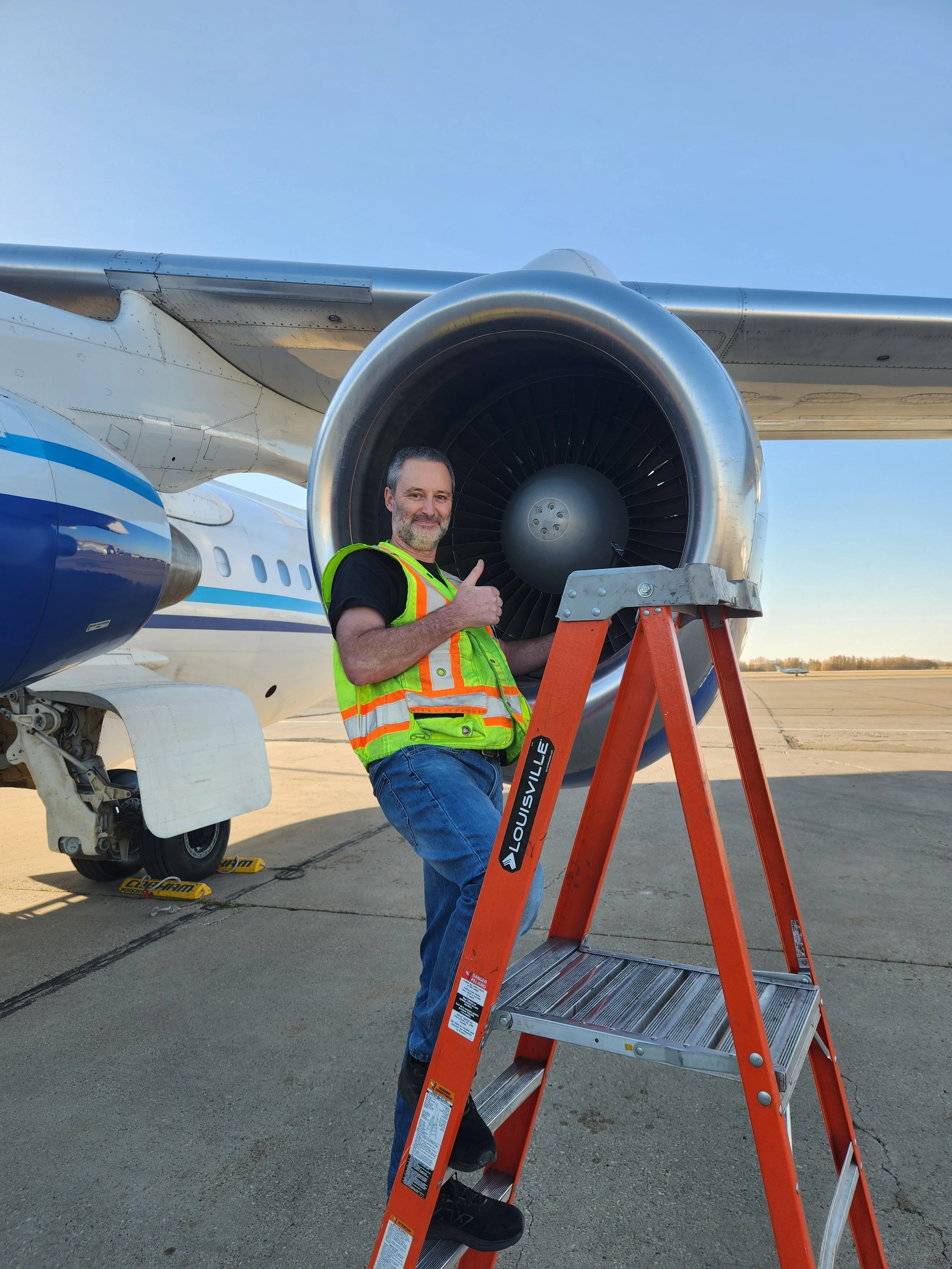
Andy Scrivener tests the device on four-engine jet in Canada.
A Taupō entrepreneur is hopeful an aviation breakthrough will slash fuel consumption by 30%.
Andy Scrivener says his brother's propeller and fan blade modification technology has attracted interest from NASA and major airlines, with certification expected in the second quarter of 2026.
Andy believes the technology could reduce fuel consumption by up to 30% across commercial aircraft worldwide.
Andy, who owns Chef's Complements with his wife, has been working with his half-brother Peter Ireland to develop a small modification for aircraft propellers and jet engine fan blades designed to dramatically improve efficiency.
The technology, developed through their company deltaBurn, involves attaching a device roughly 30cm long to the trailing edge of propeller blades and a 10cm version for jet engine fan blades.
He says the modification eliminates shock waves that naturally occur on all transonic propellers and fan blades, by creating a vortex effect that increases thrust while reducing fuel consumption.
"For every tonne of fuel that's burnt, it's 3.15 tonnes of carbon dioxide. If we can save 100 billion dollars of fuel a year, which we can, then what we can actually take out of the atmosphere is nearly 300 million tonnes of CO2 a year on a fully saturated market."
The brothers have been testing their technology on various aircraft since April 2024, including modifications to a Boeing 737 in Europe and an ATR turboprop in Canada. Andy says the 737 test achieved 30.3% greater efficiency and the modification to the blades took just 38 minutes – one minute per blade.
"We tested on a jet engine test cell in the UK with a Rolls Royce jet engine designer as a credible observer.
"In just one hour that it took me to modify this jet engine on the static test cell, we were producing over 12% more thrust."
The technology has attracted attention from major industry players. Andy says NASA officials described their innovation as "the biggest propulsion change, efficiency change in the history of flight," during discussions in December 2024.
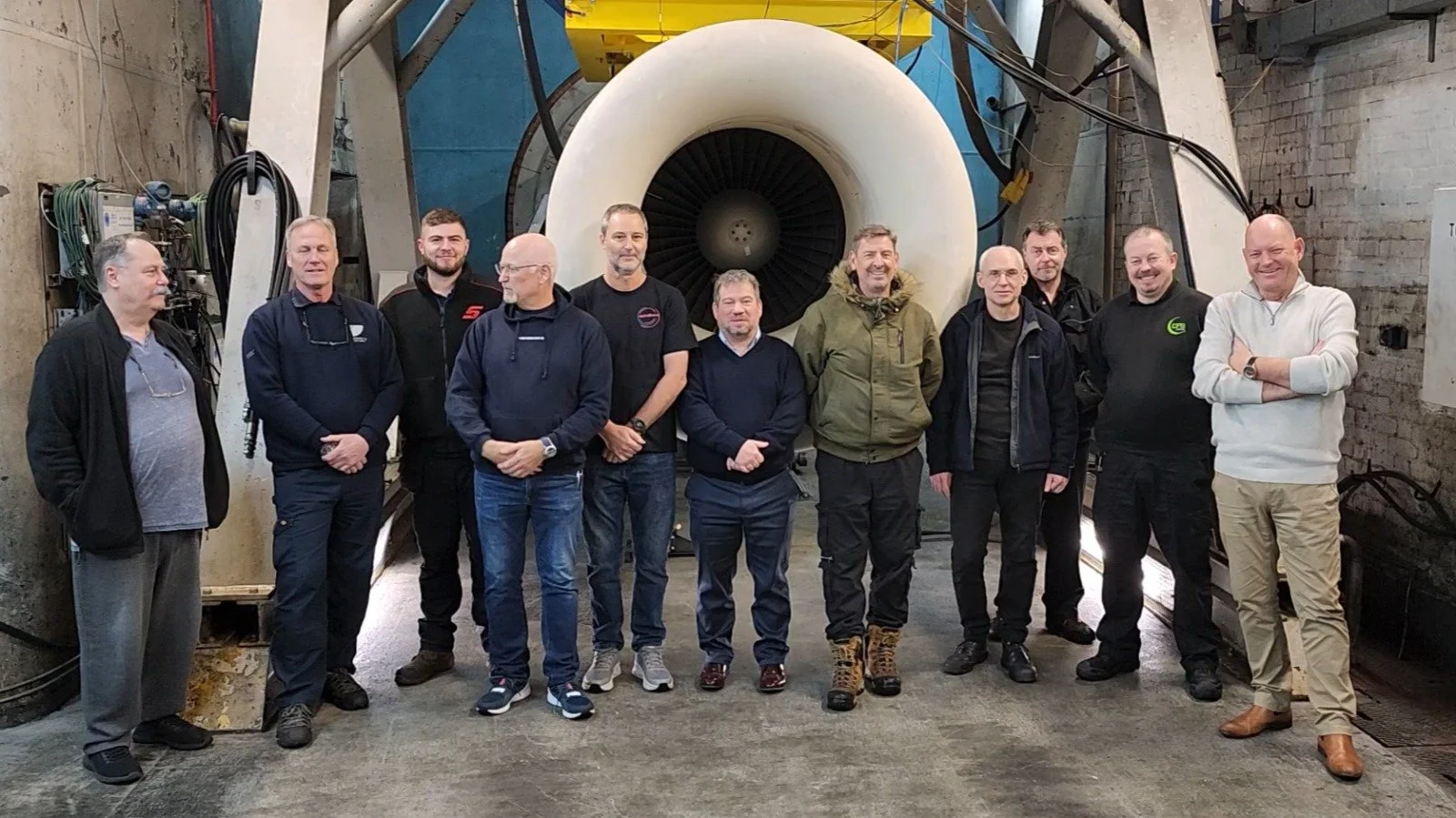
The team involved in testing an LF507 engine in England last February.
They are due to meet again soon with senior management at NASA.
United Airlines representatives spent a day with the company in August 2025, with their test pilots and FAA certification pilots reviewing the technology. According to Scrivener, they confirmed it was "absolutely 100% certifiable" but wanted to purchase half the company rather than provide aircraft for testing.
The modification works by creating what Scrivener describes as a "Prandtl Meyer expansion fan," a physics principle discovered in 1908 that increases air velocity by up to 2.5 times as it flows over an edge.
"Every propeller in history has got a shock wave on it. We put a little device here, and it creates a vortex that pulls the shock right off the back."
Peter Ireland, a former New Zealand and Australian Air Force pilot who later flew for Qantas, discovered the effect in 1988. He has since tested the technology on nearly 100 aircraft with consistent results.
The company has submitted three parts of their Supplemental Type Certificate application to the Federal Aviation Administration and expects certification in the next few months. The certification process requires extensive testing including emissions, noise, vibration and performance analysis.
"We had to submit a 197-page document just on how we're going to test for this.
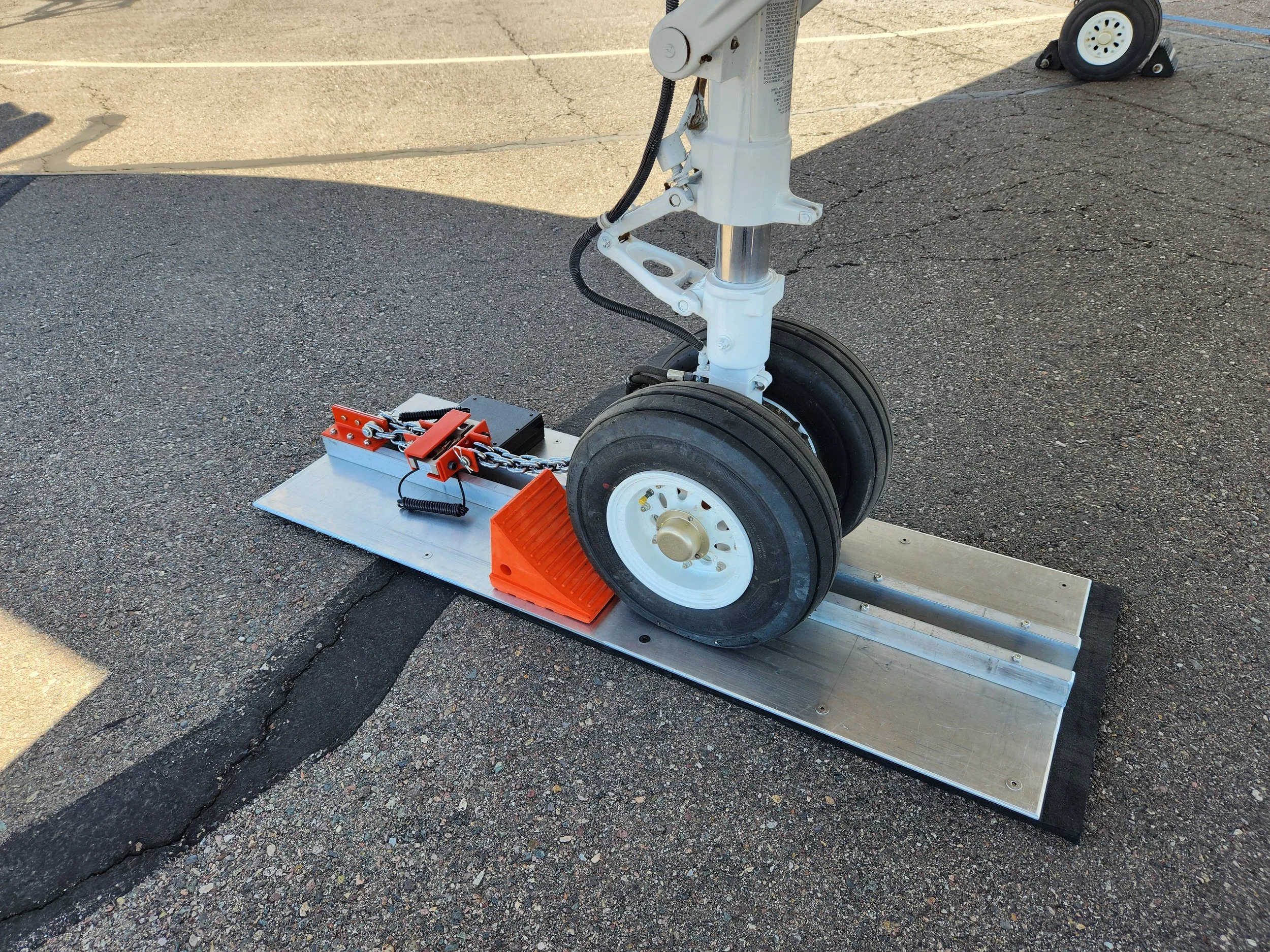
DeltaBurn’s patent-pending thrust measuring device.
"Once we're certified, the FAA becomes our insurance policy."
Testing has shown the modification not only improves fuel efficiency but also reduces engine wear.
Scrivener believes maintenance costs could drop by more than one-third because engines operate at lower temperatures and reduced loads.
"The whole engine’s N1 spool runs at 20% less loads, so … is going to save as much in maintenance costs as they are in fuel costs."
The technology applies to both propeller aircraft and jet engines, with successful tests conducted on aircraft ranging from small Cessna 152s to large commercial jets. The company has also tested the principle on wind turbines and their patent includes marine propellers.
Rather than charging upfront costs, the company plans to install modifications at no initial expense and take a percentage of the fuel savings achieved. This approach eliminates the need for airlines to calculate return on investment.
"If they use 20 tonnes of fuel and all of a sudden they use 16 tonnes, they've got the device on, so we know how much we're going to charge them for it."
The company operates internationally with offices in Singapore, the UK, and the United States, covering both military and civilian applications. They have established separate companies for different markets to handle certification requirements across various jurisdictions.
Despite the promising results, funding has been a challenge. Scrivener says he and his wife have largely self-funded the development over the past there years after unsuccessful attempts to secure investment from New Zealand banks and government agencies.
"I tried New Zealand banks, their green funds, to have it in New Zealand - up to $20 million. We approached Jacinda Ardern when she was Prime Minister, James Shaw when he was climate change minister."
The company estimates there are 29,000 commercial aircraft worldwide that could benefit from the technology. According to industry data, these aircraft consume about 100 billion gallons of fuel annually, costing airlines between $320-330 billion US dollars.
With certification expected within months, Andy believes the technology could begin commercial deployment in 2026, potentially transforming aviation efficiency on a global scale.
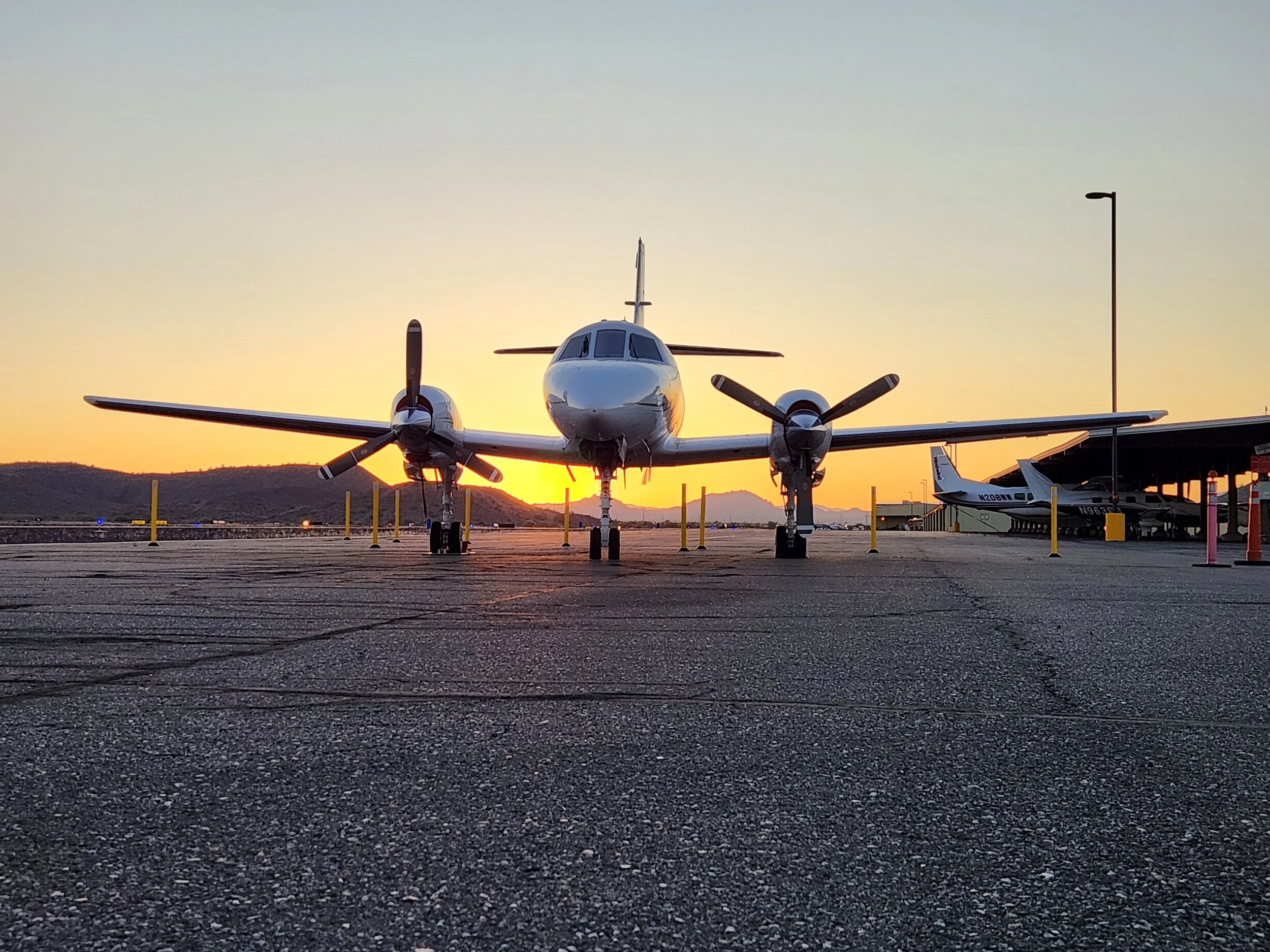
DeltaBurn’s Merlin3 aircraft undergoes FAA certification tests in Phoenix.