
Planting seeds of knowledge
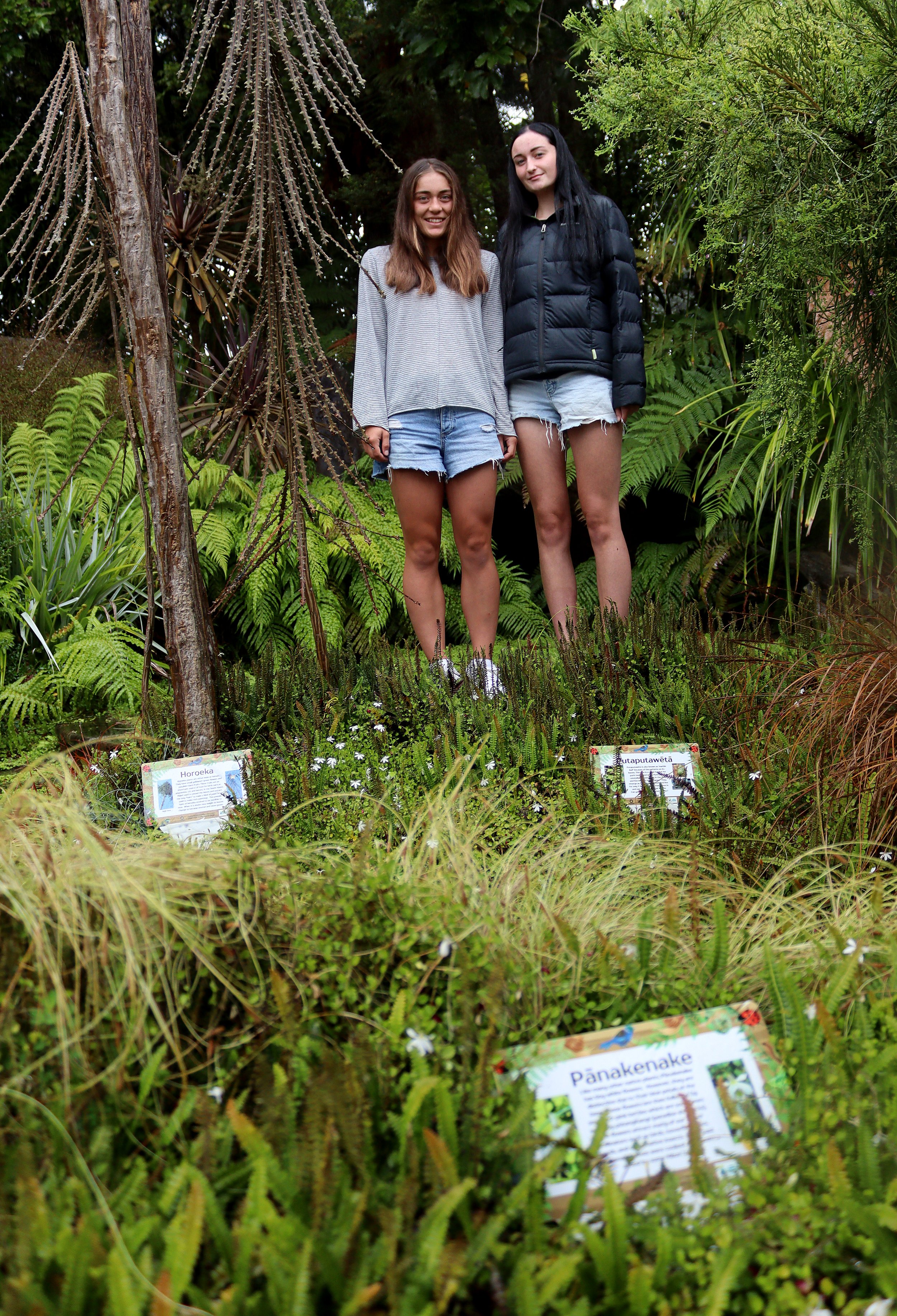
Pippi Hunter (L) AND Lizzie Hamilton with some of the signs they made for the Te Ngahere nature walk at Taupō Museum. Photo: Dan Hutchinson
Taupō is producing a generation of young people with a huge understanding of the ecology they live in, and ground-breaking education is starting to be picked up in other regions.
By Dan Hutchinson
One of the most notable projects is Kids Greening Taupō, which comes under the wider umbrella of Project Tongariro.
Project Tongariro or The Tongariro Natural History Society was born out of tragedy following the deaths of five people (four Department of Conservation staff and a pilot) in a helicopter accident on Mt Ruapehu, 1982.
Kids Greening Taupō was launched as a pilot programme in 2015, in a joint venture with DOC, and has grown to become a major success story, not only locally but further afield.
It has reached thousands of students across 47 schools in the Taupō District in the past year alone, providing free environmental education that covers everything from native species identification to preventing invasive clams from entering Lake Taupo.
The programme's educator, Rachel Thompson says to get future environmental leaders, people need to connect with nature when they're children.
"If they don't connect with nature when they're young, they're not going to grow into adults who care about nature.
"We really pride ourselves on making everything that we can free for the community.”
The programme's educational resources, many translated into Te Reo Māori, are available online and used by schools throughout New Zealand. The website received 54,000 hits last year.
Along with partner organisation Greening Taupō, the team planted more than 30,000 trees last year.
Thompson says the difference in environmental knowledge between Taupō students and those from other regions became apparent when a South Auckland school visited on a camp.
"We thought, gosh, we just take it for granted when we talk to kids in Taupō and they will know what kauri are and what tui are.
"It was really surprising to work with these intermediate age kids who had no idea about native species or introduced species."
An example of the impact of Kids Greening Taupō is two high school students who have grown up with the programme Lizzie Hamilton and Pippi Hunter, who are now members of Kids Greening Taupō's senior student leadership team.
The pair have created 15 educational signs describing native plants in Te Ngahere nature walk at Taupō Museum, completing a year-long project that helps visitors identify and learn about New Zealand's indigenous flora.
They researched and designed the signs after surveying the museum's native garden to catalogue its plants.
The signs highlight medicinal properties, wildlife connections and cultural significance of species like kawakawa, horopito and pohuehue.
"A lot of them are rongoā plants, which are healing plants," Hamilton says.
"They've got medicinal, therapeutic benefits."
The students used the online programme Canva to design the signs, which were fact-checked by an ecologist before installation.
The project evolved from earlier bug-focused signage into a permanent educational resource.
"I think New Zealanders aren't aware of that," says Rachel Thompson, lead coordinator of Kids Greening Taupō, referring to how native plants host specific insects. "If we lose that plant, we don't have that bug."
The signs were displayed throughout summer as part of the library's bush-themed reading programme. Programmes and events coordinator Jeffrey Addison says the initiative connects library visitors with hands-on conservation education.
Hamilton and Hunter have been involved with Kids Greening Taupō for four and five years respectively, participating in planting days, predator control and bush skills training.
Jeffrey Addison, programmes and events coordinator at the museum says many of the plants featured play a critical role in New Zealand's ecosystem.
There are ecological and medicinal benefits of native plants, with many featured species being rongoā plants that have therapeutic properties, including kawakawa and horopito.
"A lot of them are also rongoā plants, which are healing plants. They've got medicinal, therapeutic benefits," Addison says.
Rachel says native plants serve as host species for specific insects.
"Just like we all know about monarch butterflies and eating swan plants, a lot of our native plants are the host plant for a specific bug.
"So, if we lose that plant, we don't have that bug."
The display has been part of the museum's summer reading programme, which focused on forest conservation.
The signs were designed to last for years with UV-resistant materials provided by local sponsor Sign On.