
A feast of history and nature
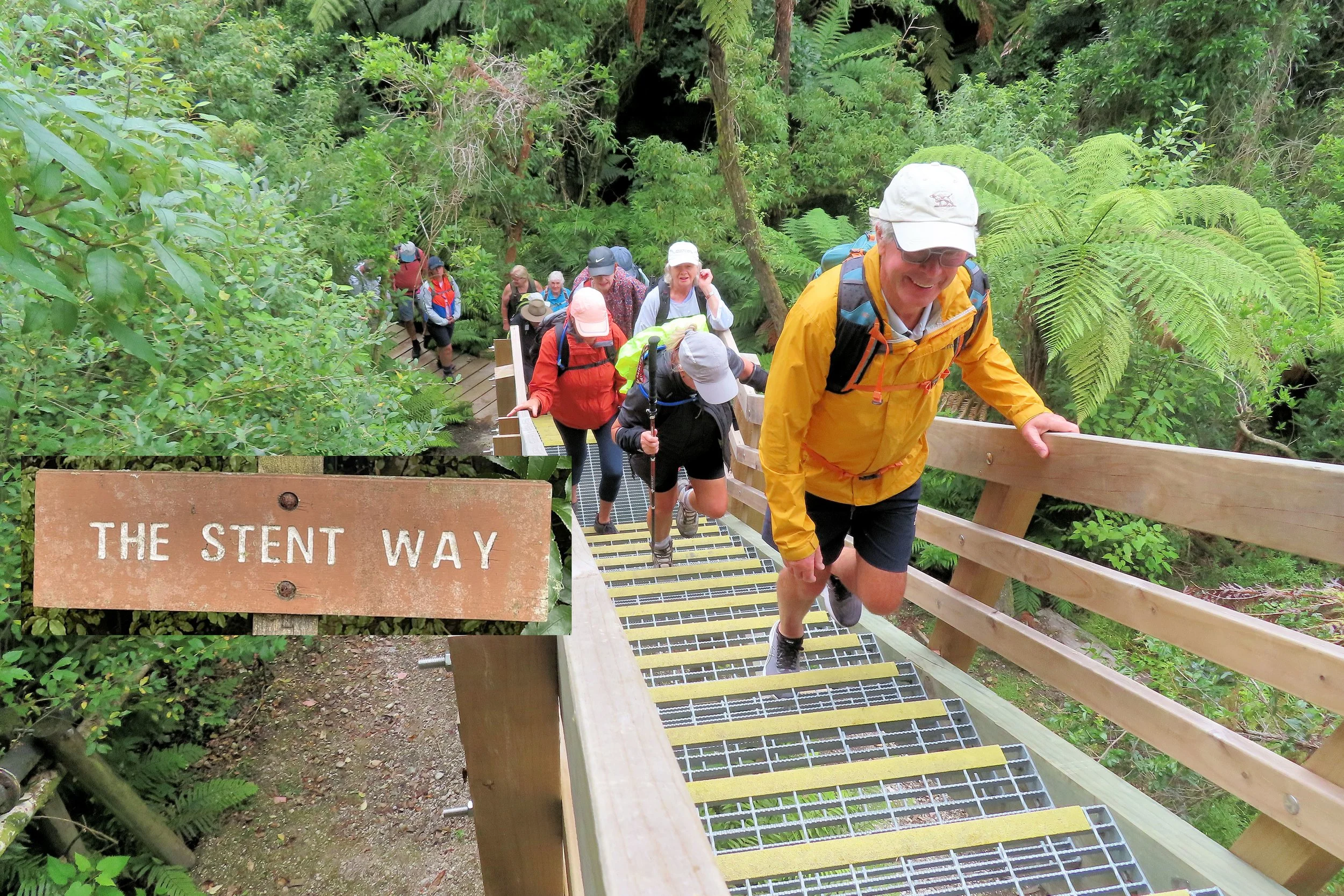
One section aptly named The Stent Way, has 91 steps.
Today [February 2] was our first group walk after the holiday break, and we had a happy day reconnecting with one another.
The anticipated delays at the Motuoapa roadworks did not eventuate as the ‘lollipop’ controllers had us through in minutes and we were soon on the shores of the southwestern settlement of Pūkawa.
Misty rain clouded our lakeview but didn’t dampen our spirits. Boots laced and packs on, we walked through the quiet streets to Stent Way and into the peaceful regenerating bush.
We tackled the impressive metal stairway with aplomb, or in truth with a little groaning, and were soon enjoying views from Lary’s Lookout across the water.
We made a short diversion to see the 10 huge water supply tanks hidden away in the trees, skimmed past a small waterfall, admired the beauty and fragility of a giant dragonfly and soon reached the road from where we returned on an alternate route to the lakeside.
The Pukawa Wildlife Management Trust which was established in 2007 manages hundreds of traps and bait stations with the avowed aim of increasing indigenous flora and fauna in the area.
We met a trapper who said that over the last year, 15 feral cats, amongst other pests had been caught.
Although now well known as a holiday spot, Pūkawa has an important role in New Zealand’s history.
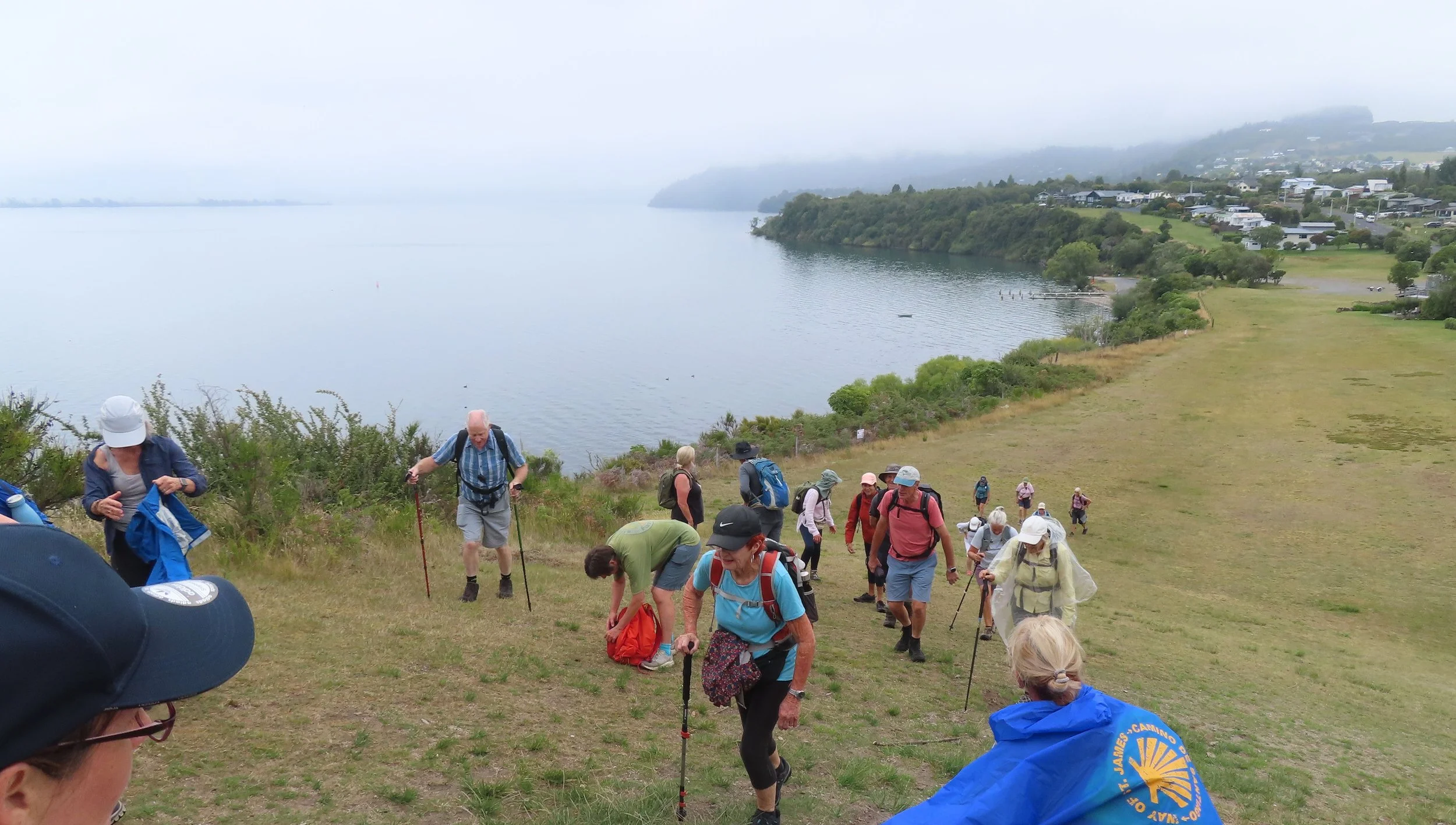
Step by step the walkers make it to the top.
In the mid 1850’s it was the site of meetings concerning Māori Kingitanga and where, in 1857, Pōtatau Te Wherowhero was selected as the first Māori King.
Pūkawa marae is home to Ngāti Manunui hapū and has a beautiful meeting house which opened in 2006.
A Christian Mission Station and missionaries were also based here in the 1850’s. In 1906 it was even proposed to build a railway line to transport timber from Pūkawa to Kakahi.
We joined another track which led to the settlements of Omori and Kuratau.
The bush here is also regenerating from timber milling some 70 years ago. Thankfully some of the larger trees survived the cull and tōtara, mataī, miro and rimū were seen and helpfully labelled and described.
Kererū, tūī and korimako were heard singing over our noisy chatter. On one decaying trunk there were green cup fungi, fairy inkcap and a white gilled fungi all in discrete colonies.
Off the bridge over the Omori stream one quick sighted walker spotted a trout.
The fish are known to spawn here in the winter. Stairs of various degrees of steepness led us up and down to the foreshore and on one occasion we looked up and saw two steel silhouettes of soldiers, one a bugler and the other standing in a Lest We Forget pose.
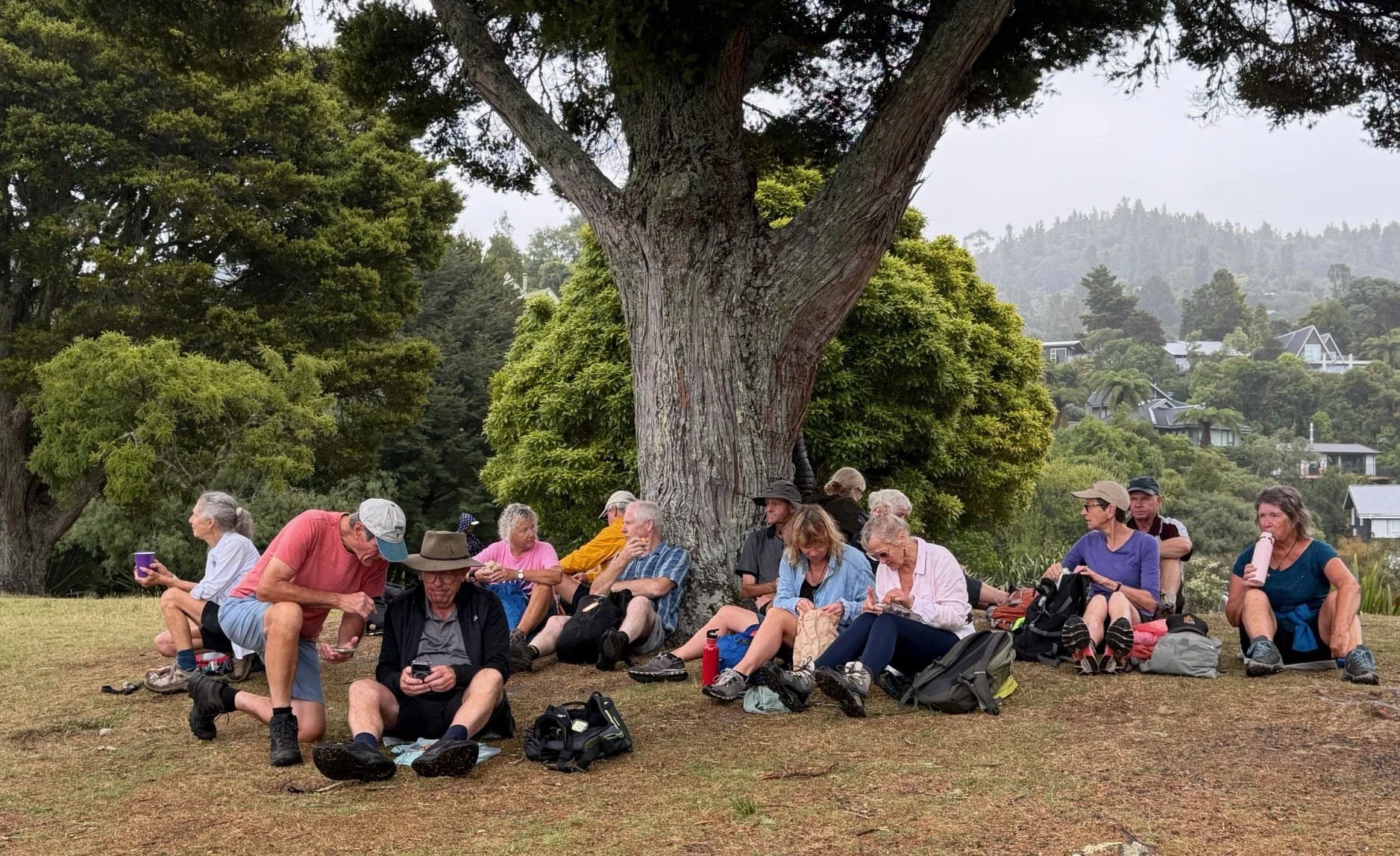
Trees with large drip lines came in useful.
We stopped near the Kurutau river mouth for lunch.
In the 1940’s Kurutau was a saw milling site but since the1960’s Kuratau has become more of a fishing and recreational centre.
Further upriver a dam was built in the 1950’s and a power station opened in 1962.
A school was built here in 1958 and the word Kurutau can be translated as ‘beautiful school’.
Once again, we used the road to access a track through bush and then followed the quietly flowing river.
Pīwakawaka beckoned us along the track, sometimes fluttering so close it felt as though they might land on us and then flittering away.
Cliffs on the other side of the river jutted directly and steeply out of the water with vegetation grimly clinging from small cracks in their surface.
Reeds clustered in quiet alcoves in the river.
Suddenly the track opened to a wide-open space with ginko, magnolias and spruce like trees.
From here we climbed up the many concrete stairs and rejoined the road and then the bush lined track back to Pūkawa.
A day to appreciate the work the communities have done to create the tracks, improve the habitat and to appreciate and value the company of others. Next week we have an out-of-town walk planned. If you would like information about our group search Taupo Monday Walkers Facebook or email walkersmondaytaupo@gmail.com