
A healthy obsession
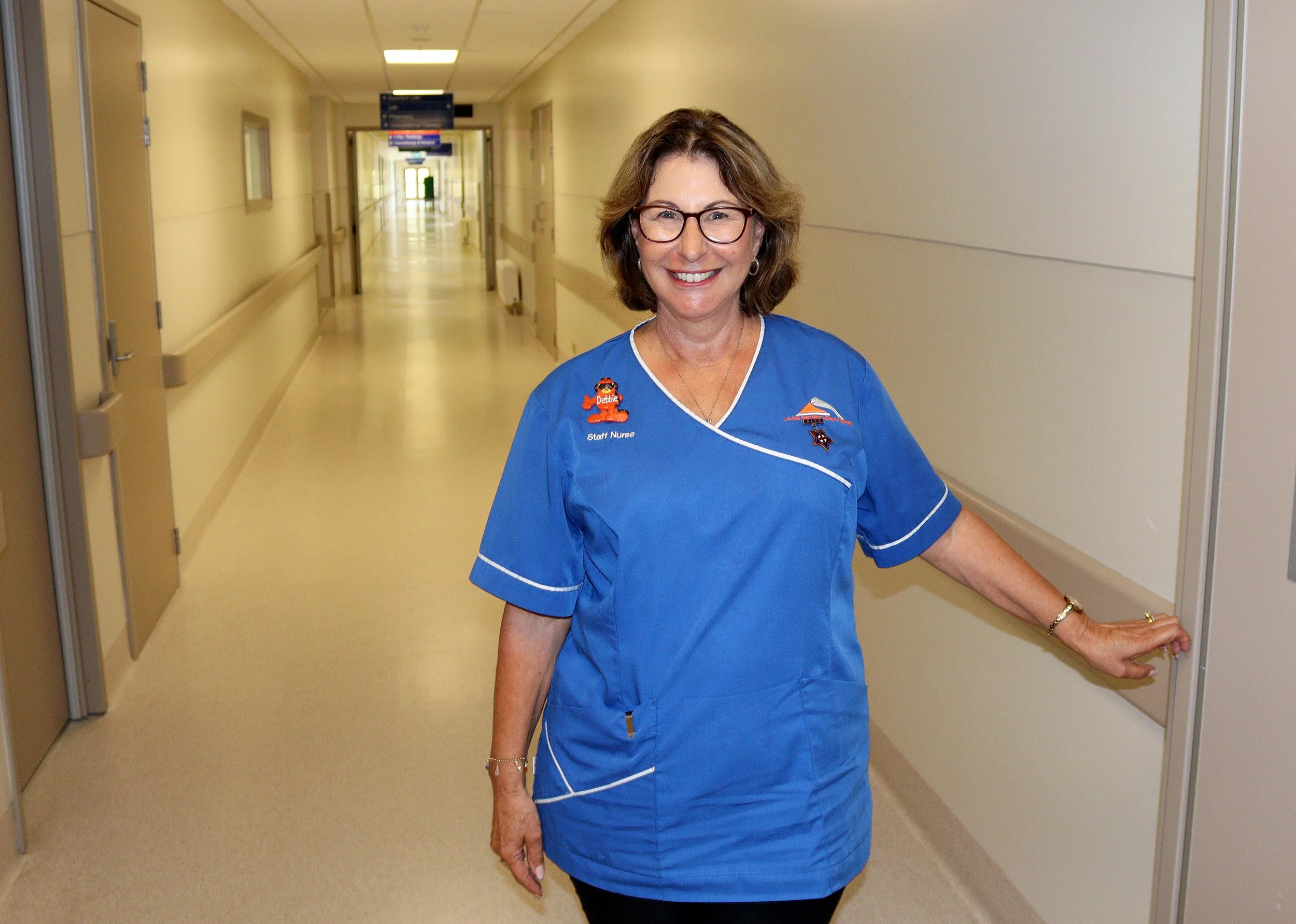
Debra Gretton has been walking the corridors of new Zealand hospitals for 50 years. PHOTO: DAN HUTCHINSON
When Debra Gretton started nursing 50 years ago, 65 was considered too old to go into the Intensive Care Unit and smoking in the wards was perfectly acceptable.
By Dan Hutchinson
She began her nursing career on February 9, 1976, at the age of 17 after asking her grandmother what she should do for a job.
Her career has spanned seven District Health Boards throughout the North Island and a range of specialist fields.
"I love the work and I feel like I have a lot to give. Fifty years of knowledge, you know, I really think I can benefit patients with what I've learned over the time.”
She is one of five generations of nurses in the family, including her great grandmother, grandmother, mother, and daughter-in-law who recently completed training.
After training in Whanganui for three and a half years, Gretton worked across multiple DHBs including Waikato, Lower Hutt, and Palmerston North before returning to Taupō nine years ago.
"I've worked in very small hospitals and really large hospitals. It's been a wonderful career.”
She has seen big changes in healthcare delivery over that time.
In the early days, patients stayed in hospital for about 10 days, and nurses had time to sit and chat with visitors.
"We did everything, we made beds. It was really lovely."
The health system has been through five major restructures during her career, from Regional Health Boards in the early 1980s to Area Health Boards, then Crown Health Enterprises in the 1990s, followed by DHBs and PHOs, and most recently Te Whatu Ora.
Working conditions and expectations have also changed over the decades.
When she started, those over 65 were considered too old to admit to the Intensive Care Unit and it was common for medical staff to smoke in the wards.
"Patients would ring the bell and say, oh, could you get me an ashtray? So, we'd get the paper towels and wet it and make it into an ashtray for them and they'd sit in their bed and smoke with the oxygen cylinder right behind them."
The workload has intensified significantly, particularly in district nursing, where she has spent the past 20 years.
The team of four to five district nurses covers Taupō, Tūrangi, and Kinloch.
"We get patients referred in and then we have to try and fit it in.
"People don't like it when you have to ring them and say, I'm sorry I can't see you today, I have no time.”
Debra works two days a week and can’t see that changing anytime soon.
"The people that you meet, of course, the majority of people are lovely. They're absolutely lovely and they're very grateful and you are meeting different people all the time."
She has worked in ICU, emergency departments, medical and surgical wards, and management roles. She ran an endoscopy unit for five years in Whanganui and has worked in outpatients, ophthalmology and ENT departments.
She has delivered 10 babies as an obstetric nurse.
The broad experience helps with district nursing and she is concerned that there is a tendency for nurses to specialise these days.
"I really do worry about that because there's so many of us of retirement age now leaving.”
“Having to ration care every day really gets, you know, as a nurse, it's the worst thing you could possibly have to do.”