
Youth health clinic expands
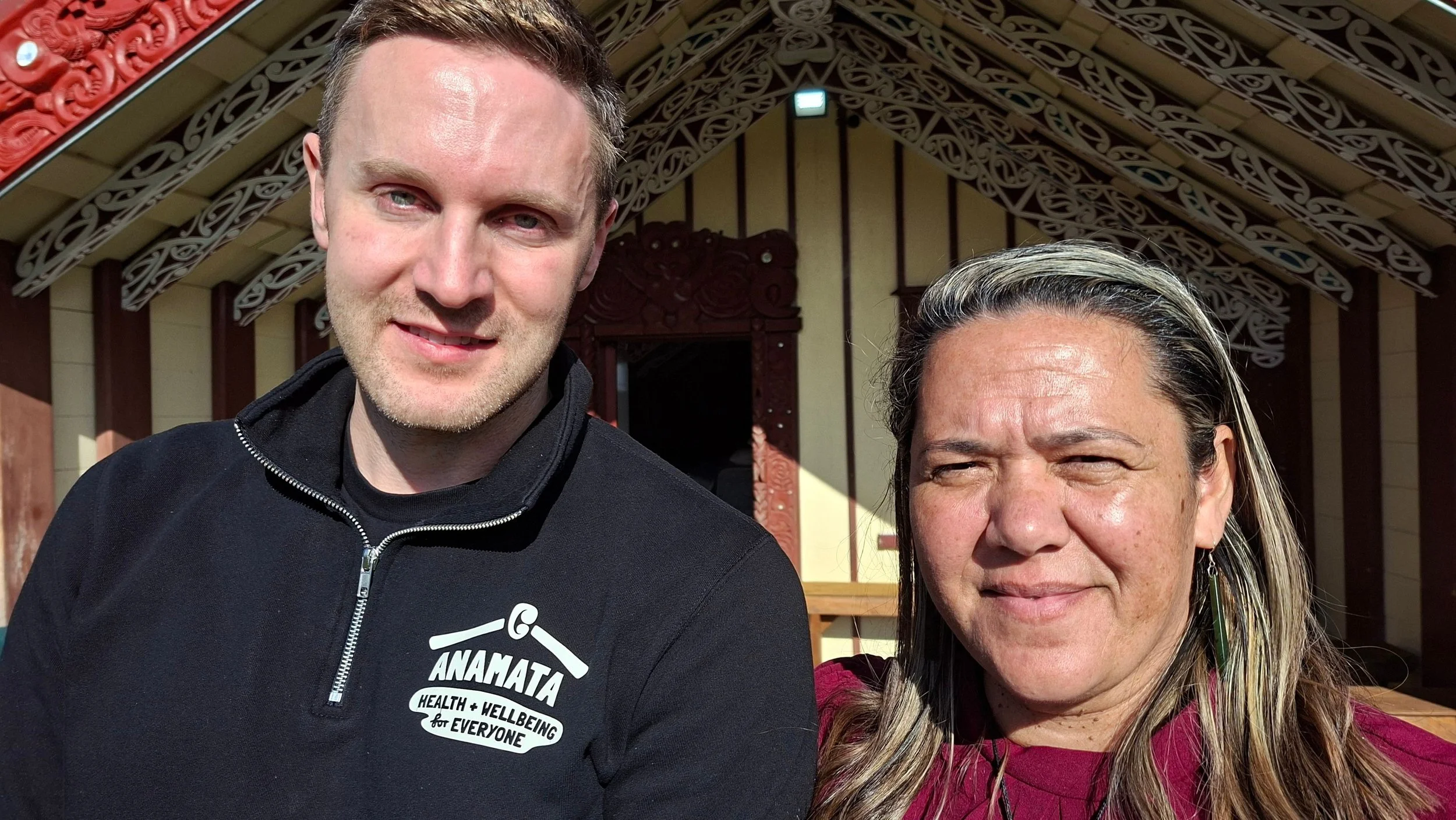
Departing Anamata CEO Ross Mortimer and new Mel Rameka. Photo: Bronson Perich
Anamata Cafe, a confidential health service for youth across the Taupō District, has expanded its offerings because of rising demand.
By Bronson Perich – Local Democracy Reporter
While Anamata has primarily focused on delivering sexual health services, there has been an increasing demand for mental health support.
Young people are needing help with anxiety, cyber-bullying, body-shaming, online predators, and the problems stemming from pornography.
Departing chief executive Ross Mortimer told Local Democracy Reporting he had seen more mental health presentations across “all aspects of our organisation”.
“Not only within the mental health team, but also through school-based health services, community clinics, and youth work services.”
While Anamata already had a mental health team, it became clear it needed a clinical expert to oversee its work.
Mortimer initially recruited Mel Rameka to provide that oversight and expertise and has now handed the entire Anamata Cafe over to Rameka.
6959 client visits a year
Anamata has nine school and community-based clinics in the Taupō District. It also provides home, phone and online consultations.
In the 2024/2025 financial year, 2264 clients visited Anamata almost 7000 times.
While contraception remains the number one reason for client visits, Rameka said youth often came to her clinics with a variety of health concerns.
Common issues included anxiety from cyber-bullying, body-shaming, online predators, catfishing, and the pressure to meet family and societal pressures, she said.
“You’ve got ... grooming for young people; where they think they’re talking to someone their [age] and they’re not, which puts them in dangerous situations.
“You’ve got ... ‘you need to be this skinny’, you need to wear these clothes.
It’s such a big pressure for young people to be what is fake.”
So while youth may come in looking for contraception, they often need more, she said.
Pornography ‘an informal sexual education'
Rameka said her staff spent a lot of time educating clients.
“They’re getting a lot of false information around things like pornography,” she said.
“A lot of them think that’s what sex is. And it’s not that, it’s acting.”
AUT senior academic Dr Alexander Stevens II has extensive experience working in trauma, mental health, addictions and sexual abuse recovery.

The Anamata Cafe Clinic on Spa Rd. Photo: Bronson Perich
He speaks of the false narratives pornography is instilling into youth.
“For many taiohi [youth], pornography has become a form of informal sexual education,” Stevens said.
“The challenge is that much of what young people are exposed to online presents unrealistic, performance-based, and emotionally disconnected portrayals of intimacy and sexuality.”
This “misinformation” as Rameka coined it, left youth unable to process the emotional and psychological impacts of being sexually active.
Addressing those knowledge and perception gaps is a key part of what Anamata does with youth.
Stevens said services like Anamata were essential for youth because they could ask for help.
“Youth services, therefore, play an important role in creating spaces grounded in compassion, trust, consistency, and environments that are safe where taiohi feel believed, supported, and not judged.
“The sooner they can get help, the better.”
Proud to support Pride
Anamata holds an annual Pride Ball for LGBTQIA+ youth, something not typically associated with a health clinic.
”[It’s] for any rangatahi ... who’s diverse, or an ally, for young people who are in the rainbow community to be able to have a space for them,” Rameka said.
“To celebrate them, to dress how they want to dress. A lot of people can’t dress like that in public, or within their whānau.
“We’re just encouraging everyone on how they can walk in as they are. They’re accepted here.”
A local councillor’s take on Anamata
Steve Manunui is a first-term district councillor in Taupō, and serves in a variety of community roles, including on the Board of Trustees for Tauhara College.
The father of two teenage daughters said Anamata did an amazing job in the sexual health space.
“This service fills a hole and gives options through challenging years at high school,” Manunui said.
“To ... fill a space that offers a safe opportunity to discuss delicate matters primarily around sexual health and education, along with social challenges, and mental health are great.”
How parents can support rangatahi
Parents, Rameka said, were welcome to refer their kids to Anamata and to attend clinical sessions with them.
However, she advised parents like herself that kids were reluctant to talk about their sex lives with their parents.
“We need to be educating and talking to our kids and our young people,” Rameka said.
“If you can’t say it to me [their parent], go to someone you know.”
It’s a piece of advice she even gives to her own kids.
– LDR is local body journalism co-funded by RNZ and NZ On Air.