Volcanic violence and human loss
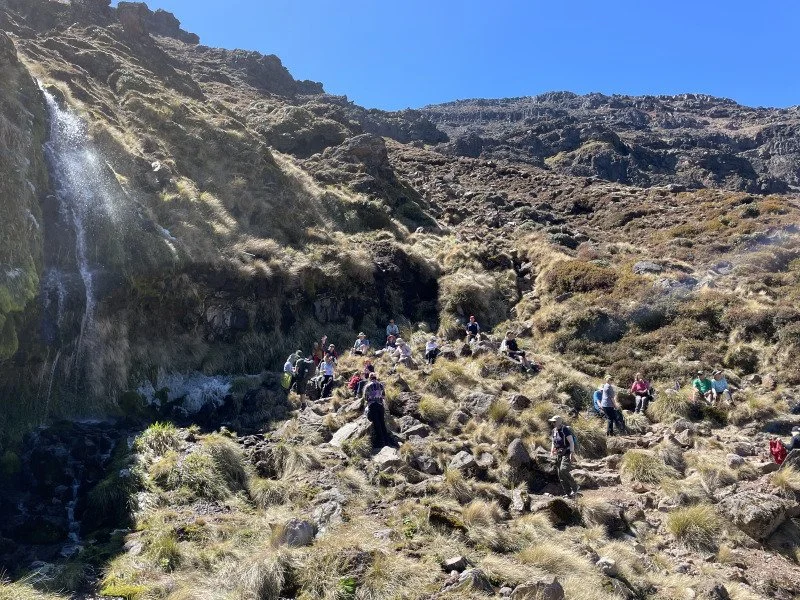
Last week we climbed up to the old Ketetahi Hut site, usually the end section of the Tongariro Alpine Crossing, and returned.
By Magic Moments with the Monday Walkers
This Rahina we walked from Mangatepōpō, to Soda Springs and on to the Devil’s Staircase - usually the beginning of the Crossing - and returned. Nothing like doing things back to front and what about the bit in the middle you may ask. Perhaps a challenge yet to come?
It was sunny and hot when we arrived at the carpark to the sight of many vehicles of all shapes and sizes but bereft of people. All early risers and well into their walk we surmised.
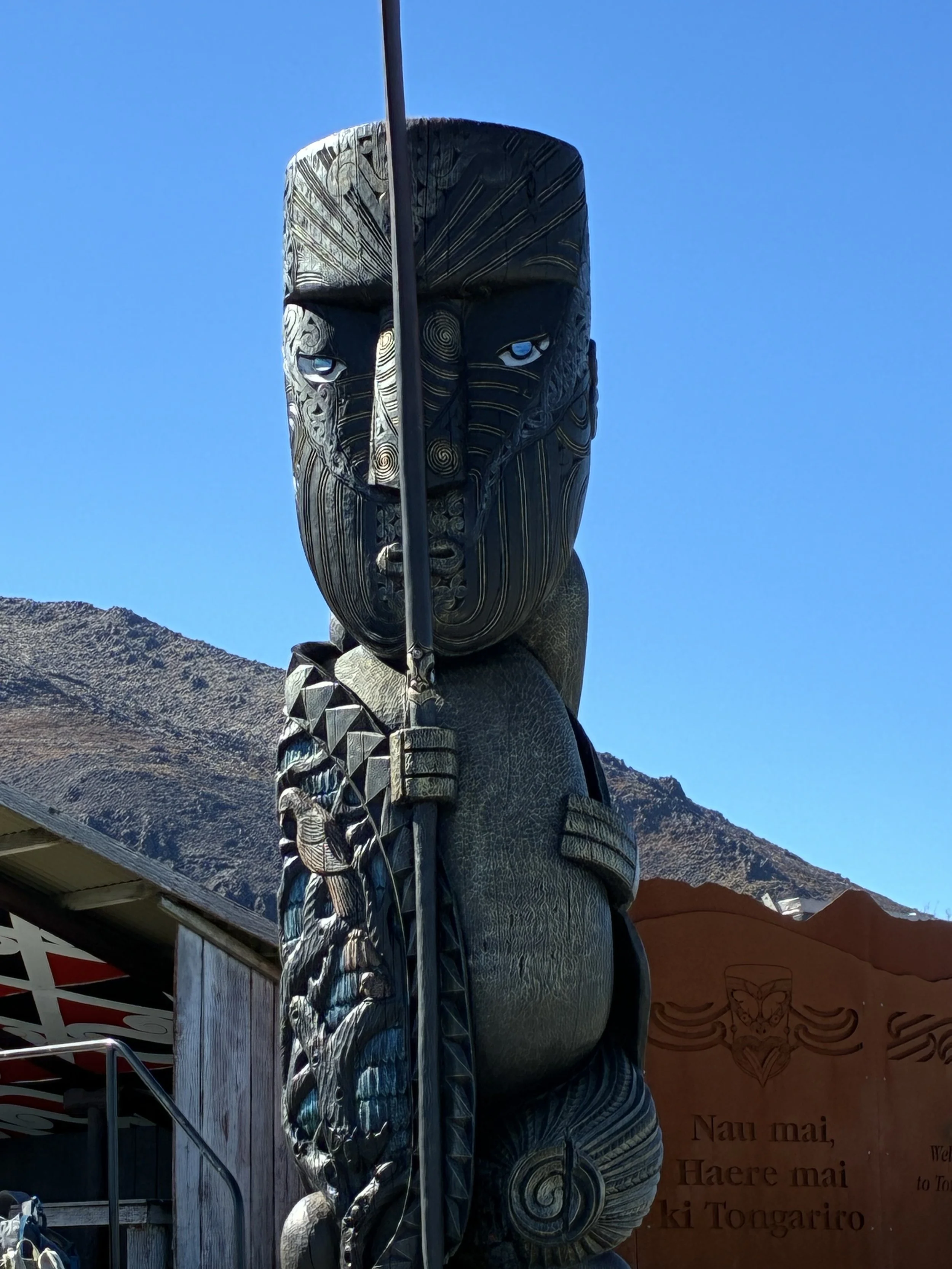
The pou at the entrance stood, a slightly charred but proud survivor of the terrible fires that burnt much of the slow growing alpine vegetation in this section of the park.
This area is sacred to Ngāti Hikairo ki Tongariro and a te purenga, or ritual bowl, for hand cleansing is placed at the track’s start.
The route was clear, the ground surface stoney and much of the vegetation was blackened and leafless.
Small patches of grass and some harakeke were growing and later we saw banks covered in green, gold and rust colours while just metres away all the plants looked dead.
Ngāuruhoe was freckled with splotches of snow and patterned with lava flows, the dark colour indicating the most recent deposits.
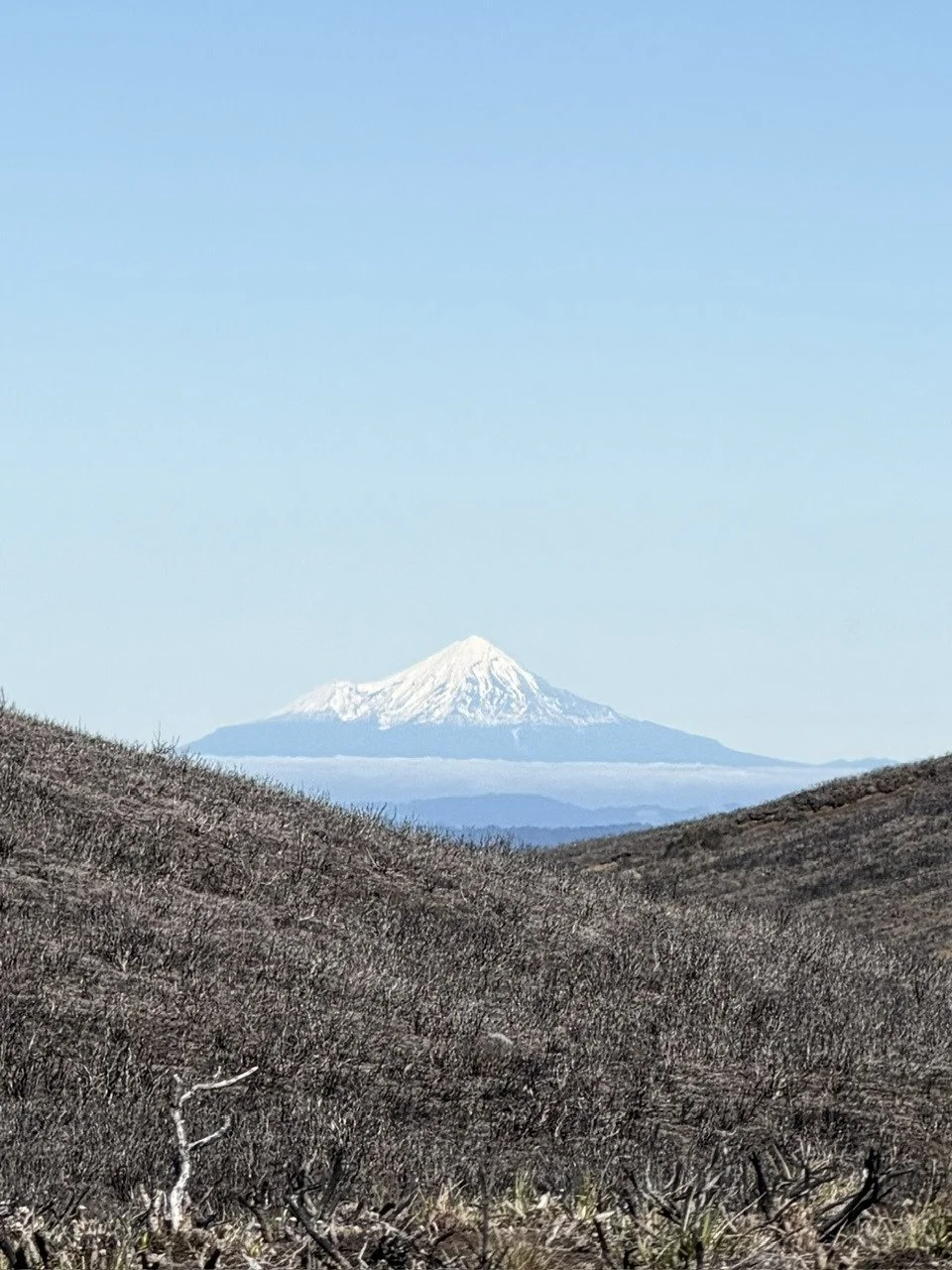
What a fabulous surprise to look back and see Mount Taranaki, almost 100 miles away in a straight line from Ngāuruhoe, snowcapped and gleaming in the sun.
We lounged on the deck of Mangatepōpō Hut before tackling the steps, stairs and boardwalks to a side track leading to Soda Springs.
On the way we passed fields of jagged scoria-like lava that signage described as a ‘slow moving blocky mass that flowed down Ngārauhoe’s slopes’ and is called a’a. A simple name for the contorted and sometimes large shapes.
Although the last lava flow here was in 1954, we were reminded the mountains ‘are still alive’ and new eruptions are possible.
The track to Soda Springs was less well formed, slightly muddy and had some shallow water patches. At an elevation of approximately 1400 metres, it provided great views down the valley.
The spring water is effervescent because of the dissolved volcanic gases. It is said to contain silica, sulpher, magnesium, bicarbonate, calcium and possible heavy metals including iron oxide, not to mention possible biological contamination so not water to add to your whisky!
The springs splash over rocks with very little pooling below. Sheltered under a ledge was a pile of large pieces of shattered ice unthawed despite the hot day.
Between November and April, ranunculus insigna or kori kori flower here. Today we saw their lush green foliage but not their large, brilliant yellow buttercup flowers.
Rana is a Latin word meaning frog and both these plants and frogs prefer to live in damp marshy habitats.
Later, tucked under a board walk, we saw a smaller relative, the ranunculus vertillatus in full flower, so perfect in shape it didn’t seem real.
We then opted to start the route up the Devil’s Staircase. This is where the route across the crossing becomes more challenging. Lots and lots of steep stairs.
We stopped where the DOC cut out ranger warned us that the hard bit was yet to come, admired the views and turned back, returning the way we had come.
Once again, the mountains have been kind to us for which we are grateful.
En route home we stopped at Te Porere and walked the path to both the Lower and Upper Redoubts.
This tranquil site, now surrounded by native bush, belies the terrible loss of life in 1868 in a battle between Te Kooti and his followers and the Crown forces, one of the last major conflicts of the New Zealand Wars.
Next Rahina is a public holiday so we will rest from our labours and celebrate the day.
If you would like more information about our group or to join us search Taupō Monday Walkers 2026 Facebook or Email walkersmondaytaupo@gmail.com