
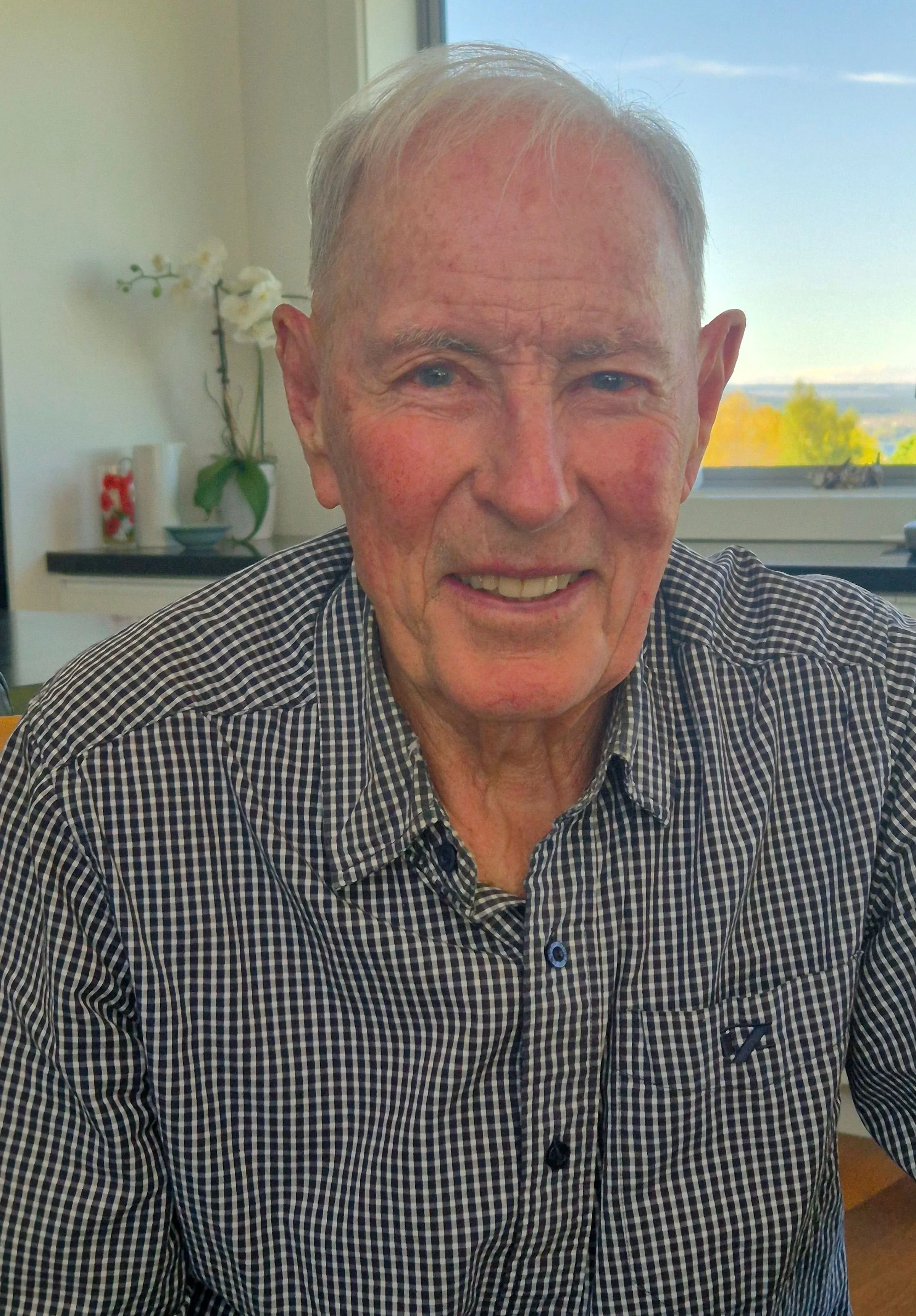
Maurice Gianotti was one of the lucky ones but he still has daily reminders of his brush with polio. Photo: Supplied
Polio, or poliomyelitis, is a paralyzing and potentially deadly infectious disease that most commonly affects children under the age of five.
By Kathryn Uvhagen
The virus spreads from person to person, typically through contaminated water. It can then attack the nervous system.
Rotary is a global network of 1.2 million members in more than 45,000 clubs throughout the world that sponsor service projects to address such critical issues as poverty, disease, hunger, illiteracy, and the environment in their local communities and abroad.
Rotary launched Polio Plus in 1985 and with its partners in the Global Polio Eradication Initiative, has reduced polio cases by 99.9 percent worldwide, sparing more than 20 million people from paralysis.
These efforts are providing much-needed operational support, medical staff, laboratory equipment, and educational materials for health workers and parents.
In a time when many have forgotten the threat of infectious diseases like polio, Rotary members have a duty to remind the public that polio anywhere is a threat everywhere and the consequences for those who contract and survive polio may be profound and permanent.
World Polio Day, observed on October 24, serves as a moment to honor the progress made, recognize the dedication of health workers and volunteers, and renew our collective resolve to ensure that we and our children are fully immunized against polio.
There were major polio outbreaks in NZ in the firs half of the 20 th century with high mortality rates and devastating and permanent outcomes for those who survived.
Taupō man Maurice Gianotti was one of the lucky ones but he still has daily reminders of his escape from the ravages of the disease.
Raised on a rural Taranaki dairy farm near Hawera, he was 8 or 9 years old when his parents noticed his left leg was a different shape; it was twisted, he had weak muscle tone and ligaments and a bunion on his toe, a possible result of disease or trauma.
Surgeons at Hawera Hospital decided he had suffered a mild case of polio when he was 2 years old although there was nothing in the hospital records at the time to suggest the Doctors suspected polio.
His symptoms were assumed to be merely the scratchiness and usual unidentified bugs and ills of a two year old.
It was wartime, so there were no newspaper updates or awareness of the prevalence of Polio.
He does remember, however, that the schools were closed in 1947 because of a polio epidemic. He recalls that his younger brother wore calipers (hard metal orthopedic braces to support the legs) and could possibly have had polio as well, but, as it was at that time, it was never discussed and he does not know the reason for the calipers.
Maurice had no impediment or indication that anything was amiss throughout his life, no pain, no hindrance - he led an active life-style, played tennis, water-skied, snow-skied - there was nothing that he was aware of to indicate that he may have had Polio.
When he reached his 80’s, however. he developed a limp and was diagnosed with Post Polio Syndrome. There is no active virus and no mechanical problem that could be addressed surgically. The right leg has compensated for the left leg and is now showing the effects of age.
He recalls that there was a Dunedin Support Group for Polio survivors at one time but he was not involved. He has a physio-prepared programme to avoid any further deterioration, he maintains his daily 3km walk and 3-4 visits to the gym each week and is an energetic and active 86 years old.
Maurice was one of the lucky ones – those less fortunate were crippled and twisted for life or incarcerated in an iron lung for the rest of their not so long lives.
They would have eventually succumbed to pneumonia and died. The spread of this dreadful disease was avoided by the discovery by Johan Salk of a vaccine which was introduced in 1952.
Every school child throughout NZ was given a tiny paper cup with a few drops of the precious vaccine.
The last case of the polio virus in Aotearoa New Zealand occurred in 1977.
Continued political and financial commitment is essential to strengthen health systems worldwide and ensure that no child anywhere suffers from polio ever again.
Learn more about progress in the global fight to end polio at www.endpolio.org.