
Recovery well underway at TNT
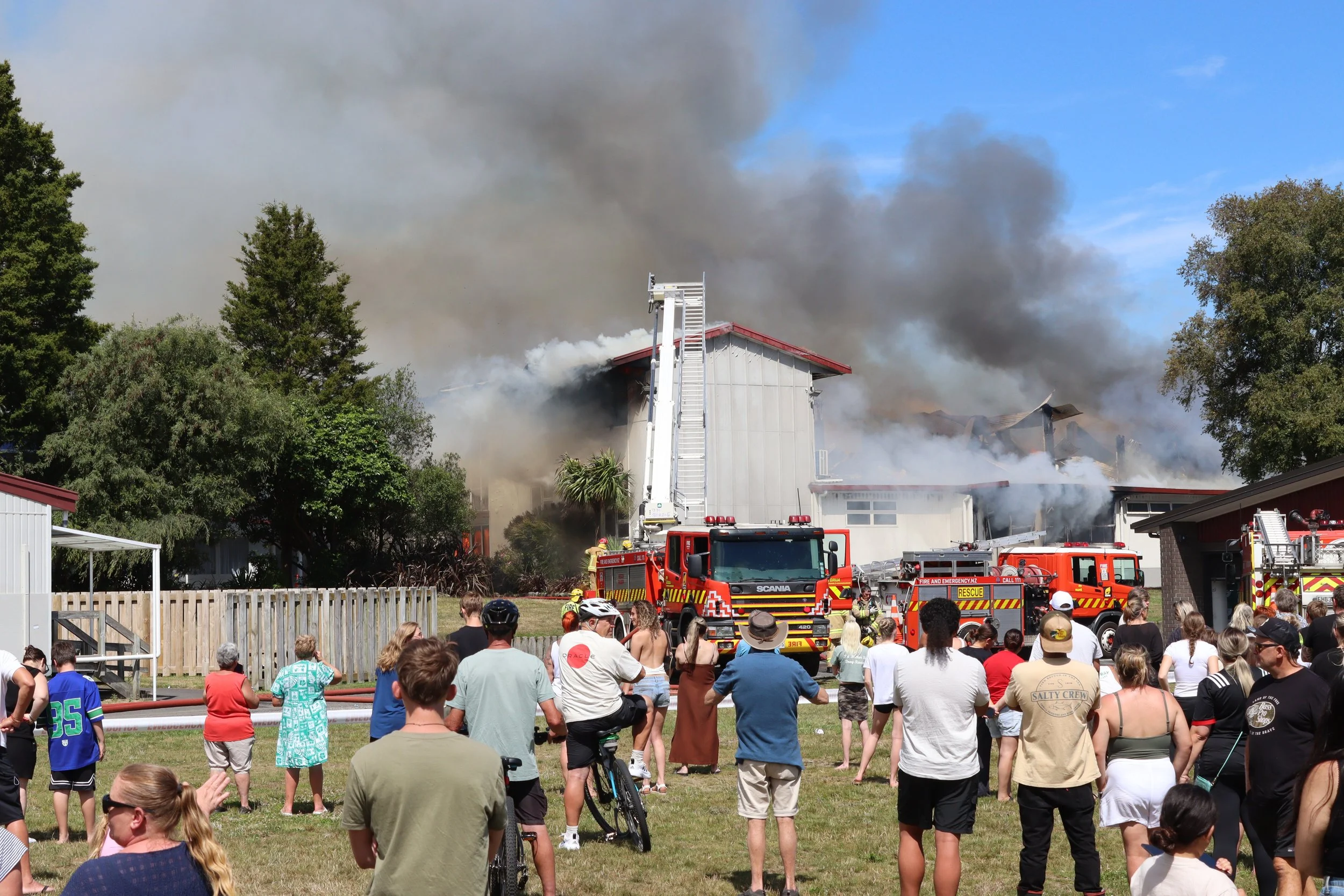
More than 100 people gathered in the Taupō-nui-a-Tia College sports field as fire engulfs the Nelson Block. Photo: Dan Hutchinson
Demolition is well underway at Taupō-nui-a-Tia College following Sunday’s fire with school management hopeful the site will be cleared by the time students return.
By Dan Hutchinson
About 1100 students will remain at home until at least February 23 while demolition continues.
College principal Ben Claxon says a possible “medium term solution” to the loss of 11 classrooms, was to take up an offer by Toi Ohomai to use space at its campus on nearby Kaimanawa St.
Police have charged two people with arson following the fire on Sunday afternoon.
Principal Ben Claxon says the demolition work began several days ago and is progressing faster than expected, with the school reviewing the situation on Wednesday next week to determine when students can return to campus.
" We've told the community yesterday that for the remainder of this week and until the end of next week, the students will be off just for not just a pure demolition aspect, the health and safety around that, but because there's trucks coming in and out, we've had to fence off massive areas," Claxon says.
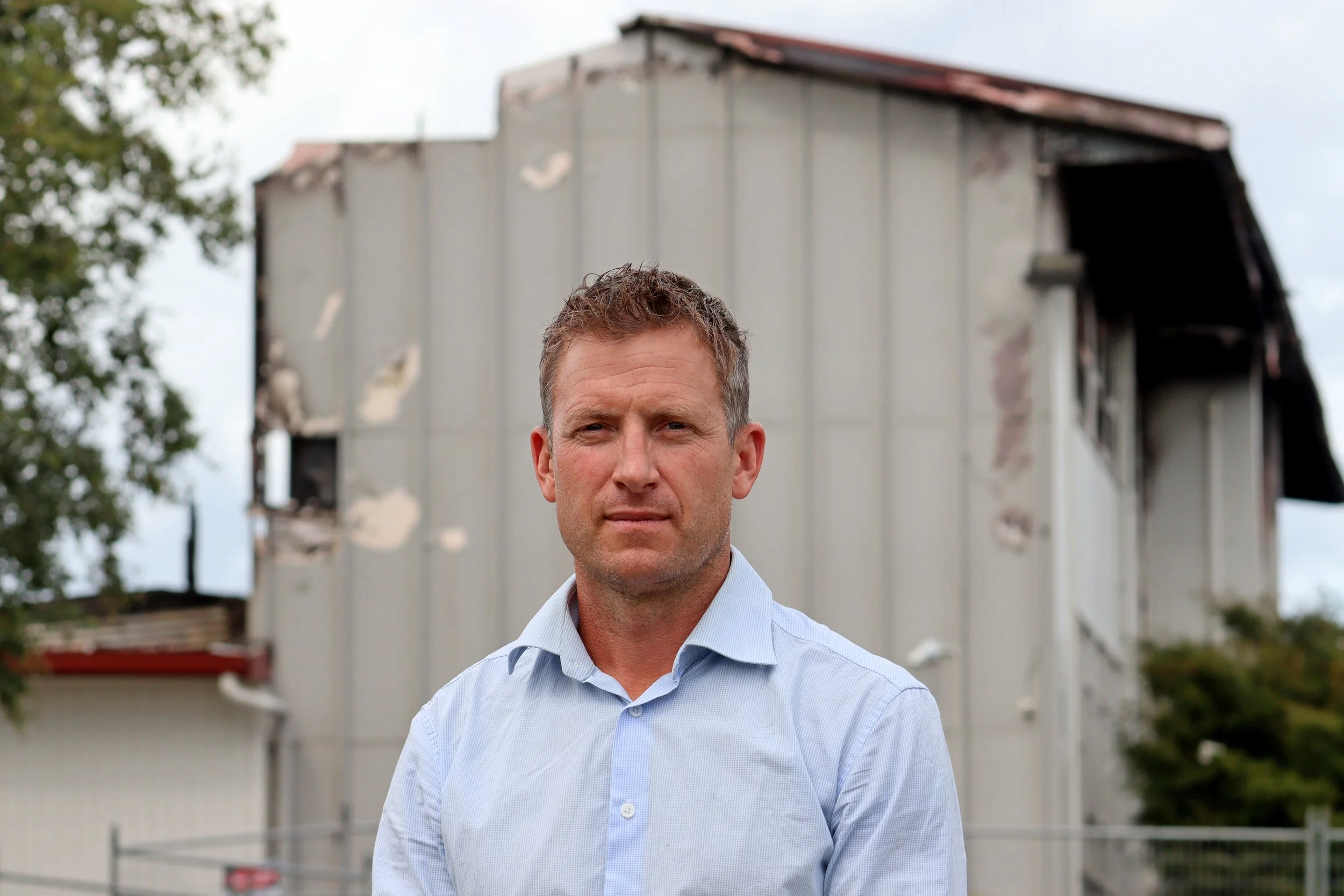
Taupō-nui-a-Tia College principal Ben Claxon talks about the recovery process after the building in the background was destroyed by fire. Photo: Dan Hutchinson
The destroyed building, known as a Nelson block, or N Block housed mathematics classrooms, French language resources, and the school's health centre, which provided both counselling services and physical health care including an on-site nurse service.
Ward Demolition contractors are removing all rubble from the site, with trucks transporting debris to Rotorua for waste management before returning for additional loads. The process includes scraping the site below ground level to ensure complete removal of any hazardous debris.
The school is awaiting test results for asbestos, expected on Wednesday afternoon, which will determine whether some facilities can be made available for students under 14 whose parents cannot supervise them at home during work hours.
While demolition continues, the school has secured a partnership with Toi Ohomai Institute of Technology to provide classroom space about three blocks from the main campus.
"Toi Ohomai have been really gracious in offering up some of their space to us and we just working through the details … but it's looking really positive," Claxon says.
The arrangement will require students to travel between sites, creating logistical challenges around road crossings and transportation, but Claxon describes it as "a good medium-term solution" while the school works with the Ministry of Education on longer-term plans.
The ministry leads the procurement process for relocatable classrooms, which could eventually be placed on the school site to eliminate the need for a split-campus arrangement.
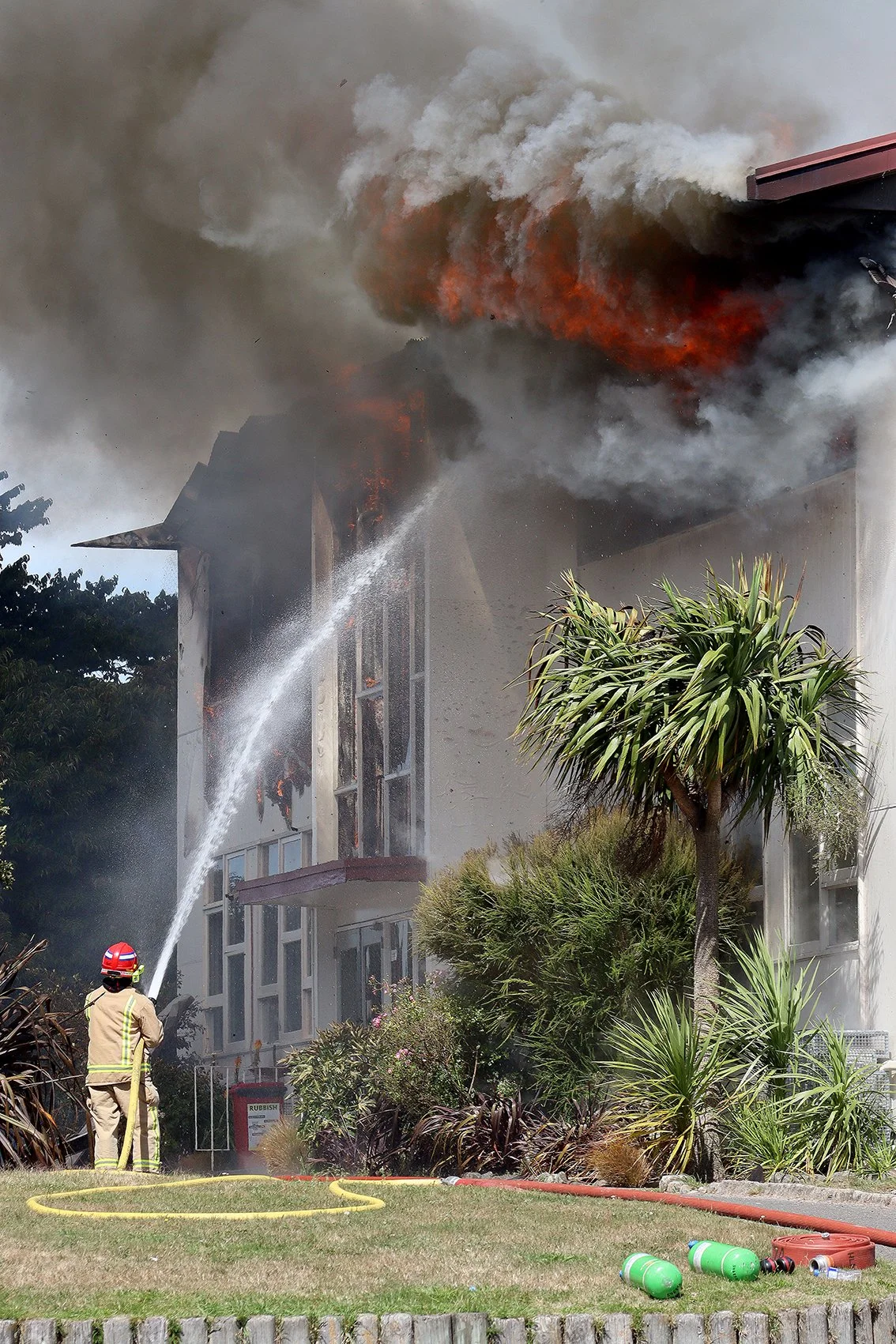
Firefighters work to suppress the fire in Taupō-nui-a-Tia’s main classroom block. Photo: Dan Hutchinson
A permanent replacement building is expected to take 18 months to two years to complete.
"The ministry led building projects, they do take time. There's lots of people involved, lots of layers. It's not the school's money, so people need to understand that it's ministry money, taxpayer money," Claxon says.
The building was covered by insurance but the replacement will likely follow new ministry guidelines around repeatable designs rather than bespoke buildings. That is a shift from previous property development approaches that allowed more creativity but resulted in higher costs, Claxon says.
Students are currently accessing online learning through Google Classroom, with teachers posting content and conducting virtual classes.
The school operates a bring-your-own-device policy but maintains an equity device loan scheme for families who cannot afford to purchase equipment.
On Friday, the school will set up a distribution point at its alternative education facility where students without devices can collect long-term loans to continue their studies from home.
"Thankfully in some ways the Covid scenario has helped us to pivot pretty quickly," Claxon says, referring to the school's existing online learning infrastructure.
The fire occurred just as the school year was beginning, disrupting planned activities including a Year 13 camp on Wednesday and Thursday, followed by Waitangi Day on Friday.
Those senior students were meant to start back at school this week.
Claxon says the school has received extensive community support since the fire, with residents and organisations providing food, coffee, and messages of encouragement.
"We just encourage people to stay strong, kia kaha. It is not the way we wanted the year to start but we've got this, we'll get through it together.
"We are just being inundated with support from people and organisations within the community. Whether it be emails, dropping off food, coffee, messages of support. It's just been really overwhelming in a good way."
The school welcomes donations to help replace lost resources, particularly textbooks and specialised teaching materials. Community members wishing to contribute can contact the school at mail@taupocollege.ac.nz.
Insurance covers the destroyed resources, but Claxon says faster replacement will benefit students' learning continuity.
Despite the arson, Claxon says the school was committed to maintaining its open-campus policy, allowing community access to facilities like sports fields during weekends, and that is supported by security camera systems rather than physical barriers.
"We want our kids to and the community to understand that this is a place where we want students to feel like they want to come and belong and not enclose them during the school day.”