Million-dollar views on the K2K
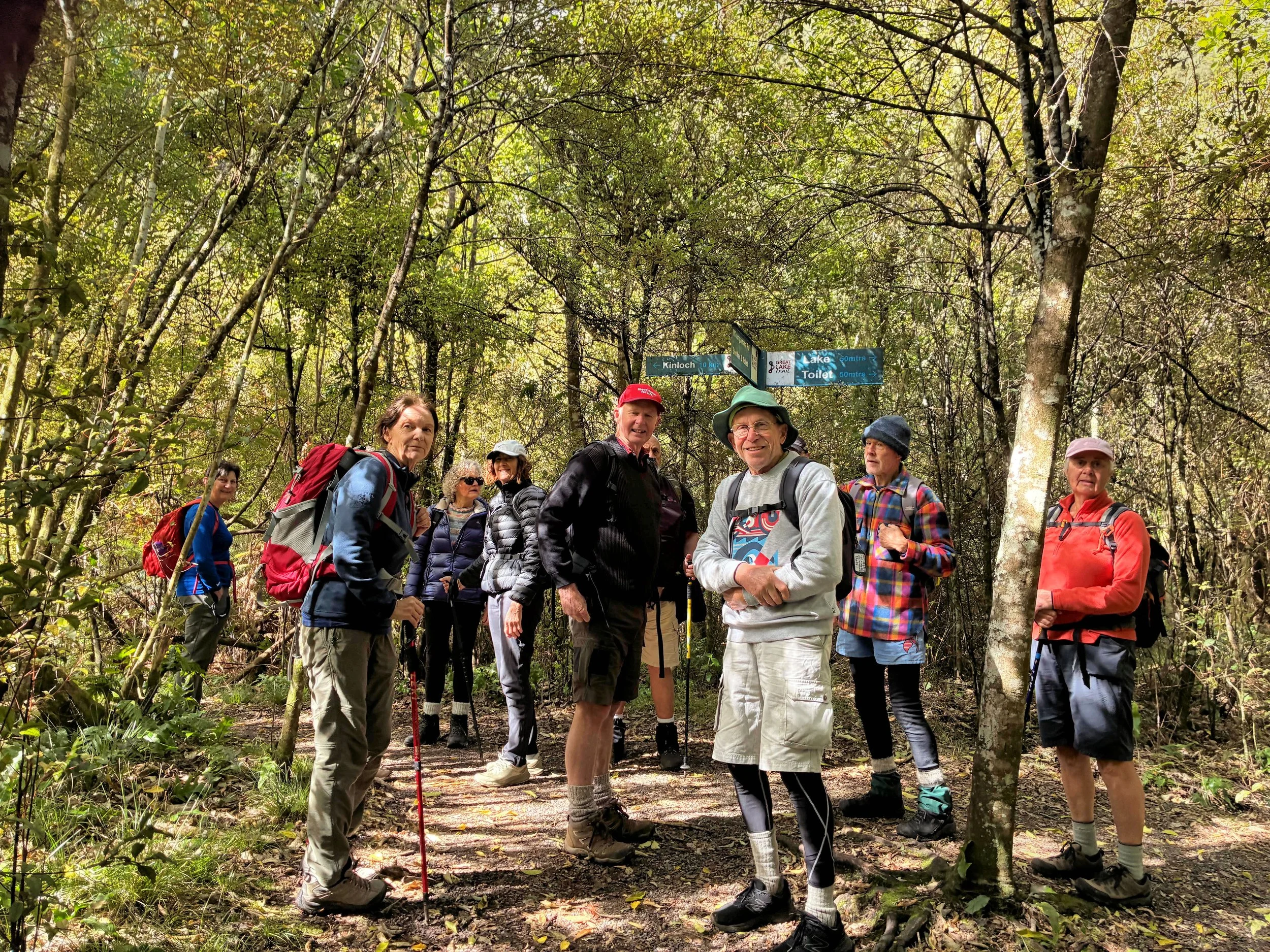
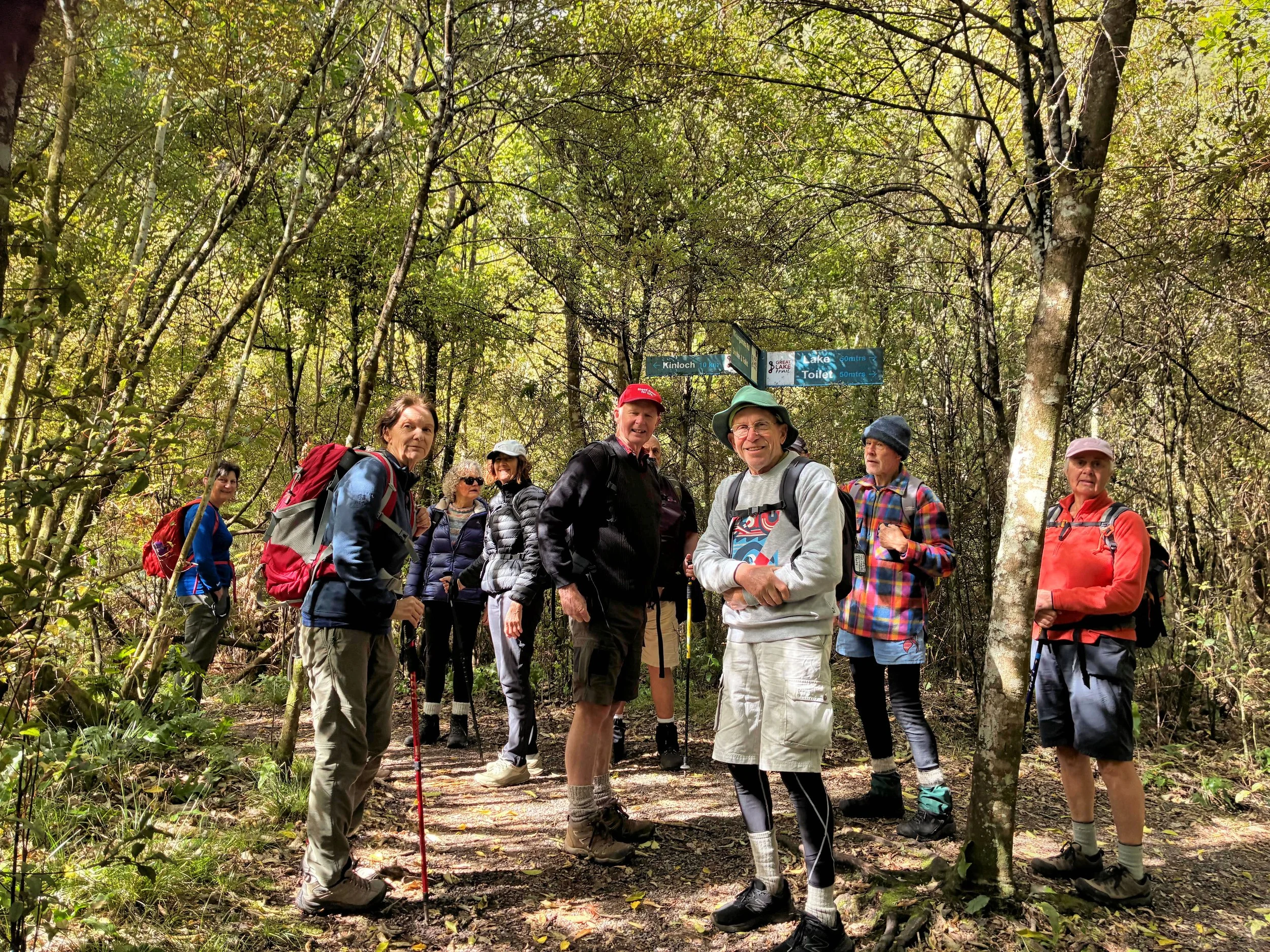
Time for a group shot. Photo: Graham Jordan
Waves crashing on the foreshore was a surprise given the shining yellow icon on Sunday’s weather map.
Supplied by Taupō Monday Walkers
After a little wardrobe adjustment, we left Kinloch on the K2K shared trail to Kawakawa Bay. Another Great Lake Trail beautifully maintained by Bike Taupō.
Soon we were in the protective shelter of regenerating bush bordered on one side by the lake and the other by housing development.
A strange mixture of glimpses through the trees with blue water and then domestic fencing and roofs, accompanied by the occasional sound of a nail gun firing.
We wended our way around and up zig zags with some taking the steeper, staired optional shortcuts.
The path was muddy in places but was mainly hard packed pumice.
We crossed a couple of sturdy bridges and were encouraged by signage such as HalfWay to Kawakawa and intrigued by others such as Broken Chain Bridge.
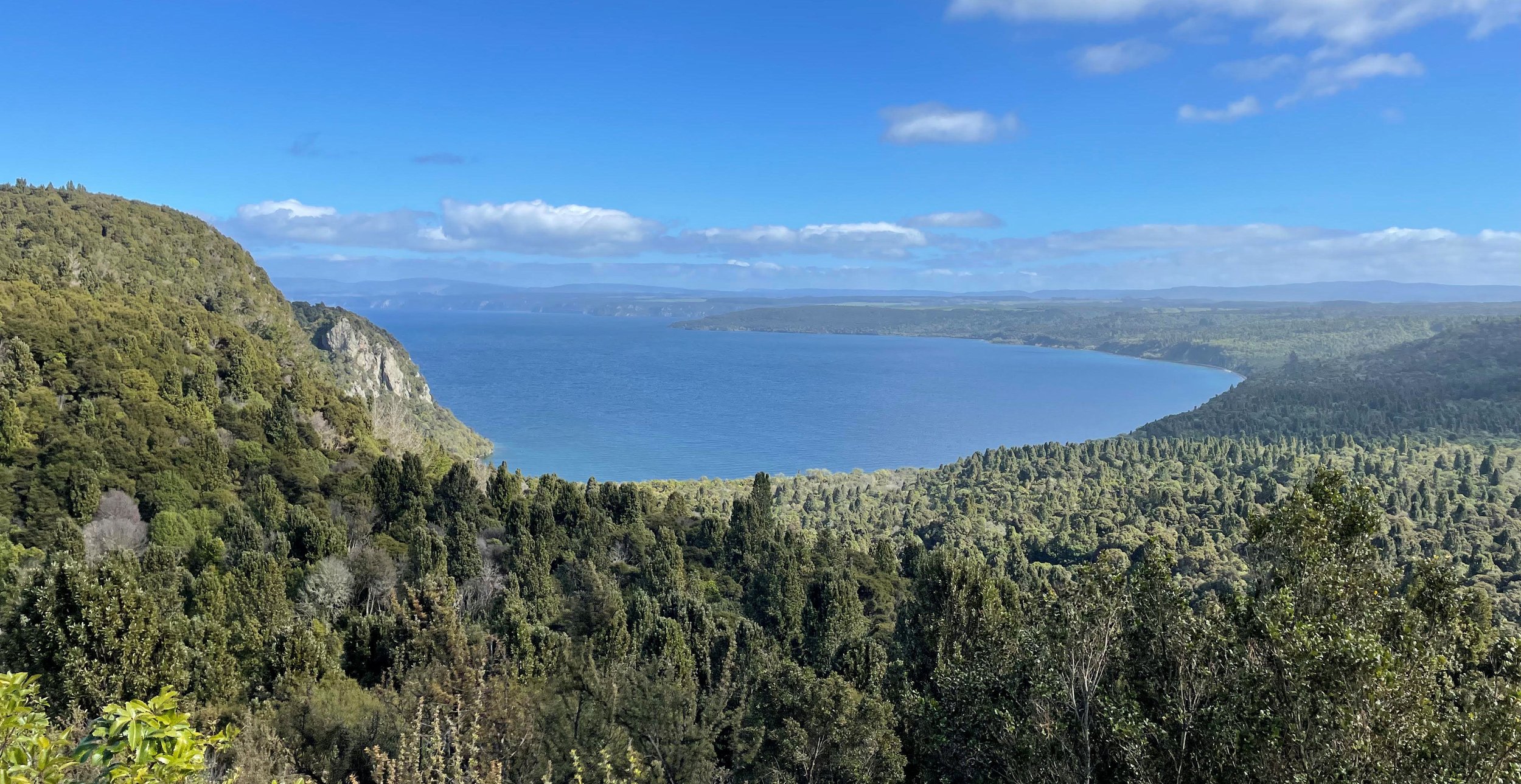
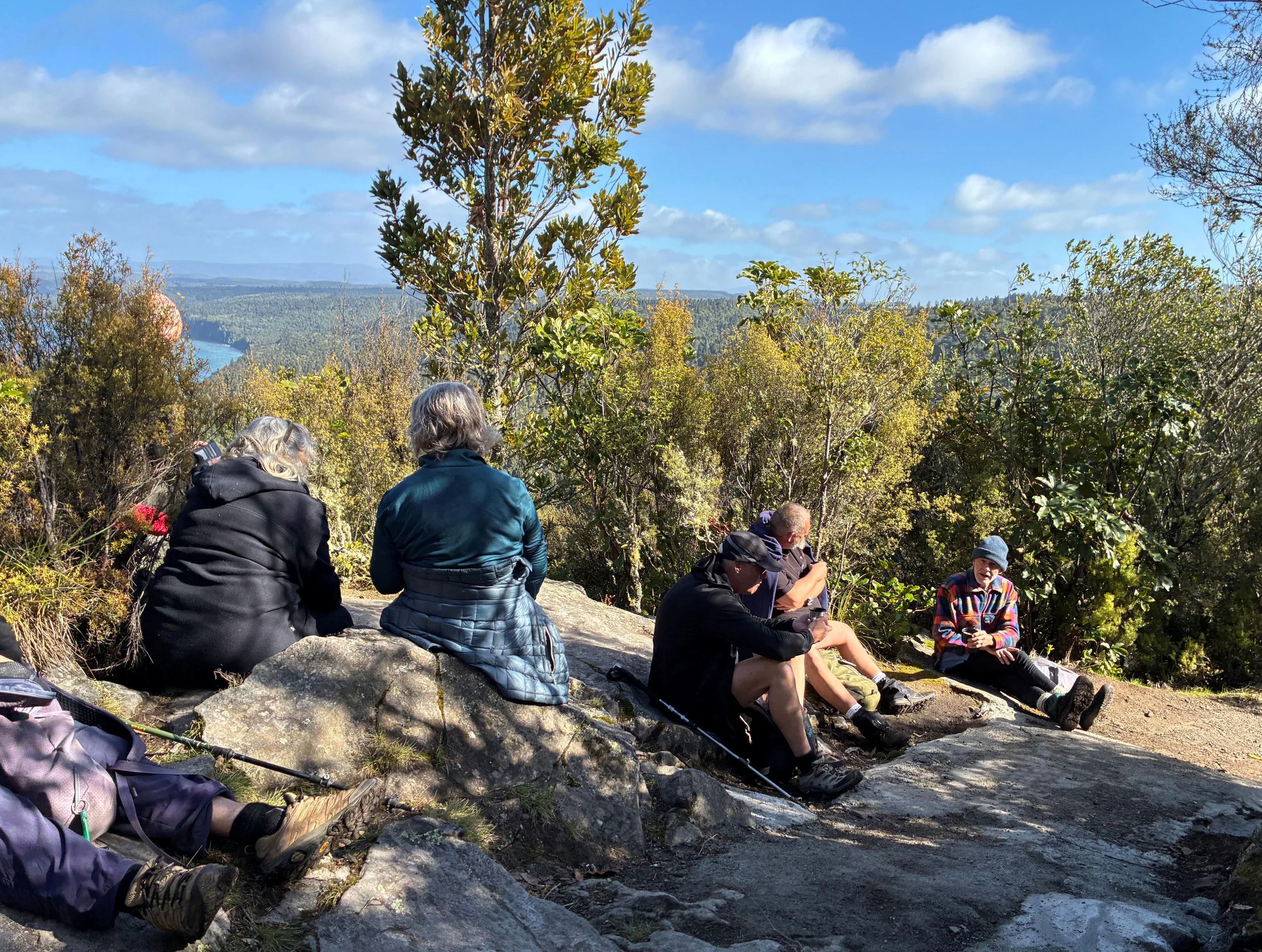
We perched high up on Codger’s Rock Lookout, with its million-dollar views.
Apparently, the name is a reference to two ‘senior’ trail builders who were teased as being old codgers for ‘resting’ at the rock.
The views from here across the Western Bays are amazing and a very good reason to take a moment to stop and stare.
A thrush settled and posed by one walker seemingly unperturbed by our presence. Tiny riroriro or grey warblers remained unseen but sang with gusto as we walked by.
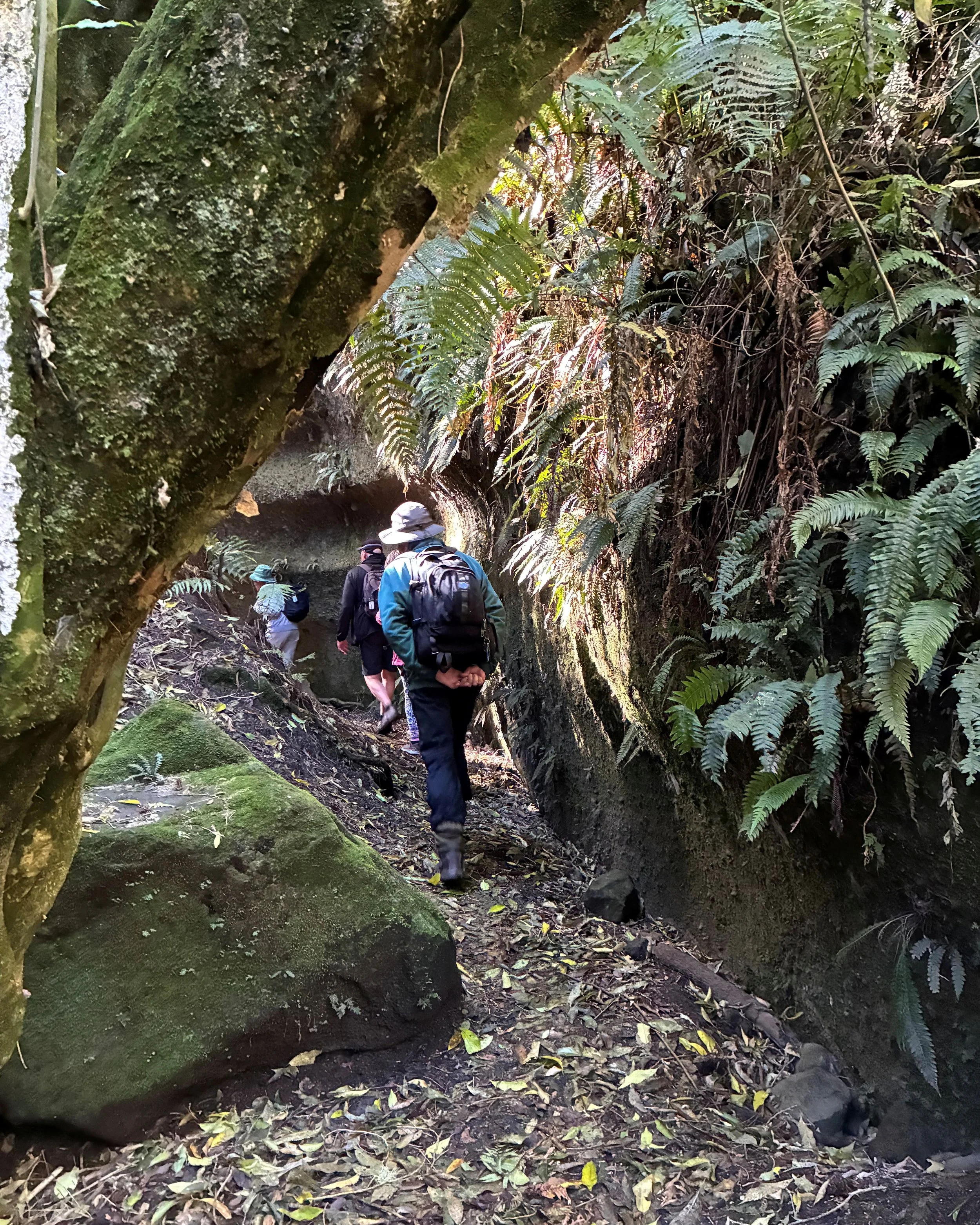
We took time to explore an off-track, deep cutting. One could well image dinosaurs clomping their way through the tall ferns along the narrow gap squeezed between the steep banks.
We left reluctantly, promising to send an exploratory team to try and find the outlet sometime in the future.
The track descended quickly to Kawakawa Bay, where we were re-exposed to the wind and waves splashing up onto the beach.
Some hardy walkers tried to catch the sun while others retreated to the large shelter concealed in the trees.
We did not linger long and were soon warm and shedding extra clothing as we climbed back up the hill.
The foliage changes often on this track.
There are many tall rewarewa which can reach 30 metres. These trees have wonderfully vivid red racemes when flowering.
Even their botanic name of Knightia excelsia hints at their grandeur.
There were large groupings of mamaku or black tree fern.
These tree ferns are also found in other southwestern Pacific Islands such as Fiji and the Pitcairns.
Draping itself around rocks and covering much of the bush floor was kōwaowao or hound’s tooth fern.
New, young fronds of this plant are an edible substitute for lettuce as are some other fiddle headed ferns.
In Australia kōwaowao is called kangaroo fern because its leaf resembles a kangaroo’s foot.
Rangiora was also prolific. It is sometimes called bushman’s friend as its large furry leaves can be used as a toilet paper substitute.
Victorian tourists used to write a message on rangiora leaves, attach a stamp and it was accepted as legal postage until 1915 when the practice was banned.
On a lower section of the trail, we were astonished to see a small possum up a tree. It remained motionless.
These mammals were introduced from Australia in 1837 for the fur trade but destroy our native forest, eat eggs and chicks and spread bovine tuberculosis. An undesirable immigrant and unusual as they are nocturnal.
The beach at Kinloch was a welcome sight after an enjoyable 19km-plus walk.
Next week we are walking a trail in search of a waterfall. If you would like information about our group or to join us search Taupo Monday Walkers 2026 Facebook or email walkersmondaytaupo@gmail.com