
Logging makes way for nature
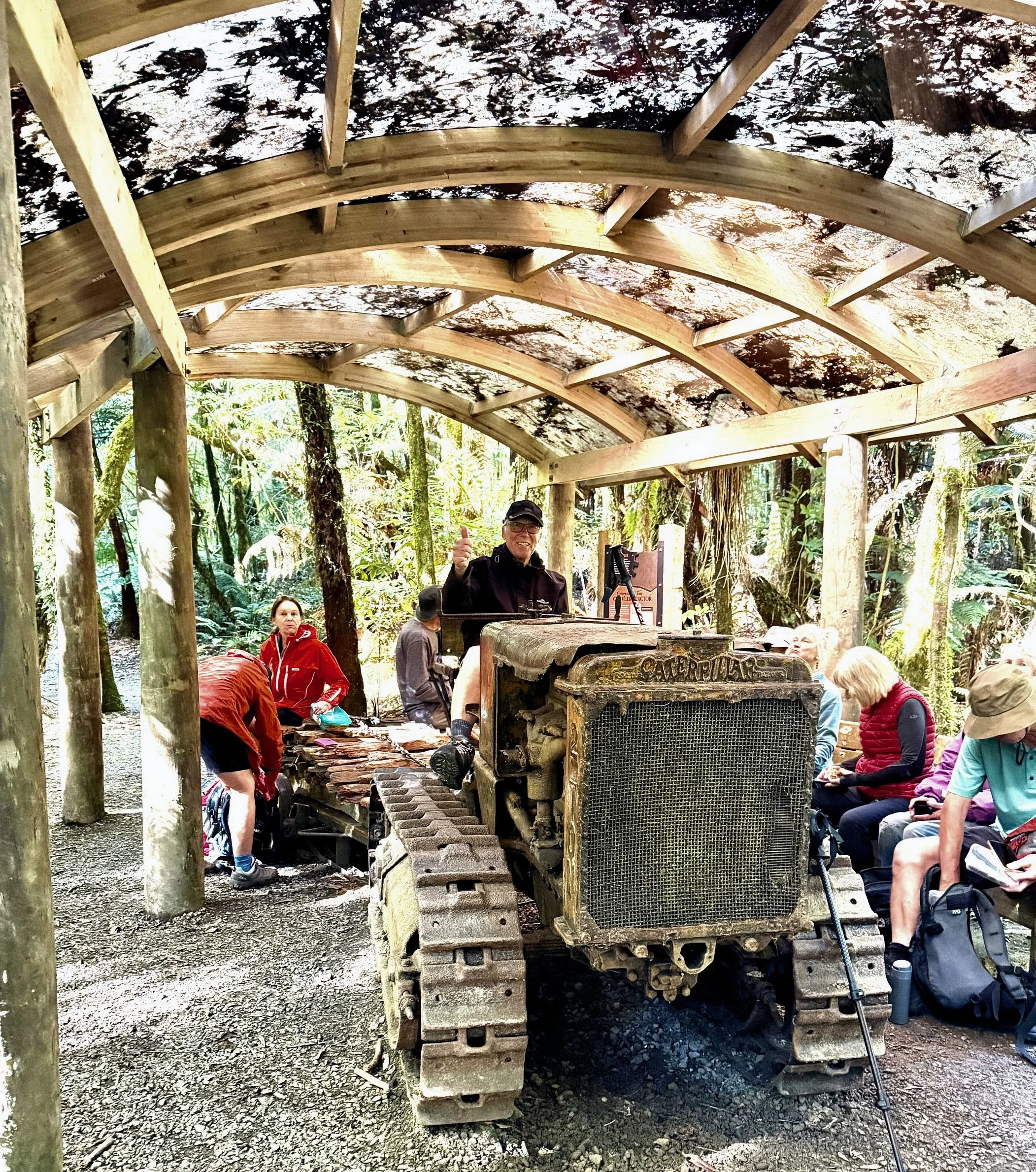
A coffee break alongside the historic caterpillar crawler.
We set off from near the Pureora DOC Base Centre to the Forest Edge Shelter, also known as the Red Shed.
Kākā seemed to approve of our choice and welcomed us with raucous squawking.
We ducked into the forest which was both dark and protective.
The wind whipped the tops of the tall trees making a sound that had one walker asking if there was a river nearby.
The trees here are long lived survivors. In 1945 the forest had been opened up for logging and despite the Maruia Declaration to Parliament in 1977 it took the tree top and platform protests by such conservationists as the King brothers in 1978 for a logging moratorium to be placed on native logging and until 1982 for a complete end to native logging and the establishment of the forest as a park.
Today we had the pleasure of admiring the height and strength of surviving tōtara, rimu, mataī and kahikatea and the green of tree ferns.
Ironically, we were probably walking on the remains of old logging tramways and crossing roads built for log transport.
Epiphytes thrived on some trees while others had been torn off by the high winds and fallen to the edge of the track luckily not living up to their reputation as widow makers.
As the day gradually warmed, patches of sunlight flooded through gaps in the foliage.
We took the short detour to the 1928 Crawler tractor. Left abandoned after piston failure, it was unearthed in the 1970’s and later restored and provided with a shelter, a steel sledge known as a konaki and even a full load of tōtara posts.
In logging days the ranger or field boss multitasked by looking after safety, hygiene and morale while estimating and recording the timber in a tree, mapping and surveying forest access and then working out the cost of production for his Forest Service bosses. An exhausting sort of job description.
Tapeys were the people who threw the steel tape around the tree to measure the tree girth and Taggies were said to be the bottom of the hierarchy, with the role of tagging said trees and being the general camp gofer.
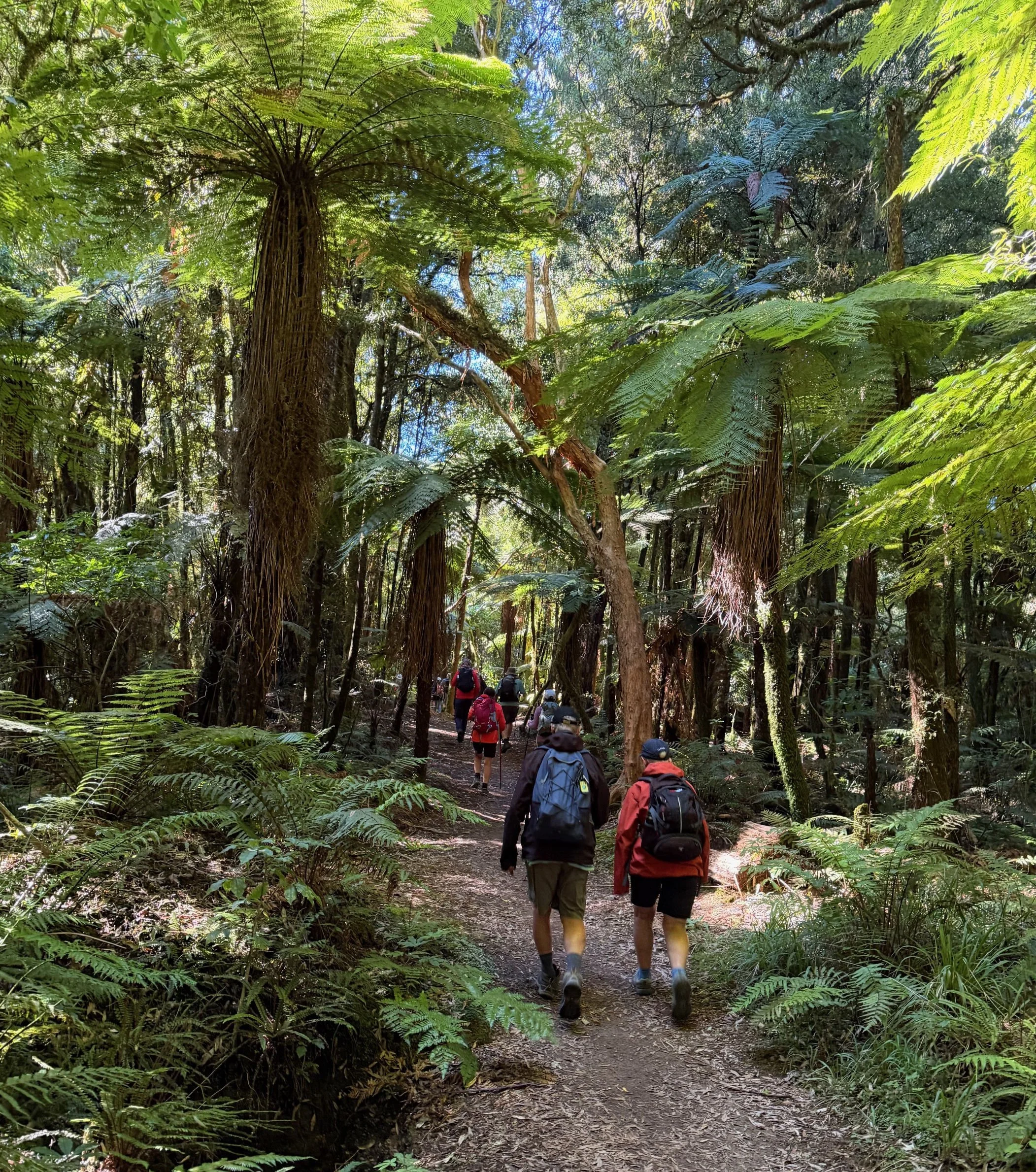
Walkers pass through mixed forest with sunshine above the canopy.
We were not alone on the track with a number of cyclists using the Timber Trail route and a Dutch traveller walking the length of both islands.
We were amazed to hear he aimed to walk 50km a day and, on one occasion, walked for 22 hours.
Soon we were out in the open and crossing the dusty metal roads and heading gradually upwards.
The shelter is concealed behind a fork in the track and neither our Dutch traveller nor any of the cyclists seemed aware of its presence.
An information board reminded us of how personal shelter from forest weather has changed from flax, tī kōuka, dog skin and feather cloaks to oilskins, swannies, to our modern hi tech outfits.
Te Pureora-ō- Kahu is known as the place where Kahu was restored to health after searching for her son.
Returning to the native forest we heard kākā, tūī, toutouwai, miromiro and later a kārearea perhaps an indication that the health of forest itself is also being restored.
For more information search for Taupo Monday Walkers on Facebook or email walkersmondaytaupo@gmail.com