
Injured and alone
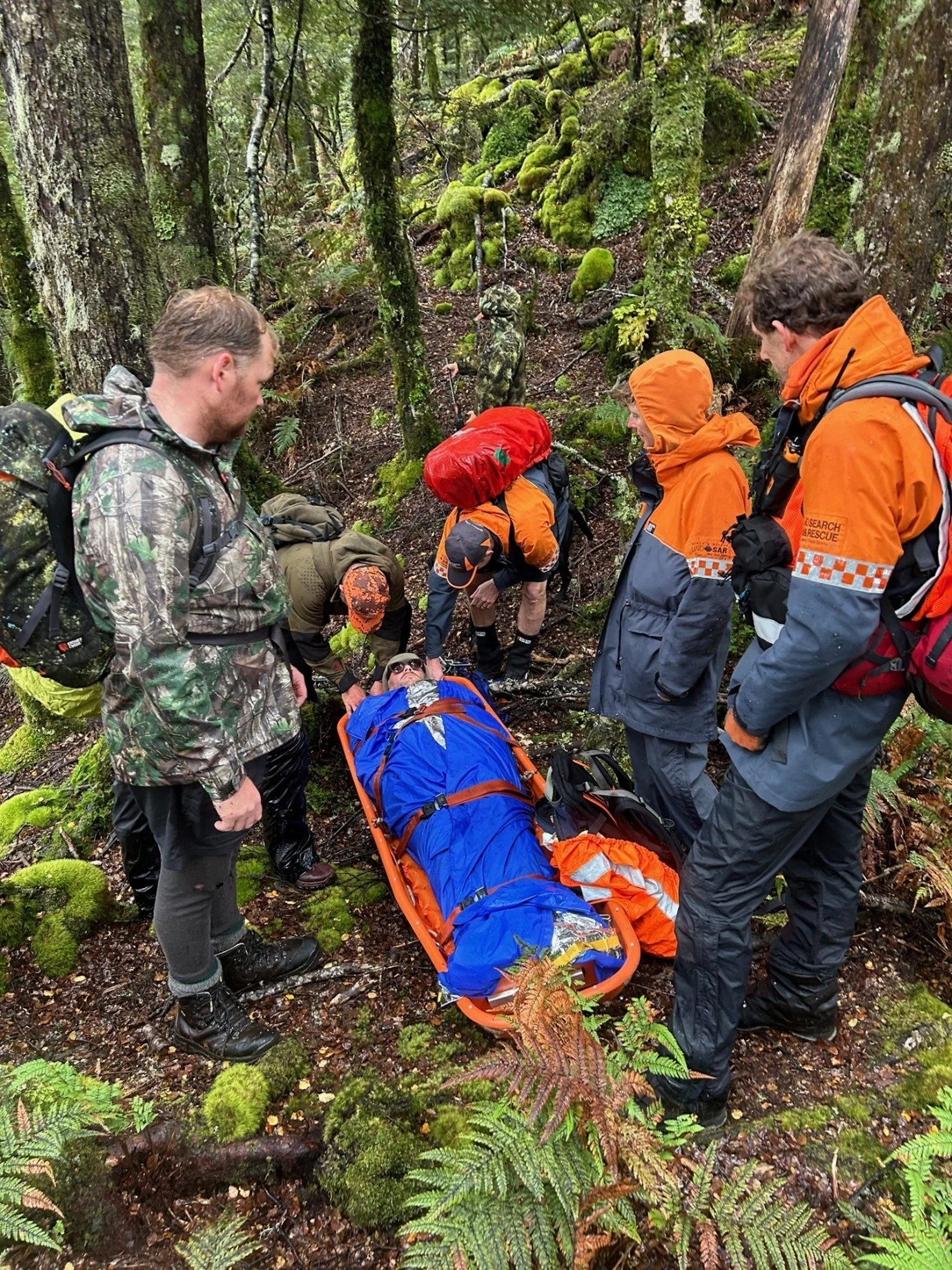
The hunter is wrapped up and strapped to a stretcher before the three-hour journey to the waiting helicopter. PHOTO: LANDSAR
It had all the elements of a tense drama – a signal for help from a hunter somewhere in remote bush, perhaps lost, maybe injured, and the weather closing in with Cyclone Vaianu threatening to wreak havoc.
By Chris Marshall
That the story ends happily is down to the grunt work of a local team of Land Search and Rescue (LandSAR) volunteers, says Police Search and Rescue coordinator, Taupō Police senior constable Barry Shepherd. And the good sense of the hunter to be carrying a personal locator beacon (PLB).
It all started when the deerstalker was hunting by himself away from several fellow hunters back at the Mangatanguru Bivvy (a privately owned hut on Māori land managed by Helisika in the Kaweka Ranges).
Then the man injured himself, unbeknown to anybody, says Shepherd.
“The rescue coordination centre (RCC) received a beacon signal about 4.40pm Saturday.”
As the weather was not suitable for an air ambulance, HeliSika was sent in, he says.
“Which was very sensible because it was one of their clients in one of their hunting blocks.
The pilot went down there and had a look around and couldn't see anybody in the bush for obvious reasons – it was fairly thick, tall bush.
“Then it got dark, not suitable for your air ambulance to go in there. So, RCC handed the job to us because it needed a ground response. And even if we'd been able to fly in there on Saturday, we would have sent a ground response anyway.”
A team of six was briefed at 5am Sunday morning, he says, then at 6.30am flown by Helisika into the hut where the party was camping.
“Then the team walked up and found him. Discovered then that he was quite seriously injured.
And that required a stretcher evacuation back down to the hut.”
The hunter had spent an uncomfortable night in the bush, says Shepherd, unable to move much with his injury and alone in the elements.
All six of the team, with assistance from two men from the hunting group “packaged the guy up and dragged him for three hours down to the hut. And then Helisika picked them all up and brought them back to their hangar at Poronui.”
From there the man with a badly injured knee was driven by ambulance to Taupō hospital.
Shepherd describes the effort to get the man the approximately one and a half kilometres back down to the hut as a ‘bloody impressive effort from the LandSAR team.’
“It was a bit windy and wet… that storm didn't come to much for us, thank goodness.
“It just wouldn't have been safe to be in there if there was strong wind. … There was always that in the back of our minds that if it got really windy, they'd have to pull out. But if we're already in there when it kicked in, that's just to add to the risk, right?”
Shepherd says the hunter’s mishap was an honest accident, with his knee likely to need surgery.
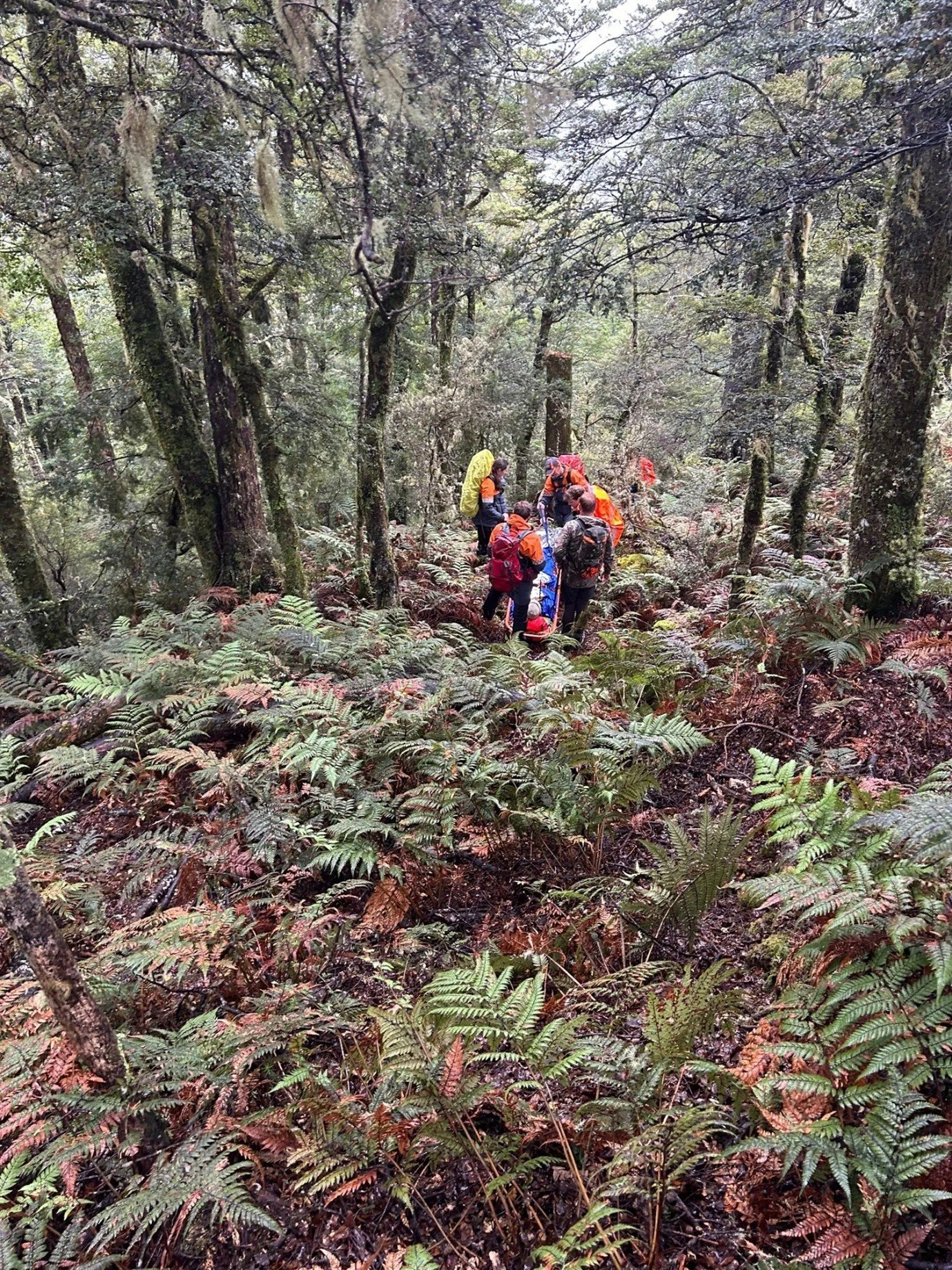
The rescue team drags the injured man through thick bush for three hours to the landing site. PHOTO: LANDSAR
“It sounds very simple, straightforward, but there were lots of cogs in the machine for sure.
Lots of considerations with dark and daylight and wind and rain pending and just getting people in there and do a good job.”
He says tobogganing a 100kg male down through the bush for three hours on an open plastic stretcher was no mean feat, but the incident also highlights the value of carrying a PLB.
“No one would have known but because he activated his beacon, one of the pilots from Helisika went down there and landed and had a chat to the guys in the hut, so he was then able to tell them what was going on. The beacon's going, but none of us knew exactly what the problem was.”
The hunter was well dressed and equipped and competent, says Shepherd.
“But human error, mistake, injured and can't walk, you're pretty screwed, really, for getting out.
“It sure makes it simpler if someone does have a beacon… but then the weather was the biggest issue here because it's all very well on a fine sunny day that you can fly in there and pick people out of the bush, but that's the benefit of these Land Search and Rescue people, right?
“It just seems ironic that they get sent in there on the shitty days and the helicopter does fine weather jobs.”
And while Shepherd says the LandSAR “guys and girls certainly said the injured man made them work for it,” he stresses that the hunter was very appreciative of all of the team’s efforts.