
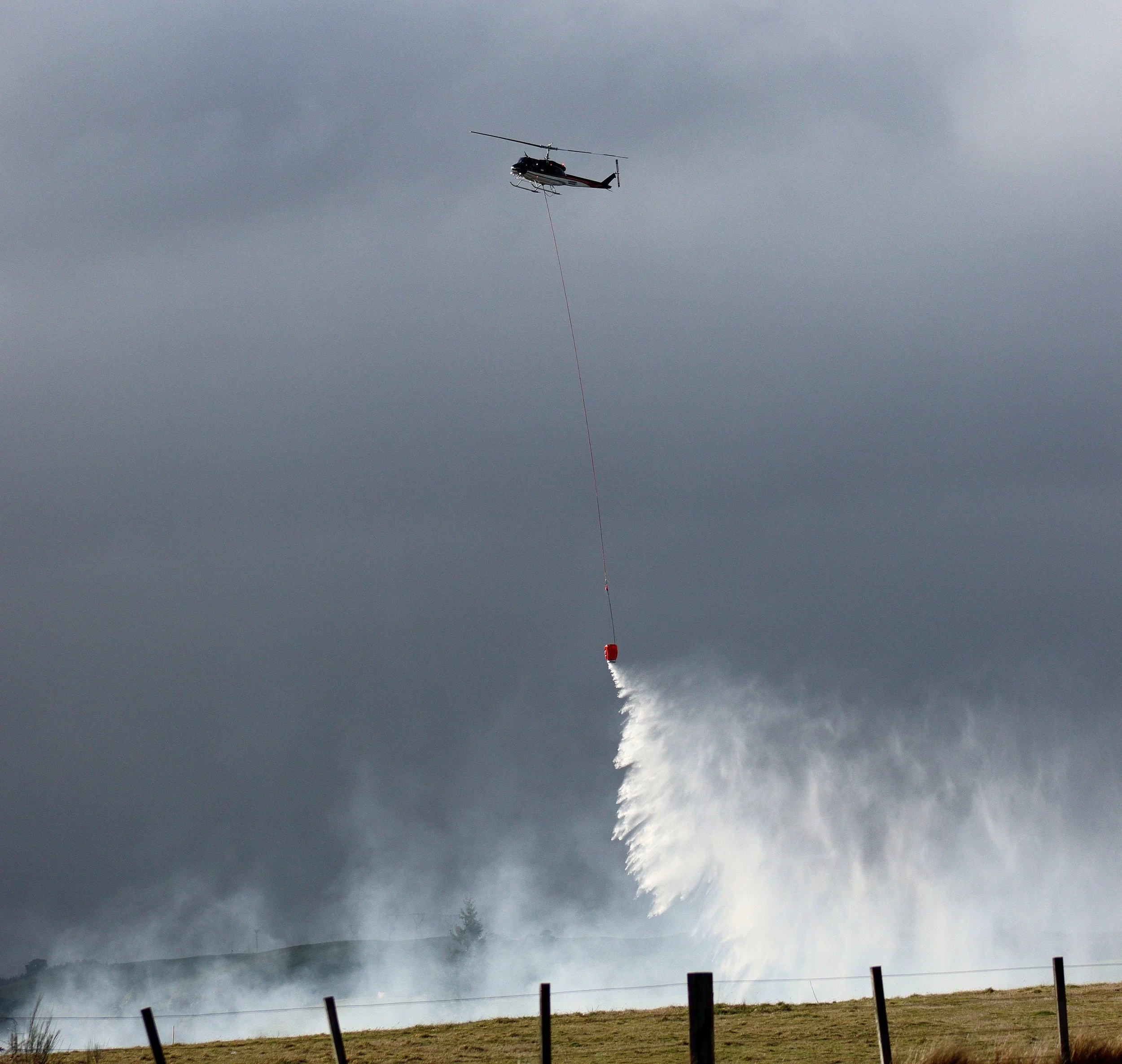
Firefighting helicopters swoop in to douse the blaze on August 31. Photo: Dan Hutchinson
Last week’s fire at the Broadlands Road Geothermal Reserve has dealt a blow to a sensitive ecological area.
By Chris Marshall
Taupō ecologist Alana Delich says the area affected by the fire is a critically endangered ecosystem because of the unique geothermal landscape.
“Here are living things growing somewhere that's hot, acidic, no nutrients, like the most difficult place to survive.”
The predominant species affected is geothermal kanuka itself, which is the only woody species in the world that can survive in hot soils.
“Overseas, you only get grasses and little herbs and mosses.”
“There is also a fungi called Pisolithus which partners with the roots of the geothermal kanuka, trading soil nutrients and water for the sugars the kanuka produce.
“Their common name is dog poo fungi because when you see them it does make you think: ‘who let their dog run around in here?’ They’re not beautiful, but they're quite fascinating.”
Alana is the senior ecologist with Singers Ecological and a board member on the Wairakei Environmental Mitigation Charitable Trust (WEMCT).
“There are not that many species in there, but they're really unique and important to conserve.”
Such ecosystems total only about 1,360 hectares in the entire country, mainly in Taupō and Rotorua and a small amount in Kawarau.
“It's all spread apart in these little unique hot areas, and they've got all these threats, including fire, as we've now seen, but fire, weeds, geothermal energy development, farm development, all these pressures. So that's why they are a critically endangered ecosystem.”
Delich was hoping a WEMCT meeting this week could allocate funding to fly a drone over the area and put together an accurate map of the damage.
Fire and Emergency New Zealand says it is still investigating the cause of the fire.
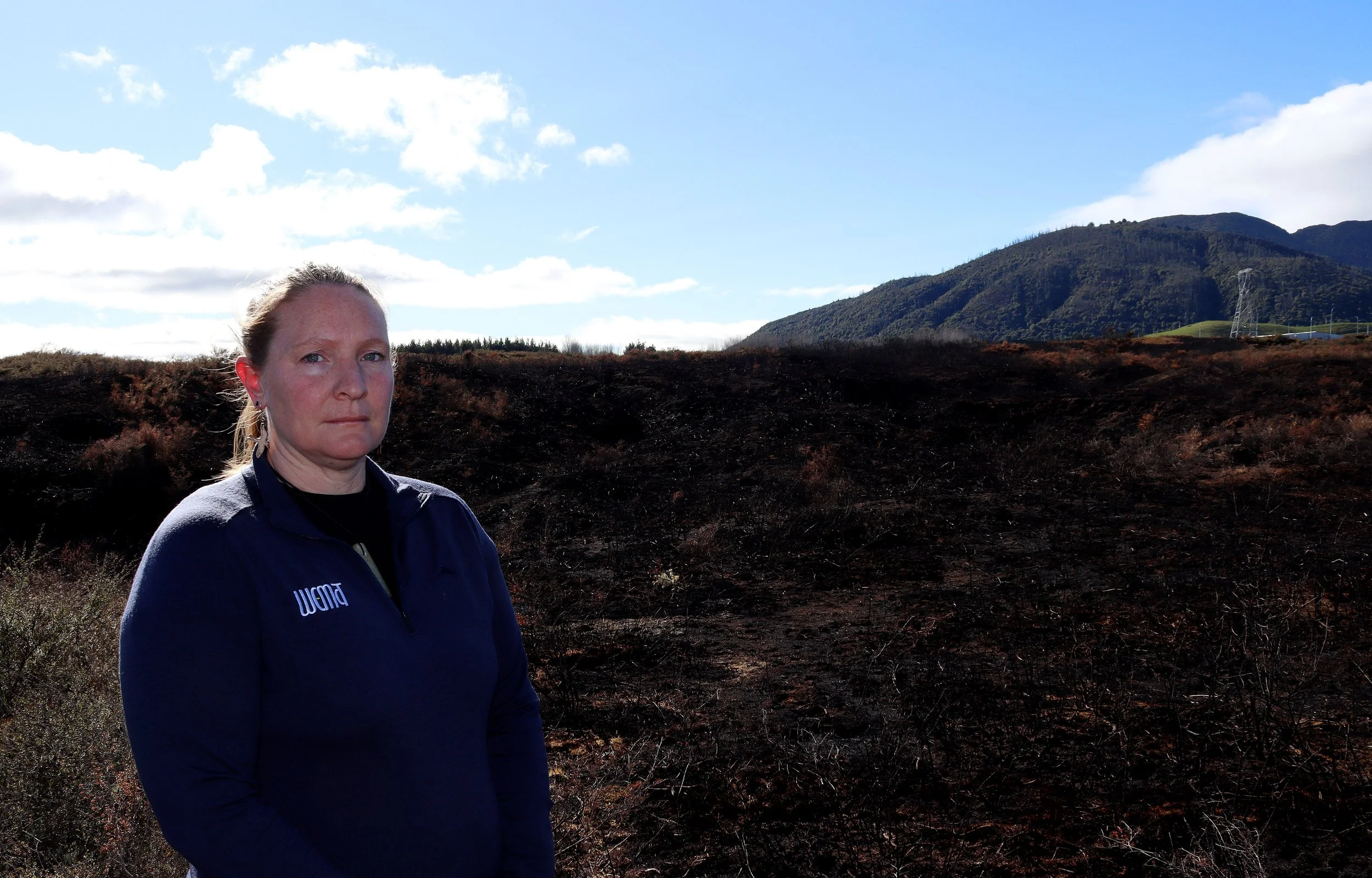
Ecologist Alana Delich surveys the burnt landscape that is home to critically endangered plants. Photo: Dan Hutchinson
As for recovery, the best thing would probably be to let nature take its course, similar to the Tongariro fires.
The important thing would be weed control.
The fire was a blow to contractors engaged in ongoing weed control in the area for the last 20 years.
Some of this work has been funded by the Department of Conservation in handover funding to Te Kotahitanga o Tūwharetoa which owns the area as part of a Treaty settlement. More recently it has been funded through WEMCT.
Greening Taupō has applied for that funding to maintain and restore the area with agreement from Te Kotahitanga.
WEMCT has also paid to remove a nearby stand of Pinus pinaster as a source of windblown seed.
“We were doing lots of work to make this place better. Lots of people were.”
Recovery from a smaller fire in 2013 fire, took about 10 years.
“So, it's only just come right, really… Geothermal kanuka does grow relatively slowly, so hopefully given more time, it will crowd out the grass.”
She wants the public and neighbouring businesses to understand the value of such areas and ensure they are not treated as informal refuse tips.
She also feels there have been missed opportunities to protect the area when consenting the surrounding development, such as the Taupō District Council highlighting its significance by putting in place larger buffers.
Talk that developers would ensure some access lanes between the industrial sites hasn’t happened either.
The fire came very close to large community planting areas at the end of the golf course, part of an interconnected series of green spaces that various organisations are enhancing to form a corridor from Tauhara Maunga into Taupō.
Greening Taupō coordinator Roby Ellis says fortunately, more than 8000 native plants established by Greening Taupō along the boundary of the geothermal area were not affected.
These plantings form part of the wider vision to create an ecological corridor connecting Tauhara Maunga with the township.
“The fire is devastating for the Broadlands geothermal habitat and the native vegetation within this special area.”
She says once there is a clearer understanding of the damage and what will be needed, they are ready to work alongside the landowner to support their environmental goals and the recovery of the special site.
The ecological corridor of plantings runs from the mountain to Te Mana o Tauhara Charitable Trust’s Tauhara Ngāwhā restoration of a geothermal area on the other side of the East Taupō Arterial (ETA) and Greening Taupō’s buffer planting next to Broadlands Geothermal on the Taupō Golf Course.
“They were all connected as part of this corridor of natural areas to link us back to the maunga and connect the birds back to Taupō,” Alana says.
She says its value could be more appreciated by neighbours like the golf course highlighting the geothermal reserve as a unique feature.
“I remember when we moved to Taupō, maybe 2008, there was still steam coming out of some of those holes on the golf course.
“The area has cooled over the last 10 to 15 years which is a bit of a worry for its recovery. It's easier for a geothermal area to recover when it's still hot, because that keeps out weeds. Once it's cooler and a fire introduces a bit of fertility, that changes the nature of the area.”
She says if the ground is cooler, the geothermal kanuka is going to have less of an chance to spread, and there will be an ash boost for other weed species that blow in.
While the fire is a setback, Alana is optimistic attitudes are changing.
“We're quite good at celebrating the jobs that geothermal brings to our district, but we're less good at celebrating just the cool ecology that we are lucky to have here in Taupō. It has been treated as a bit of a dumping ground, sadly…
She says Tūaropaki Trust at Mōkai has done a great job with some small geothermal sites.
“They are one of the few sites that are expanding. Because they're protected properly and the stock are kept out and they're not dumping any rubbish in there anymore.”
“When we look after it, it bounces back.”