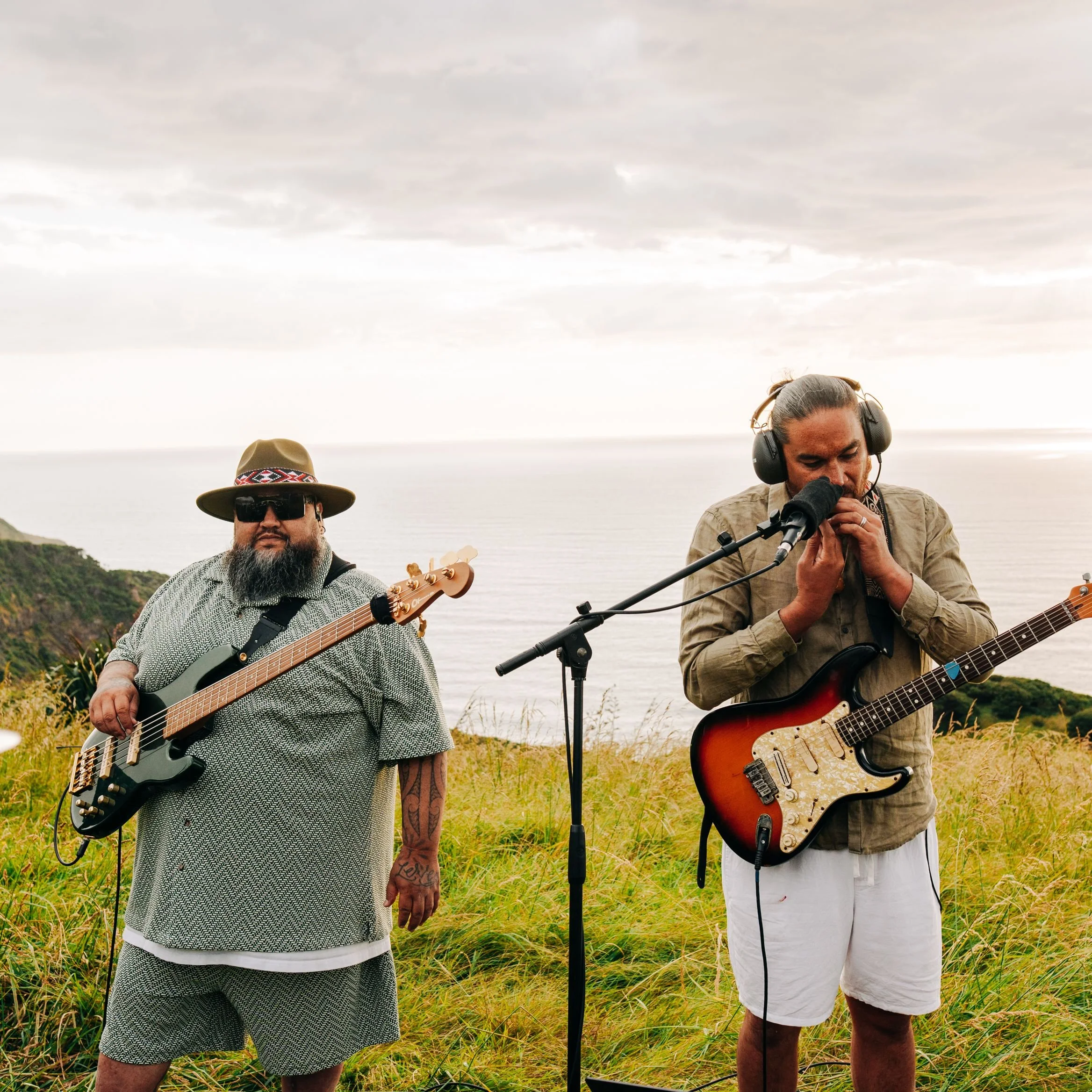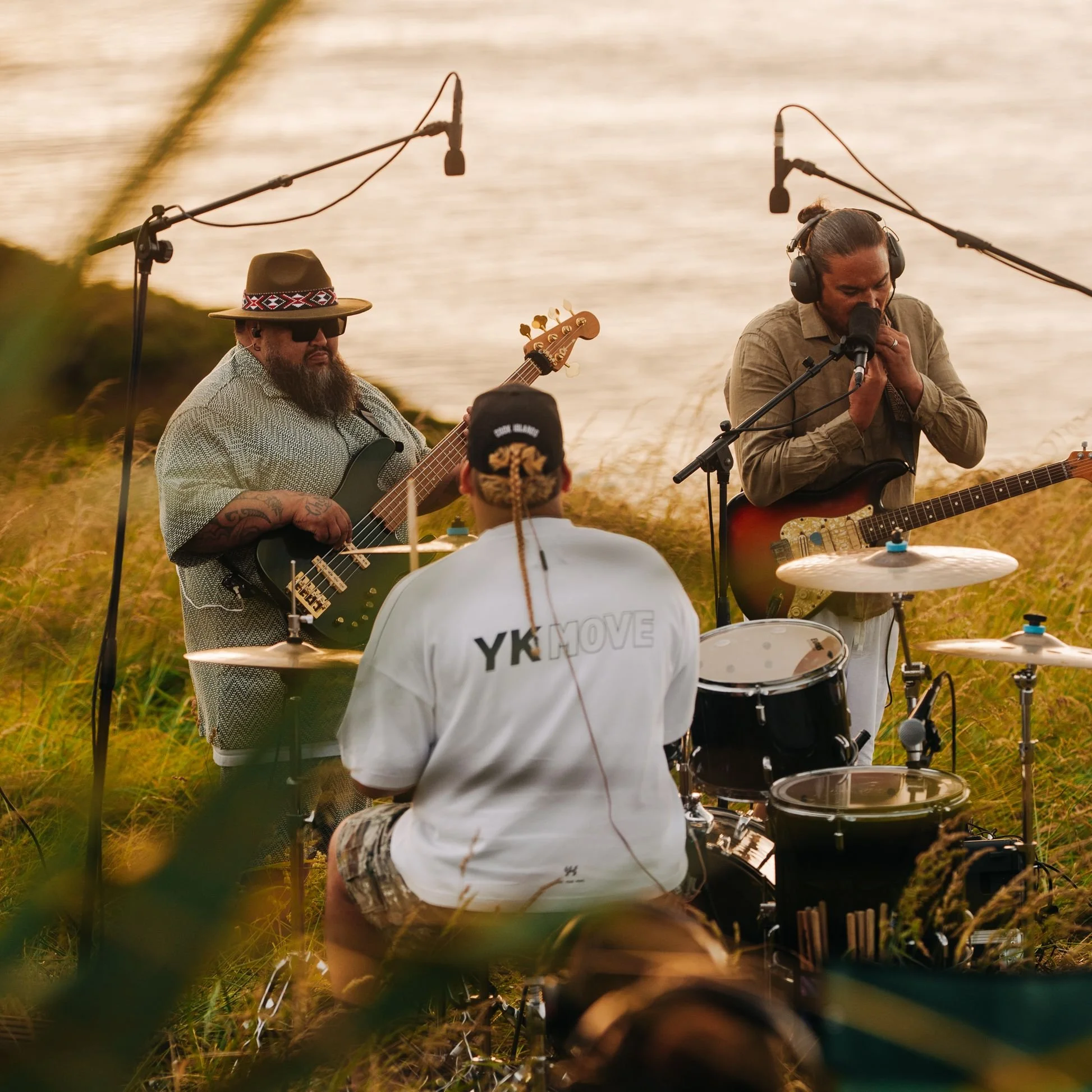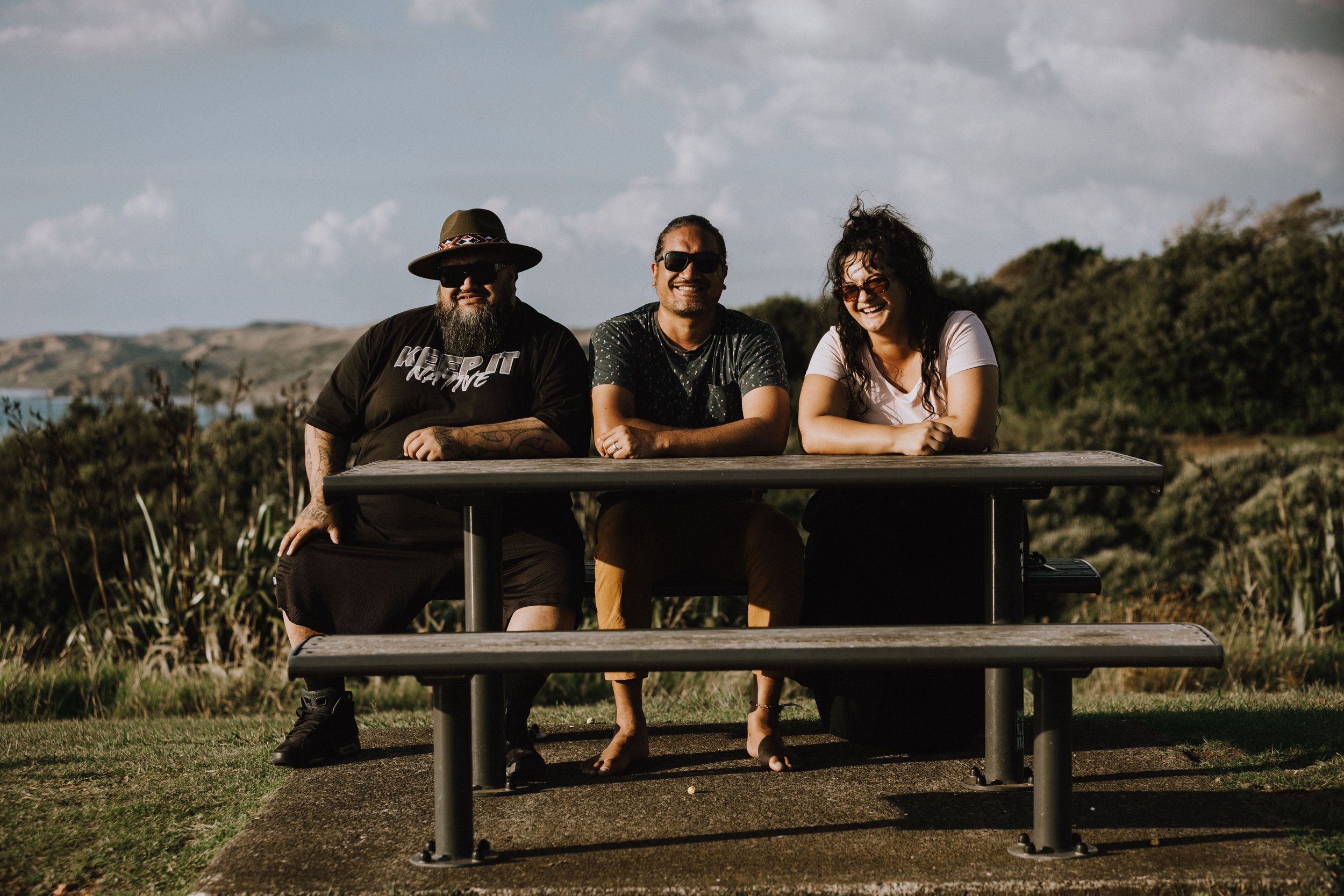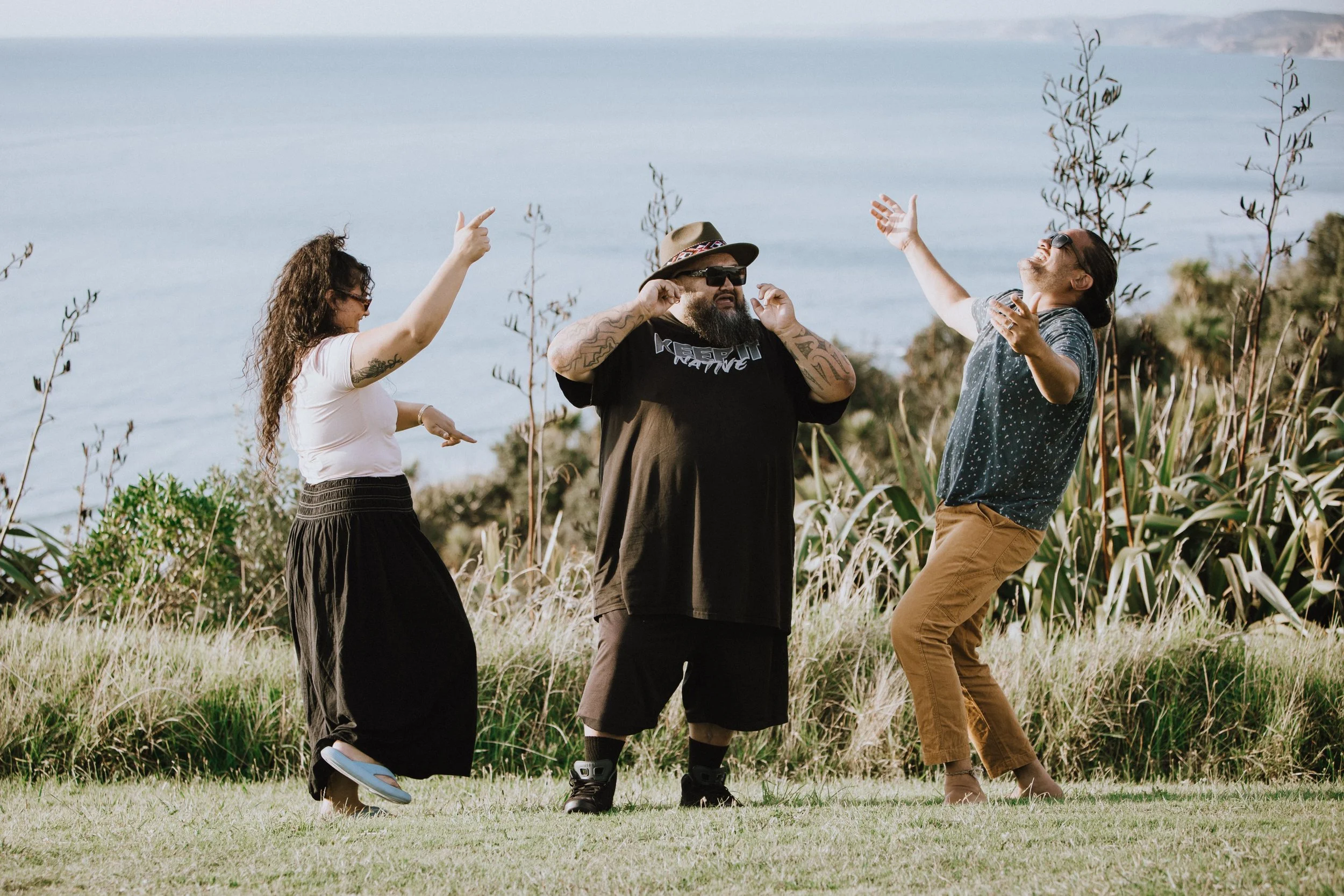
Moetu Smith (left) and Reti Hedley are busy reviving traditional Māori music and instruments.
Tūrangi’s Reti Hedley and Waikato musician Moetu Smith are pushing the boundaries of paoro taonga – traditional Māori music and instruments.
The duo, known as IA have just released a new six-track EP Tawhiti, alongside the new waiata ‘Rerehua’ featuring Jordyn with a Why.
The story of IA is one of iwi, whānau and whakapapa, deeply rooted in the Taupō and Tūrangi district.
Their journey reflects a powerful reconnection with ancestral knowledge and musical traditions, through contemporary music.
They aim to bring taonga pūoro back into the modern era, and do not treat the ancestral instruments as relics of the past, but as evolving instruments.
They released 'Et Tāwhiti' after writing and completing the entire album whilst Hedley was overseas.
The EP's title means "a very long distance," and reflects the collaborative process between the two musicians.
Hedley says he and Moetu wrote and completed most of the album while he was overseas, before heading into the studio.
"That's why we chose that name, because we collaborated from a distance and everything down on Zoom."
The pair began their musical partnership during the summer of 2019, spending months experimenting with ways to marry traditional taonga pūoro with modern instruments.
Covid-19 lockdown in 2020 intensified the process.
"We would just get together and get the guitars out, get all the taonga pūoro out and try and learn how to marry together the voices of taonga pūoro and then the voices of more modern instruments.
"It was a long summer. We might have made 20 odd experimental bits and bobs," Hedley says.
For Smith, the project represents an opportunity to revitalise traditional instruments in contemporary settings.
"It's always been a goal to put taonga in the forefront of the music scene instead of just being used as backups.
"Obviously encouraging our rangatahi to pick it up and carry on with it as well."
The musicians deliberately structure their compositions around the instruments themselves rather than treating them as decorative additions.
"What me and Moetu learnt quite early on is that building music around the instruments allows the instruments to shine," Hedley says.
This approach contrasts with what he describes as the current paradigm, where traditional instruments are often used as "a kind of sprinkling of hundreds and thousands over a cake."
The duo creates many of their instruments themselves, while others have been made for them. Hedley says he has never purchased a taonga pūoro.
The process of creating traditional bone or wood instruments varies depending on the instrument type, from simple bamboo nose flutes requiring basic cutting and hole-drilling to complex pūkāea trumpets made from heart rimu.
"If we were wanting to focus specifically on nose flutes, most of those were made out of Pacific bamboo," Hedley says.
"That's easy as you just cut down the bamboo and then just add a few holes here and there."
More complex instruments like pūkāea require selecting heart rimu for its resonant sound, splitting it in half, gouging out the inside, and binding it back together
The musicians have taken their work internationally, touring Canada twice and performing at indigenous festivals in Ottawa, Montreal, and Vancouver.
Travelling with traditional instruments presents challenges.
"It's very hard to take what we do on the road because there's a lot of moving parts to our travels and the biggest one is our taonga," Smith said.
"The first time we tried to leave the country with it, we almost didn't."
Both musicians maintain day jobs alongside their musical collaboration. Smith works in Māori mental health, whilst Hedley is a teacher.
"We're all about composing and continuing that experiment," Hedley says.
"Write the song, get some funding, release the song. For the purpose of exposing these instruments to New Zealand and the world, but primarily our own here in New Zealand."
The pair records at various locations including Roundhead Studios and Parachute Studios in Auckland, though Hedley handles mixing and mastering from his home studio, Te Arawa Studios.
Their previous work includes another six-track EP and various singles. One of their songs, 'Pā Māori,' celebrates people who maintain marae and tribal areas and was filmed at a marae near Tūrangi.
Finding a place for various musical instruments ins not straightforward, with many traditional instruments actually serving healing and ceremonial purposes within cultural practices that were later suppressed.
"Every time me and Moetu make a song, we're kind of breaking thousands of years of tradition by reapplying instruments for healing and reapplying them as instruments for music," Hedley said.
Despite these considerations, both musicians remain committed to expanding the pool of taonga pūoro practitioners and demonstrating the instruments' potential in contemporary music.
The knowledge required to create traditional instruments often extends beyond written resources, requiring direct transmission from experts who understand the details and nuance involved in preparation and construction.
'Et Tāwhiti' represents the latest chapter in the duo's ongoing experiment to showcase traditional Māori instruments in contemporary musical contexts whilst encouraging others to explore these ancient sounds in new ways.