
Bright future for solar ventures
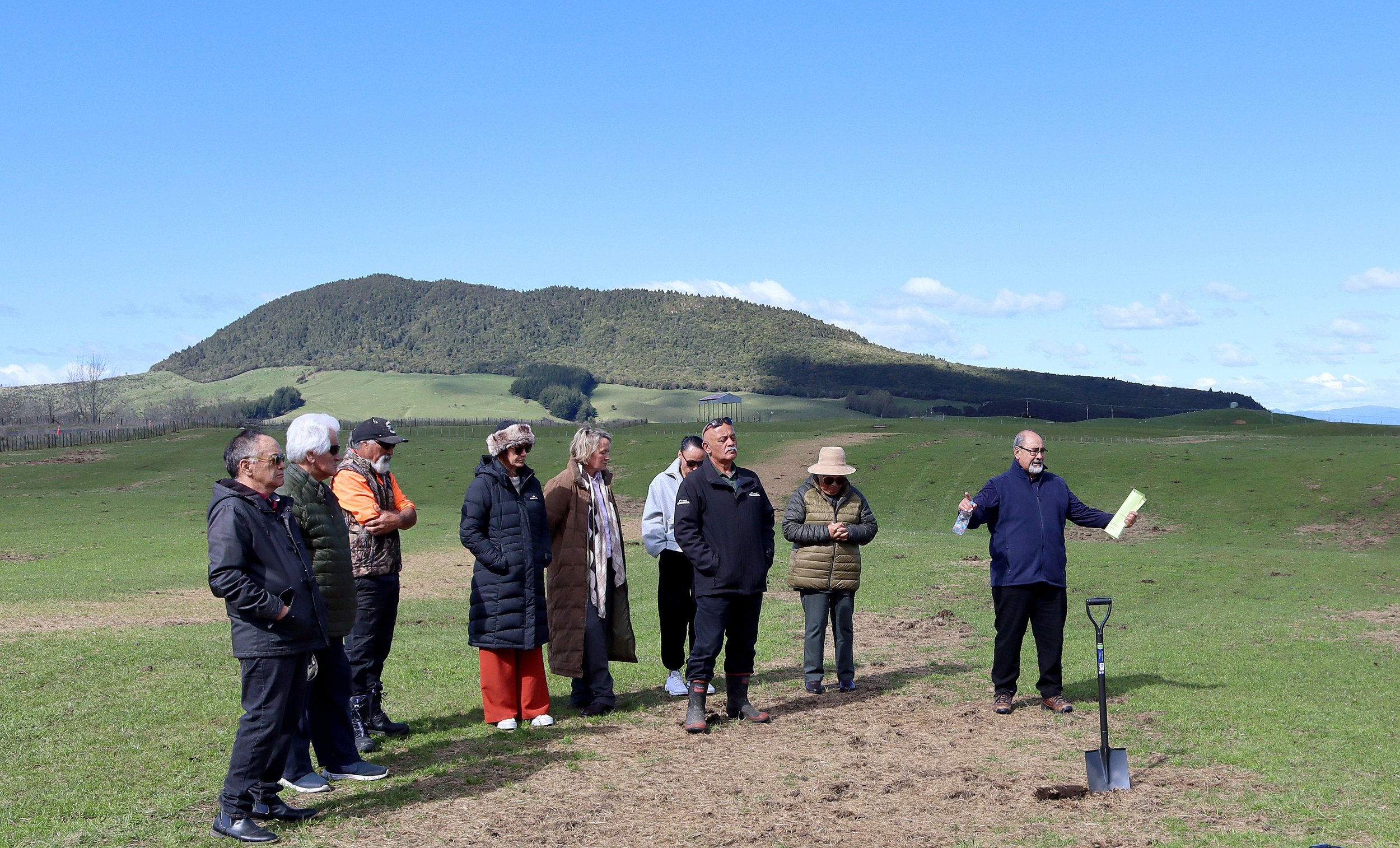
Investors gather to mark the stary of construction of Te Aho o te Rā Solar Farm. Photo: Dan Hutchinson
Construction is underway on a 15-megawatt solar farm near Tūrangi, in what is a joint venture between solar developer Lightyears Solar and eight Māori-owned entities.
By Dan Hutchinson
The Te Aho o te Rā Solar Farm, at Kuratau, was formally launched with a site blessing and sod-turning ceremony on September 24, with representatives from Lightyears, Māori investors, local landowners and project partners including Infradeep, The Lines Company and Fonterra.
Work is soon to get underway installing about 24,000 solar modules on the 32ha site.
Output from the solar farm will generate enough electricity to power the equivalent of 3,300 homes.
Fonterra is purchasing all the energy generated by the farm, which is expected to be completed by July 2027.
Lightyears managing director Matt Shanks says the project is the result of nearly four years of collaboration with the Waitūhi Kuratau Trust, the key landowner trust whose trustees were instrumental in shaping the deal.
"One of our objectives when we started Lightyears was to make it easy to invest in solar in New Zealand.
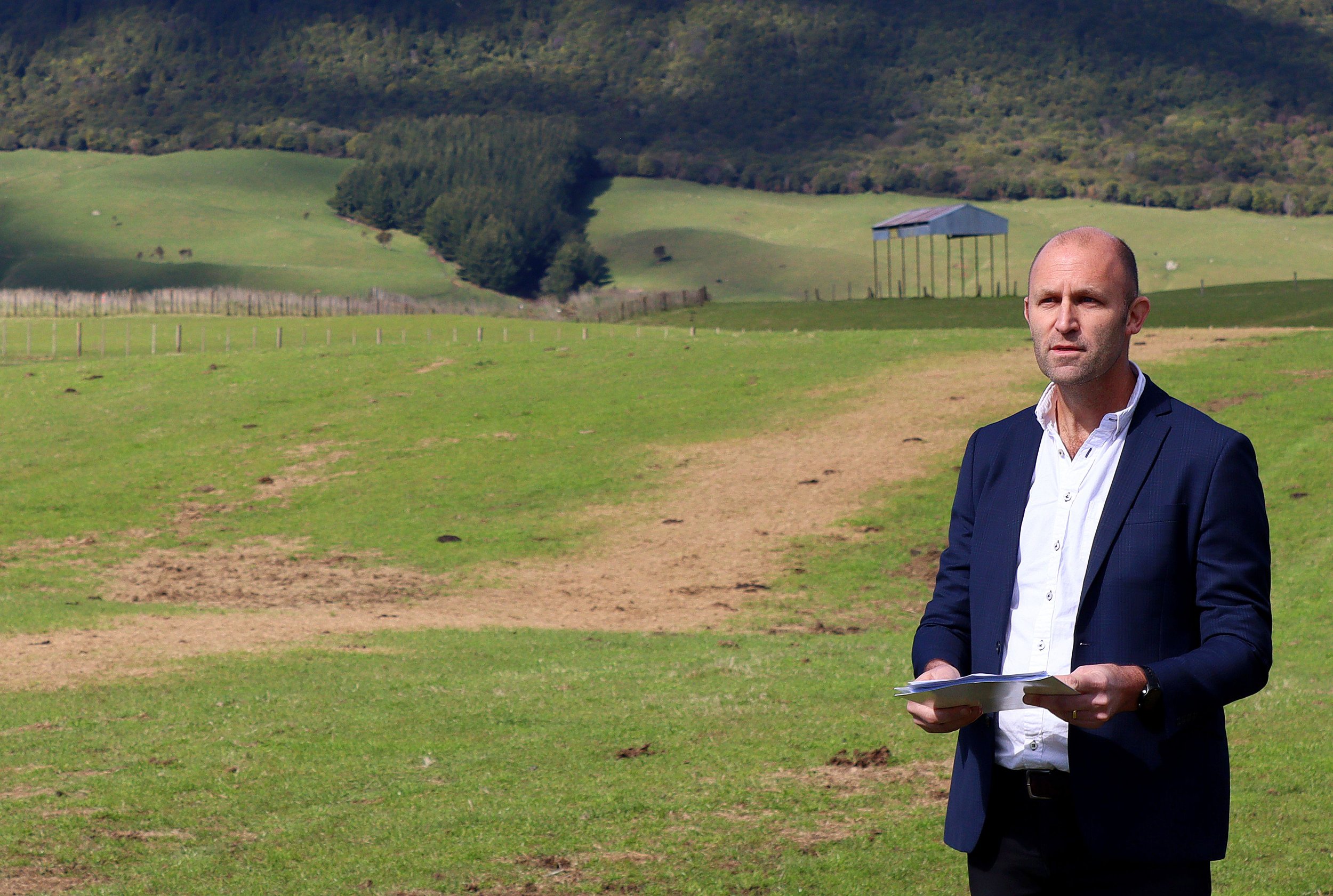
Lightyears managing director Matt Shanks explains how the farm came about. Photo: Dan Hutchinson
"This partnership puts that ambition into practice, creating an opportunity for co-investment alongside our Lightyears Energy platform."
The first conversations with the trust began in February 2023, when Shanks walked the ridge of the property with the trustees and recognised the potential for a co-investment structure.
Over the following years, Lightyears developed a joint venture model capable of accommodating investment from multiple Māori trusts simultaneously.
Te Aho o te Rā is the fifth solar farm Lightyears has started construction on in 2026 and its largest to date, and the first of several the company is planning in the Taupō region.
Local representative Duncan McKenzie, speaking at the ceremony, says he hopes employment opportunities on the farm will be directed toward local rangatahi first.
"What I see here is actually a healing and a growing.
"On behalf of our rangatahi in the area — if there's an opportunity for them to be employed on this whenua, please go to them first and give them the opportunity, because they're going to be tomorrow's leaders."
Duncan says "Mai te rōpatu, mai te ora — we're moving from a state of grievance to a state of well-being."
The farm's design includes solar panels spaced far enough apart to allow sheep to graze across the site throughout the year.
Once operational, Te Aho o te Rā will add new renewable generation capacity to the central North Island grid via The Lines Company network.