
Taupō Polytech set for renewal

Toi Ohomai chief executive Dr Pim Borren. Photo: Supplied
Toi Ohomai’s new chief executive has ambitious plans for the Taupō campus once it reopens its doors next semester.
By Dan Hutchinson
The local campus along with Toi Ohomai Institures of Technology’s campus in Tokoroa faced closing altogether last year because of declining student numbers. Many staff were made redundant.
In July, the Government announced it would return 10 polytechnics to regional governance, reversing Labour’s decision to merge them into Te Pūkenga.
Dr Pim Borren previously served as chief executive of what was then called Waiariki Institute of Technology from 2006 to 2012 and says he returned driven by frustration at the institute's decline. He started in January this year.
"My frustration of hearing and listening and observing how poorly the institute that I used to be CEO of was doing.
"I've come back as a slightly older, probably a little bit wiser person, but I've still got the same passion and energy and commitment to our local communities."
The campus on Kaimanawa St has been loaned to Taupō-nui-a-Tia College following a fire that destroyed the college’s N Block, which housed 11 classrooms.
Dr Borren says the Taupō campus is now just six weeks away from reopening.
He wants to grow student numbers, expand course offerings and eventually build a modern, purpose-built facility.
"It's been closed for far too long … We used to be the major provider and we're going to be again in the future."
While the arrangement delayed his plans, Borren says it has helped build a positive relationship with the local school community.
While the exact course programme for Taupō has not been finalised, it is likely to include business, IT, automotive, carpentry, hairdressing, barbering and beauty.
He has hired a regional coordinator who will be based at the Taupō campus once it is returned, and the institute is consulting with businesses, employers and iwi to identify the skills the local economy needs.
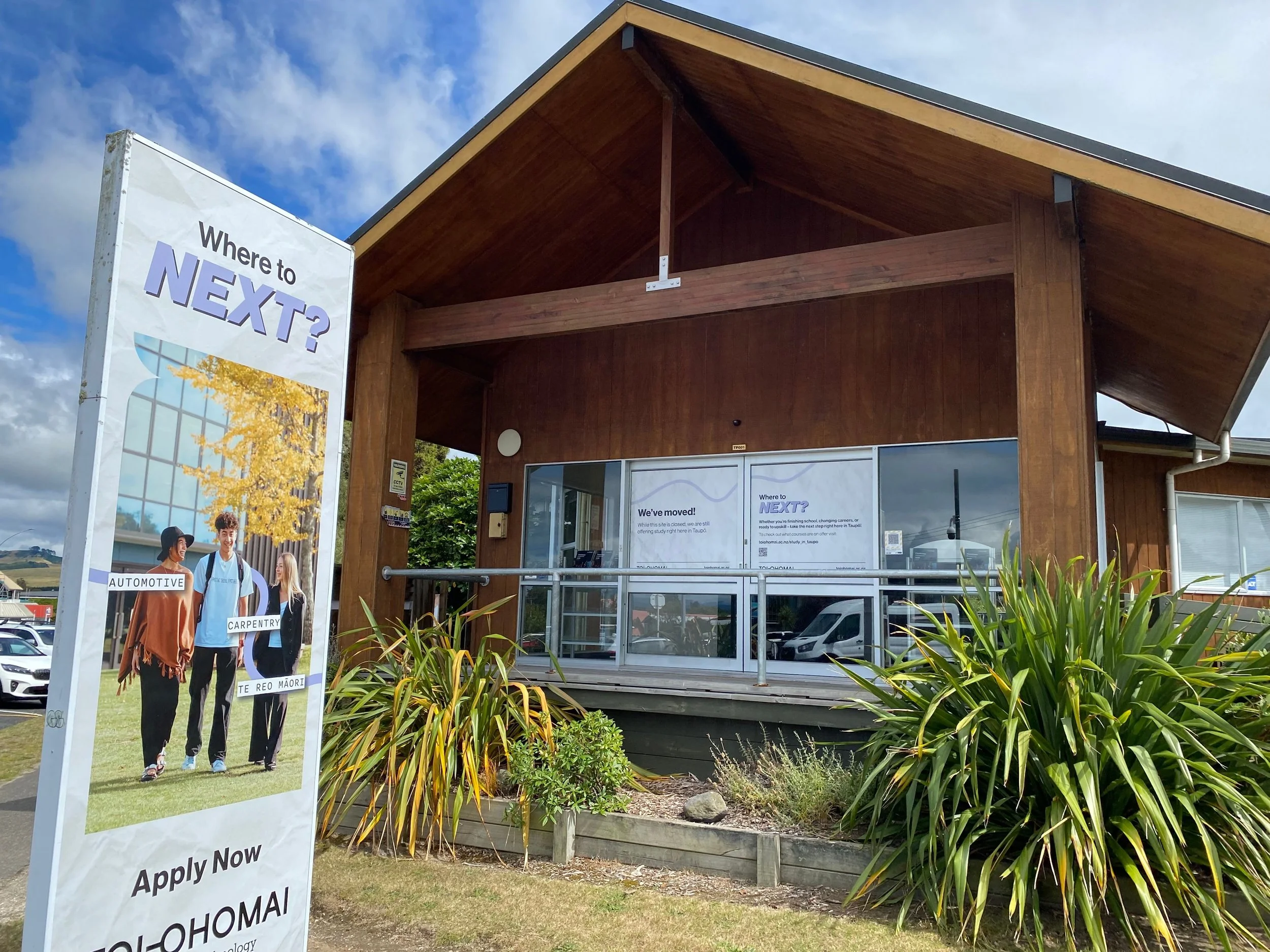
The Toi Ohomain Taupō campus has been on loan to Taupō-nui-a-Tia College for most of the year. Photo: Dan Hutchinson
Longer term, Borren wants to build a modern, custom-designed campus in Taupō, modelled on the recently developed Tokoroa campus, which combines trade training with business and IT facilities.
"I'd like nothing more than to build something similar in Taupō. It'll have to be a bit bigger because we'll have bigger numbers in Taupō."
Toi Ohomai owns the land and existing buildings at the Taupō site, which includes 12 to 13 prefabricated classrooms that Borren describes as being in good condition.
The institute operates five campuses across the Bay of Plenty, including Tauranga, Rotorua, Taupō, Whakatane and Tokoroa.
He says the goal this year has been to grow numbers at the Rotorua campus so it can support the smaller areas.
"We're actually having a very good year in terms of enrolments. We're growing well this year after years of decline, and next year we'll grow even more."
"It's a big town," Dr Borren says of Taupō. "It doesn't have much provision at the moment in tertiary education."
He says they became an independent institute again on January 1 this year after several years under the Te Pukenga umbrella.
“I often say we're government-owned but not government-run.
“I'm very keen to make sure that we get the institute back into Taupō and back delivering a range of programmes."
He says 20 years ago they were looking at a new campus for Taupō.
“I had an investor in Taupō who was very keen to give us a whole lot of money. But I'm still keen to develop some additional, some more modern teaching spaces.
He says Rotorua will continue to be the focus next year, and in 2028, the priority will be the three regional campuses.
“But with a real priority being placed on Taupō, I promise you."
"It's a big town. It's bigger than Whakatāne and Tokoroa, and it doesn't have much provision at the moment in tertiary education. So we, you know, we used to be the major provider and we're going to be again in the future."
He says it was not just school leavers that needed tertiary education but “second chance learners”, and part-time students who were usually full-time workers and parents trying to upskill.