
Kids on the frontline of clam fight
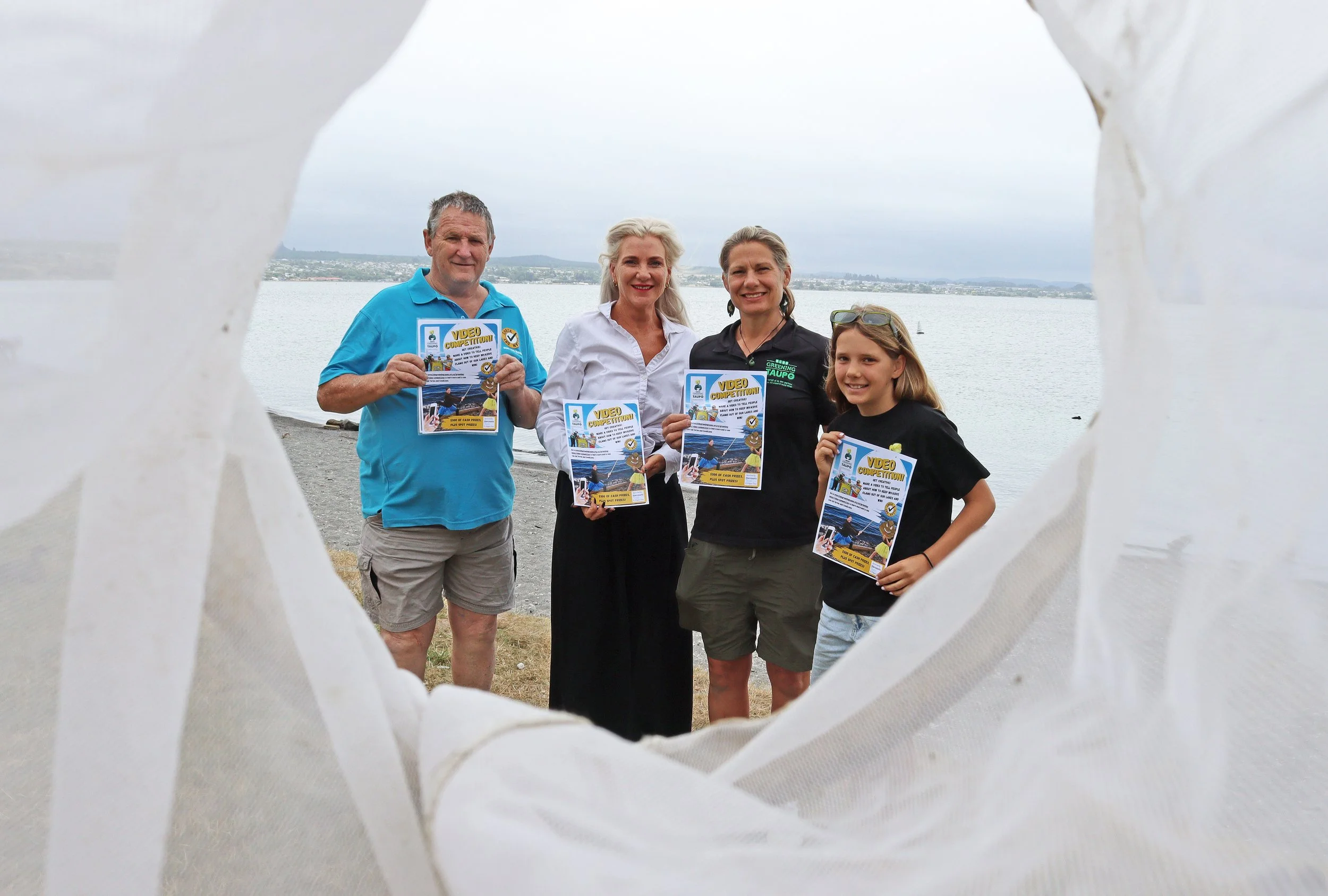
Dave Cade – aka Dudymo Dave, Harcourts Taupō owner Mary-Louise Johns, Greening Taupō education coordinator Heidi Pritchard and Adelyn Pritchard get behind the gold clam video competition. Photo: Dan Hutchinson
There’s an environmental disaster looming and people are being encouraged to grab their phones and start filming.
By Dan Hutchinson
Kids Greening Taupō is teaming up with Dave Cade (aka Didymo Dave) and Harcourts to shine a light on the potential threat that Gold Clams pose to Lake Taupō.
Discovered in the lower half of the of the Waikato River in 2023, the clams breed quickly and can form a carpet of prickly shells on the lakebed.
They are inedible and there is nothing attractive about them, except for the golden name, Dave says.
Spot prizes and $300 in cash are up for grabs to the person who comes up with the best video that tells people how to keep invasive clams out of the lake.
Heidi Pritchard, education co-ordinator with Kids Greening Taupō says they want children to promote the key prevention message of “check, clean, dry”.
“We really want to make sure that we keep our lake really nice and clean.”
“A great example of what we've been doing is we've been going into the schools and been talking to the children about all this, especially right before our summer break and then they've gone home to try to tell their parents with their homework sheet that the parents actually had to go and fill out.”
Dave says the same message applies to any aquatic pest, like didymo.
The video competition is about getting creative and thinking about biosecurity so it remains at the front of people’s minds when they go boating or swimming in other parts of New Zealand and then come to Taupō.
“We're not too worried about who's coming up with the best (video). It's about kids having a go.”
Heidi says the ‘check’ part of the process is basically a visual examination of nets, togs, boats or anything else used in the water, to see if there is any aquatic matter on there.
The ‘clean’ part of the process means putting togs and nets into the washing machine on a hot water cycle for at least 20 minutes to kill any microscopic pests.
“With Didymo, okay, we could use a spray bottle and spray waders or something down with 10% solution of dishwashing liquid. With these things, with the clams, we've got to go 55 degrees (Celsius), 2% bleach. So, that's sort of hot tap water,” Dave says.
He says people are often focused on the visible clams, but the tiny white clouds of spat are the big issue because they cling to anything in the water and can be easily transferred from place to place.
In Lake Karapiro the clams have been found in concentrations as high as 1000 clams per square metre, virtually carpeting the lakebed in places.
To enter the contest people can head to www.kidsgreeningtaupo.org.nz/greeningnews or email their entry to rachel@greeningtaupo.org.nz.