
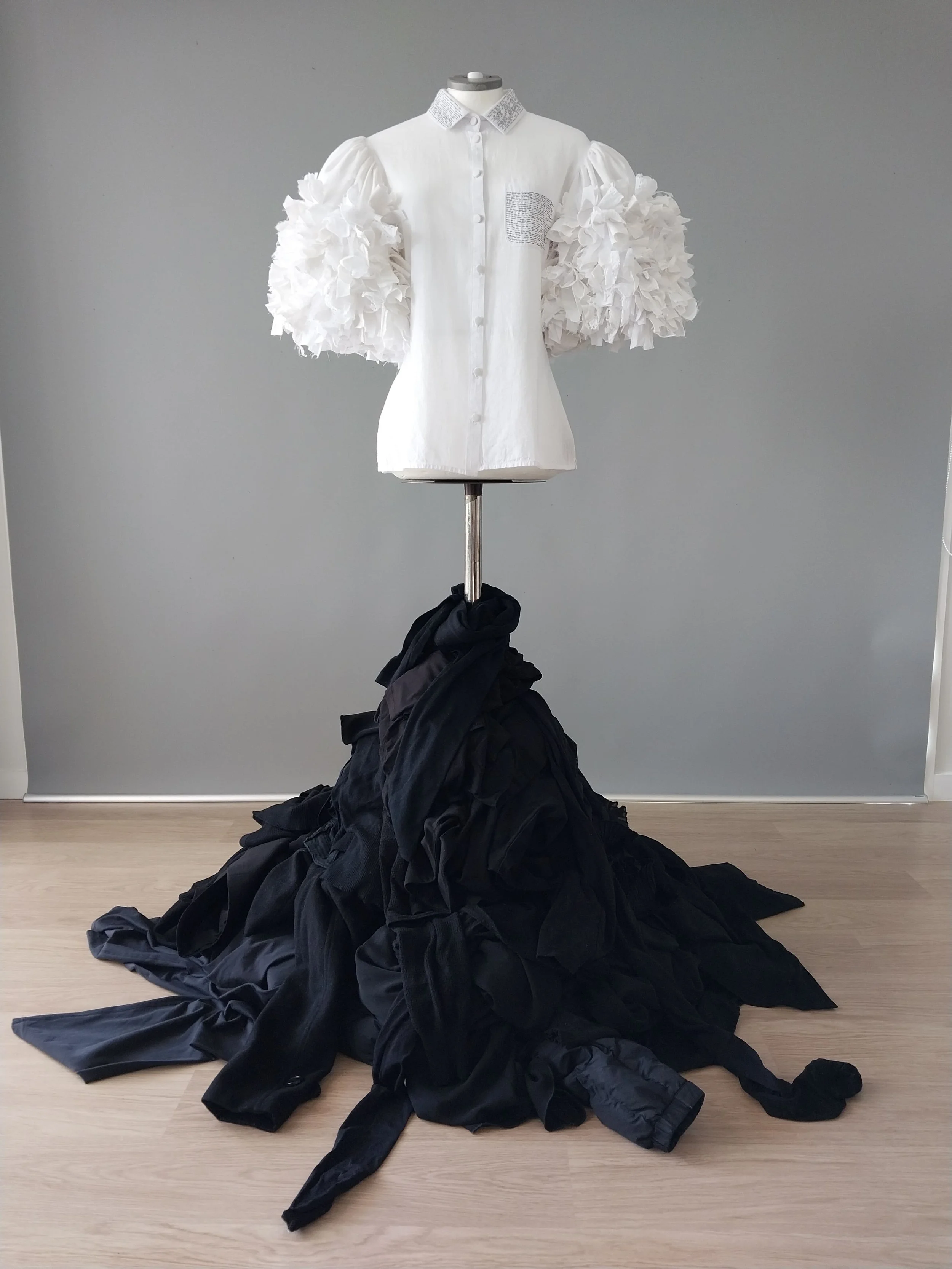
Alise Dumble’s work ‘Dress Code: Morse Code’ was completed in March this year from unwanted clothing, fabric offcuts, polyester
Taupō based textile artist Alise Dumble is thrilled with being named as a finalist in the prestigious Molly Morpeth Canaday Art Award, a national art competition that encompasses disciplines from 3-D sculptural works to painting and drawing.
By Chris Marshall
The past weekend’s exhibition opening at the Whakatāne Art Gallery saw Alise’s work among 87 finalists, selected from 638 entries, vying for around $35,000 in prize money spread across various awards.
“I didn’t win any of the prizes, but even just to be a finalist is really incredible,” says Alise.
Alise’s work ‘Dress Code: Morse Code’ was completed in March this year from unwanted clothing, fabric offcuts, polyester thread and a second-hand mannequin.
“I like to work with mostly second-hand textiles or waste textiles, just to help raise awareness about the sustainability and environmental issues that are caused by the clothing industry, and particularly fast fashion.”
And while her work is art with a message told through the materials and the techniques, it is also wearable.
“The blouse that sits on the mannequin can be worn and was actually worn for an editorial fashion shoot organised by Fashion Revolution New Zealand earlier in the year… I like them to be wearable because it enables the artworks to go out into the world and connect with people beyond the confines of the gallery space.”
In her description of the work submitted for the award, Alise noted it was created to celebrate Fashion Revolution Week 2026.
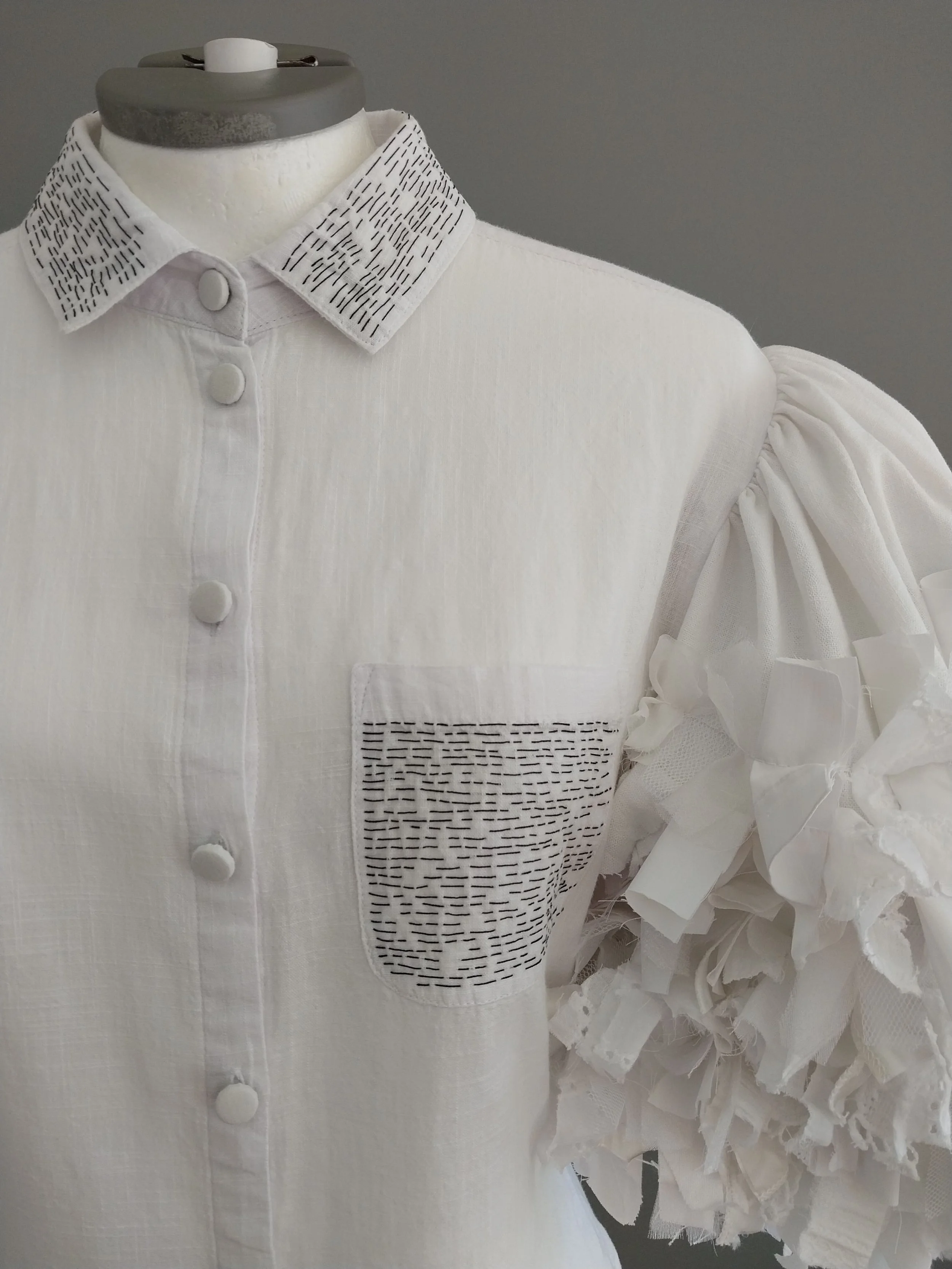
She said she slowly stitched some of the seams by hand - these are juxtaposed with the machine stitching on the original mass-produced garments, made by factory workers overseas who are often subjected to exploitative working conditions.
The hand stitched dots and dashes of the Morse code on the collar and pocket are a reminder of the environmental impact of fast fashion and read ‘52 thousand tonnes of clothing and textile waste is sent to landfill each year in New Zealand’ (Threads of Tomorrow Report, 2024, Fashion and Textiles NZ)
The textured embellishment on the sleeves is made from small fabric scraps and offcuts that she saved from previous sewing projects, ensuring they didn’t end up in landfill.
Fashion Revolution is a global movement that wants to see a fashion industry that conserves and restores the environment, and values people before growth and profit.
Alise says she was lucky enough to be invited to give a talk about her piece at the gallery on Sunday (November 15) following the awards.
“So that was really exciting and that let me explain to everyone a bit more in-depth about my work.”
Alise, who volunteers as wardrobe manager at Centre Stage, says she has an abiding interest in fashion history and examining history through the lens of clothing and textiles.
“One era that I am particularly interested in is the Art Deco era, the 1920s and 30s. So, a lot of the pieces I create are inspired by that era.”
An era in which things were made to last, she says.
Meanwhile her ‘Dress Code: Morse Code’ will be lasting at the Whakatāne Art Gallery, along with the work of the other finalists until the end of February next year.
“The calibre of the work was just next level. Walking around the exhibition I was ‘Oh my goodness, I can’t believe my work is included’ because it was such a high calibre and just really exciting. So, I do encourage people if they’re over in Whakatāne to go and check out the exhibition.”