
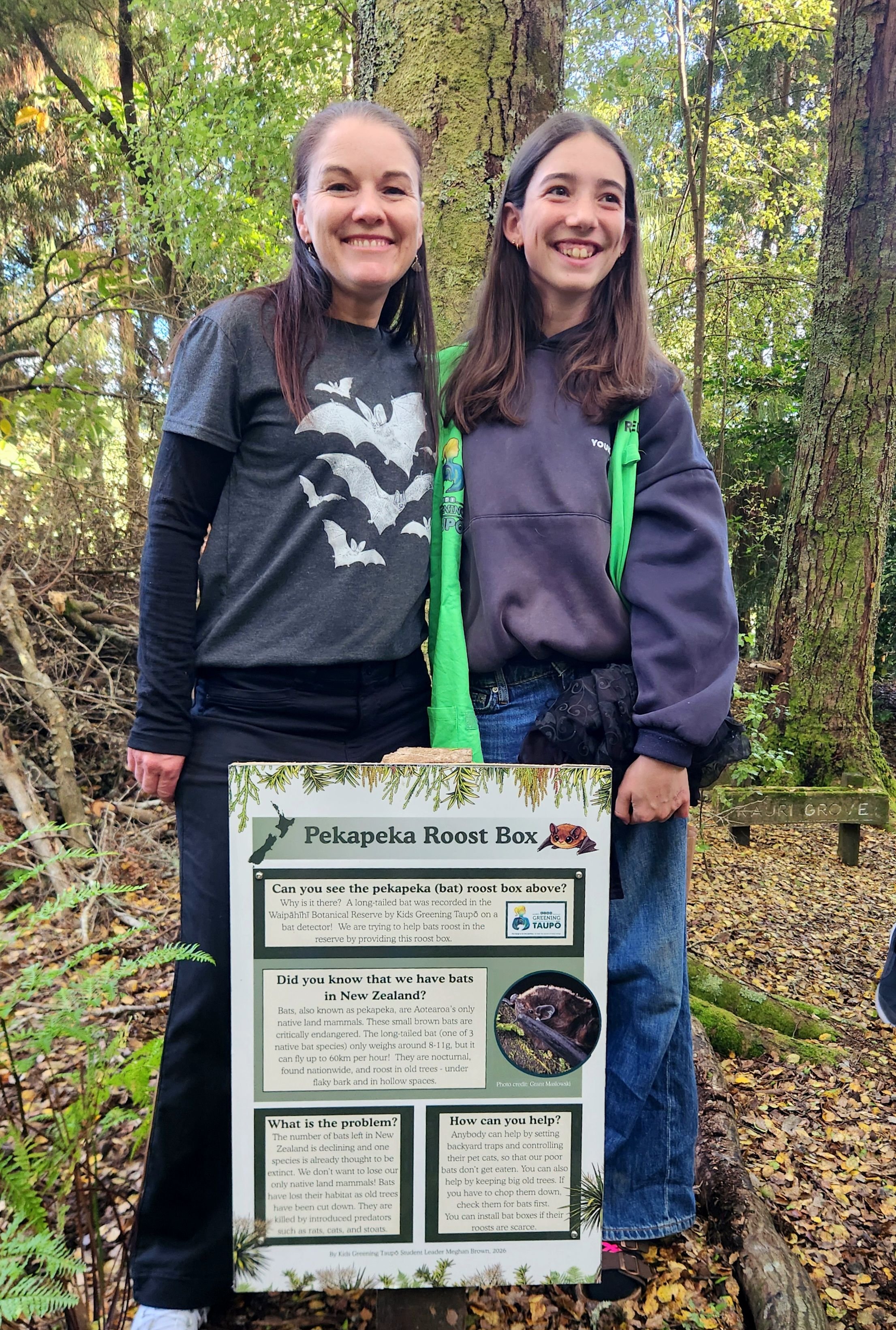
Rachel Thompson and KGT student leader Meghan Brown show off the new bat roosting box and information panel at Waipahihi Botanical Gardens.
The opening of a bat roosting box in Waipahihi Botanical Gardens was a fitting way for Kids Greening Taupō lead education coordinator Rachel Thompson to head off.
By Dan Hutchinson
As afternoon turned to dusk on November 12, a good-sized gathering turned up to see the first of three roosting boxes officially opened for business.
They were also there to farewell Rachel as she prepares to head off to a new role with the Waikato Regional Council.
A schoolteacher by trade, Rachel took the lead role with KGT in 2020, officially taking over from her predecessor on the first day of the Covid-19 lockdown.
That day, KGT’s other coordinator, Sian, returned from leave.
“We never even had a chance to meet in person before starting work together from our bubbles.”
Undeterred, they set about creating resources for schools to teach children about the environment.
The collection has grown to more than 350 free educational resources, used by teachers, students and whānau all over Aotearoa.
More than 50 te reo Māori resources are used by kura kaupapa and kōhanga reo nationwide.
The kaupapa of KGT was to get the whole community involved in conservation by engaging with Tamariki.
“I think we have achieved that, and in doing so created a whole generation of tamariki who will become the kaitiaki of the future.”
There are now 49 schools and early childhood education centres with native planting projects associated with KGT, many with multiple projects they work on.
They also started Greening Taupō Day, which has grown to a huge festival of conservation attended by thousands of children and supported by 50 organisations running activities and stands.
“I figured that if every student in town asked their parents for a coin for KGT, it would get whānau talking about us and what we do. I couldn’t believe it when I actually saw tamariki all around town dressed in green for us.”
Rachel says one of KGT’s greatest strengths is its flexibility and ability to respond quickly to the needs of the community, taking on new topics and opportunities as they arise.
When the Aotearoa New Zealand Histories Curriculum was introduced, they ran teacher professional development, released resources, and delivered school sessions about the history of biodiversity in Aotearoa.
After Cyclone Gabrielle hit, they were able to support schools in Hawke’s Bay that had been cut off from roads, power and internet by putting together home learning packs and having them delivered by helicopter.
The discovery of invasive clams in the Waikato River led them to create resources that are now used by schools and councils throughout the country.
In 2025, she set herself the goal of reaching every school in the Taupō catchment with the Check Clean Dry message.
“We achieved it.”
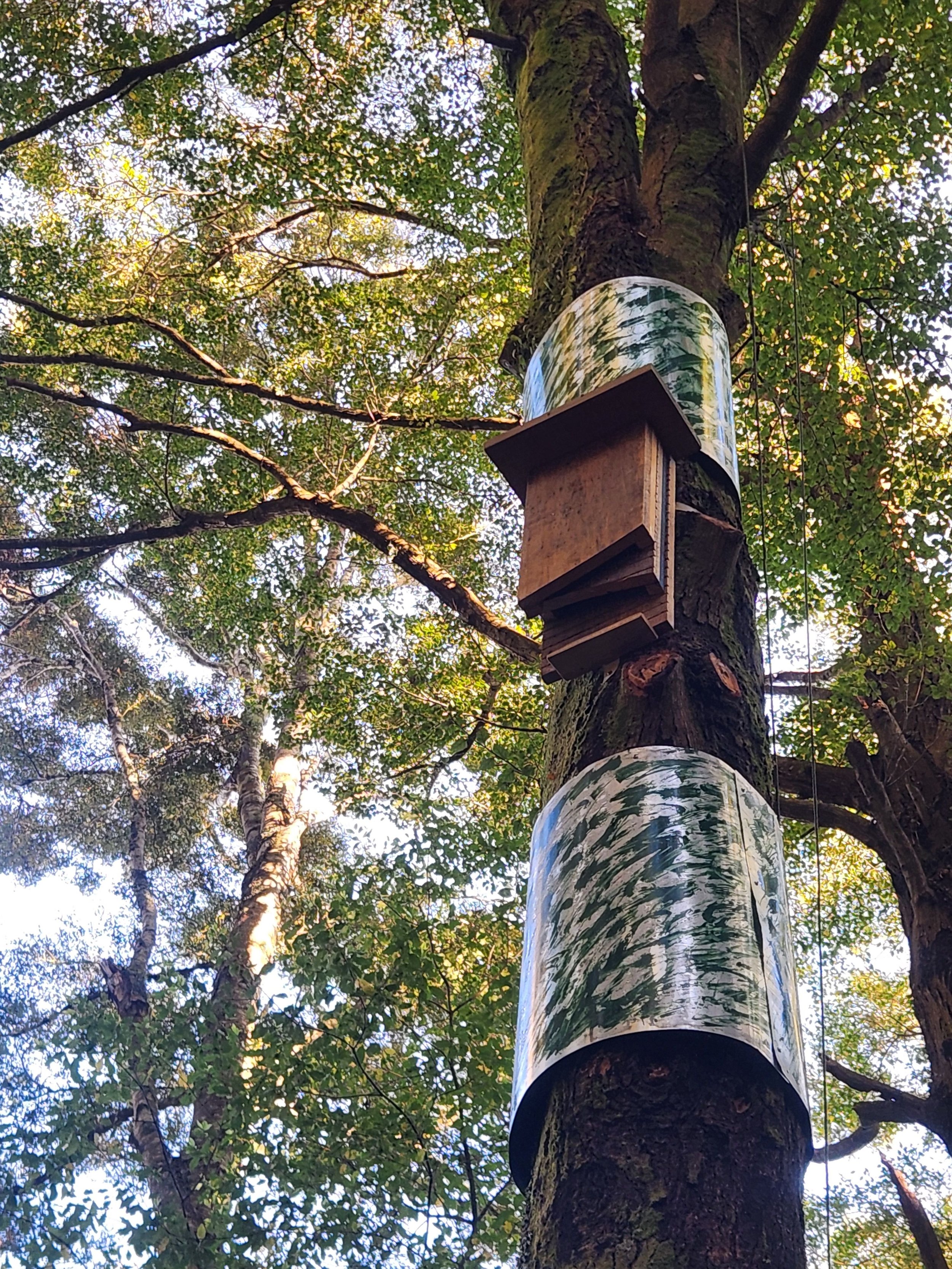
Meanwhile, back at the bat roost, Rachel explains how it came to be.
Pekapeka became a focus for KGT this year when they were offered the use of a bat monitor by The Bat Co. Lab, and they put it out in Waipahihi Reserve.
They had never been recorded there before, but they were known to be in forests nearby.
“We recorded many birds, insects and rats … then one native long-tailed bat. We were the first ever to record a long-tailed bat at the Waipahihi Botanical Reserve”
Local volunteer, Roel, donated an artificial bat roost and KGT student leader Meghan Brown made an information panel.
Rachel says there is a small chance pekapeka will roost in the box, but even if they don’t the exercise is more about education and the predator-proof box will be used by other species anyway.
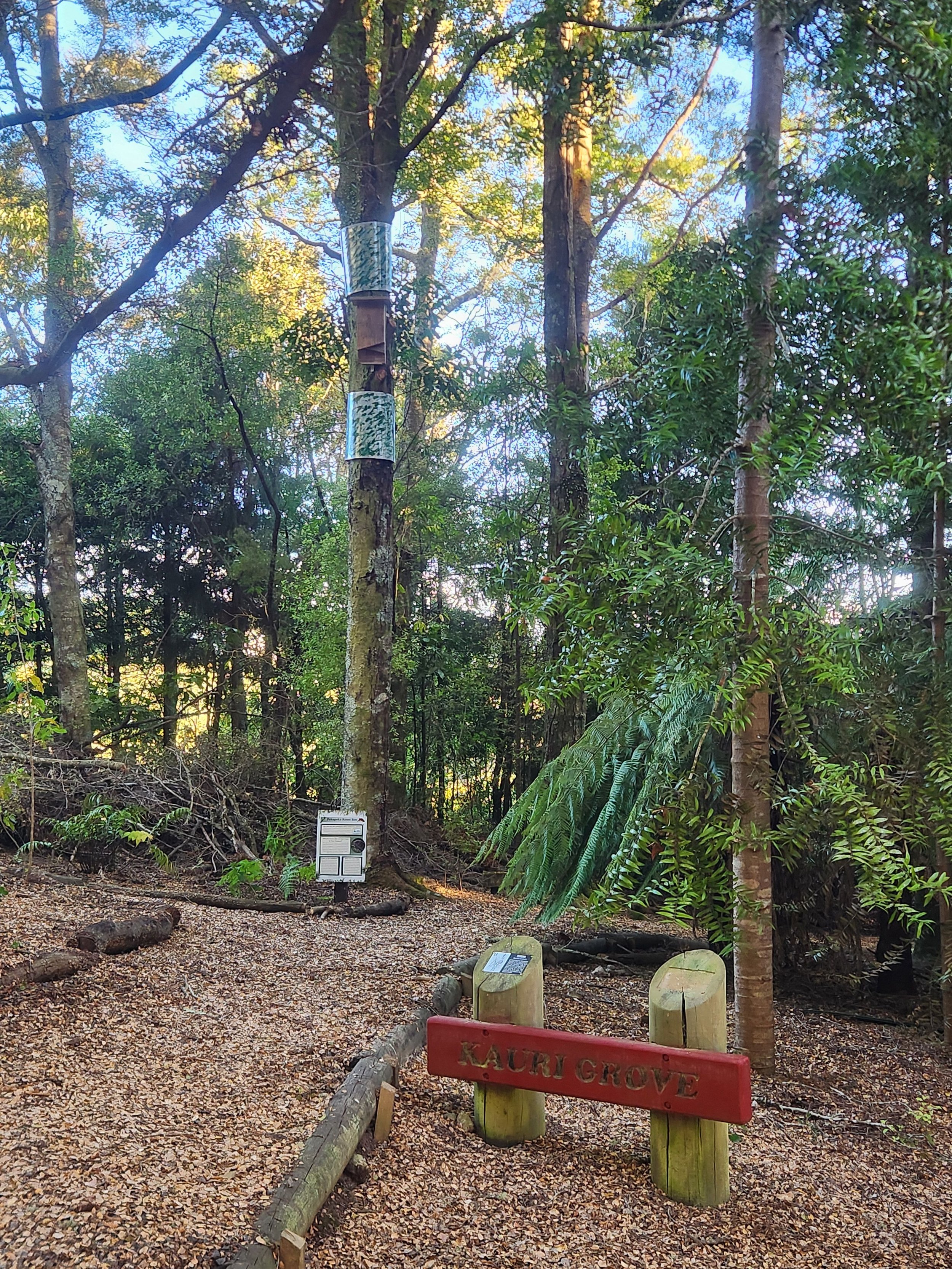
Two other boxes are planned for more hidden locations which are likely to be more successful.
While she is sad to be leaving, Rachel knows the programme is in safe hands with KGT education coordinator Heidi Pritchard stepping into the lead role.
“Heidi will ensure these wonderful learning experiences continue, and I look forward to seeing where KGT goes next and what other awesome outcomes it achieves.”